Perforated UV Print Film for Glass That Still Lets Light Through
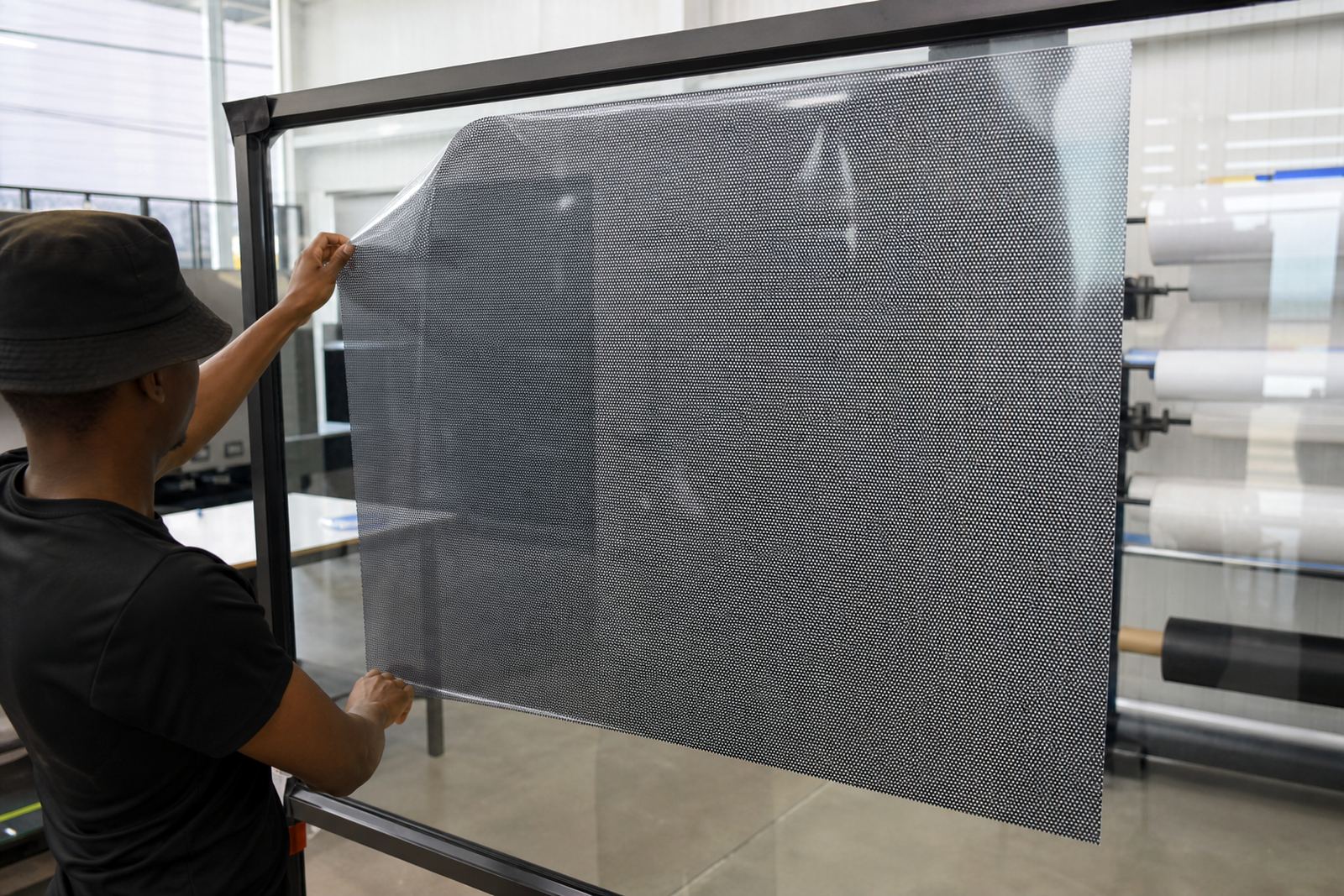
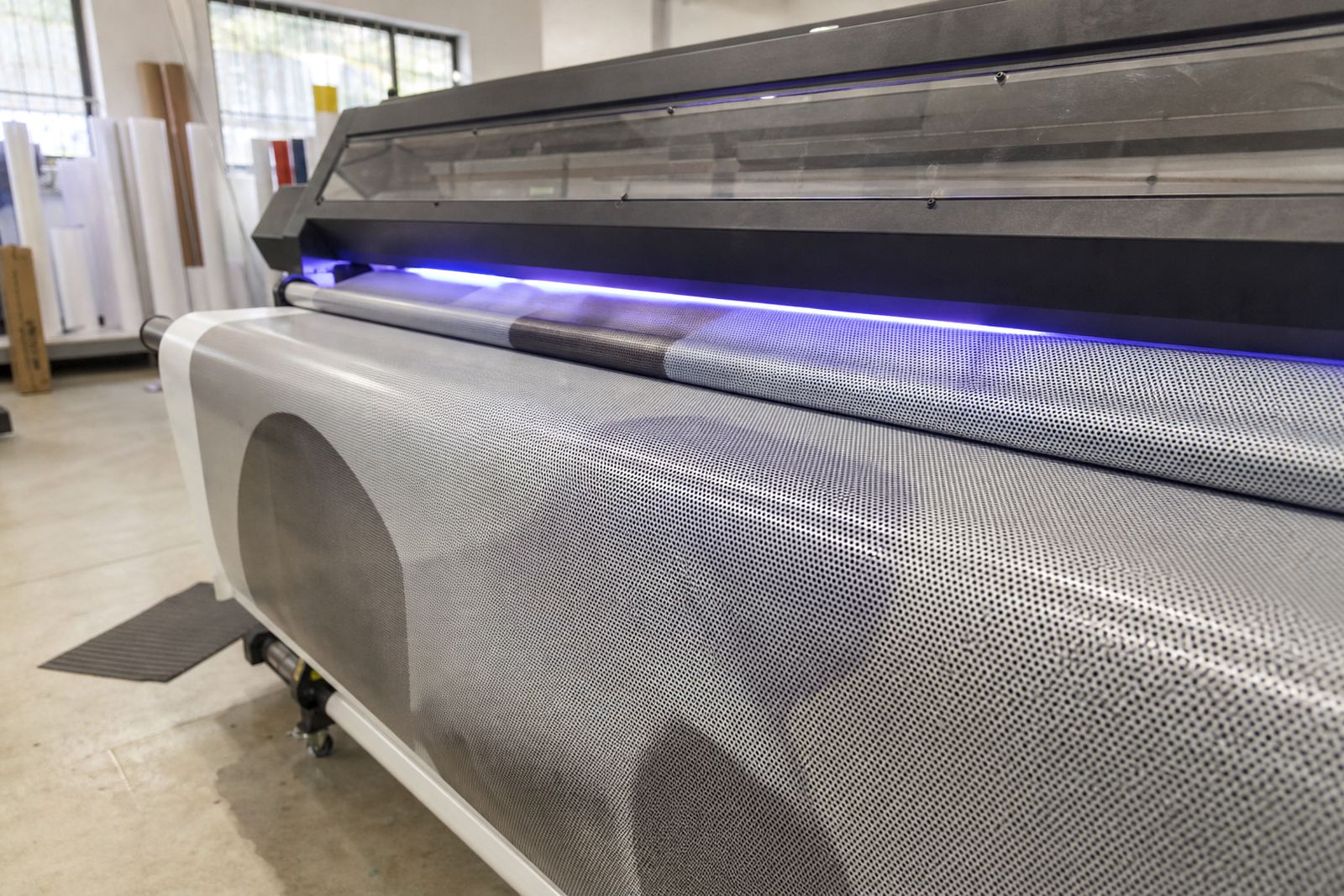
UV print film is a perforated self-adhesive vinyl made for glass surfaces where you want a printed face and usable visibility from the other side. The face carries the artwork, while the tiny perforations reduce the visual block so people inside can still see out. It is a practical choice for retail windows, office glazing, street-facing partitions and vehicle windows where branding matters but sightlines must stay open.
For most jobs, the film is specified in a one-way vision format with a black adhesive backing and a white or printable face. The perforation ratio can be selected to suit the job, commonly around 30/70, 40/60 or 50/50 open area to print area, depending on how much visibility and print coverage you need. More open area gives better outward visibility, while tighter perforation gives stronger graphic coverage and colour density. A small slip in the choice here can affect both legibility and privacy, so the right balance matters.
Print, Lamination and Finish Options That Suit South African Conditions
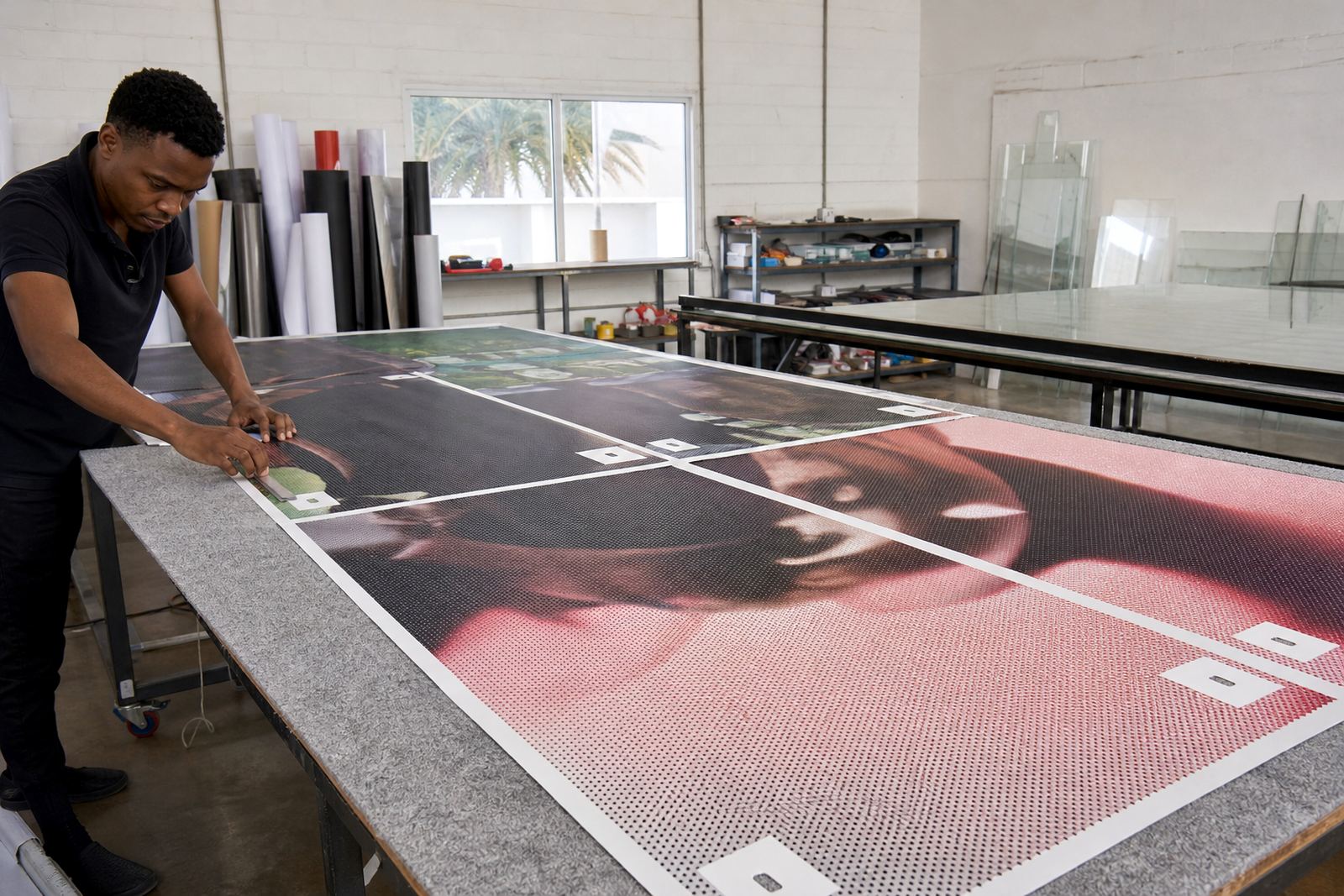
For shopfronts in Cape Town, Durban or Gqeberha, and for vehicles working in full sun, the print needs to hold colour well and resist daily wear. UV-style printing places ink onto the face of the film with controlled placement, giving crisp text, bold blocks of colour and workable detail on the printable side. After printing, lamination can be added for extra protection against scuffing, washing and general handling.
- Common widths depend on the printer and panel layout, with rolls often used for large glass runs and full vehicle panels.
- Typical applications include full-coverage windows, partial branding strips, rear vehicle glass and retail display panels.
- Matte or gloss laminate can be selected depending on glare, cleaning needs and the final look you want.
- Edge sealing may be recommended on some vehicle jobs, especially where the film will face regular water spray or frequent washing.
Because coastal humidity, dust and hard use all play a part, we always check how the printed finish will behave on the actual surface before fitting.
Where UV Print Film Works Best on Shopfronts and Vehicles
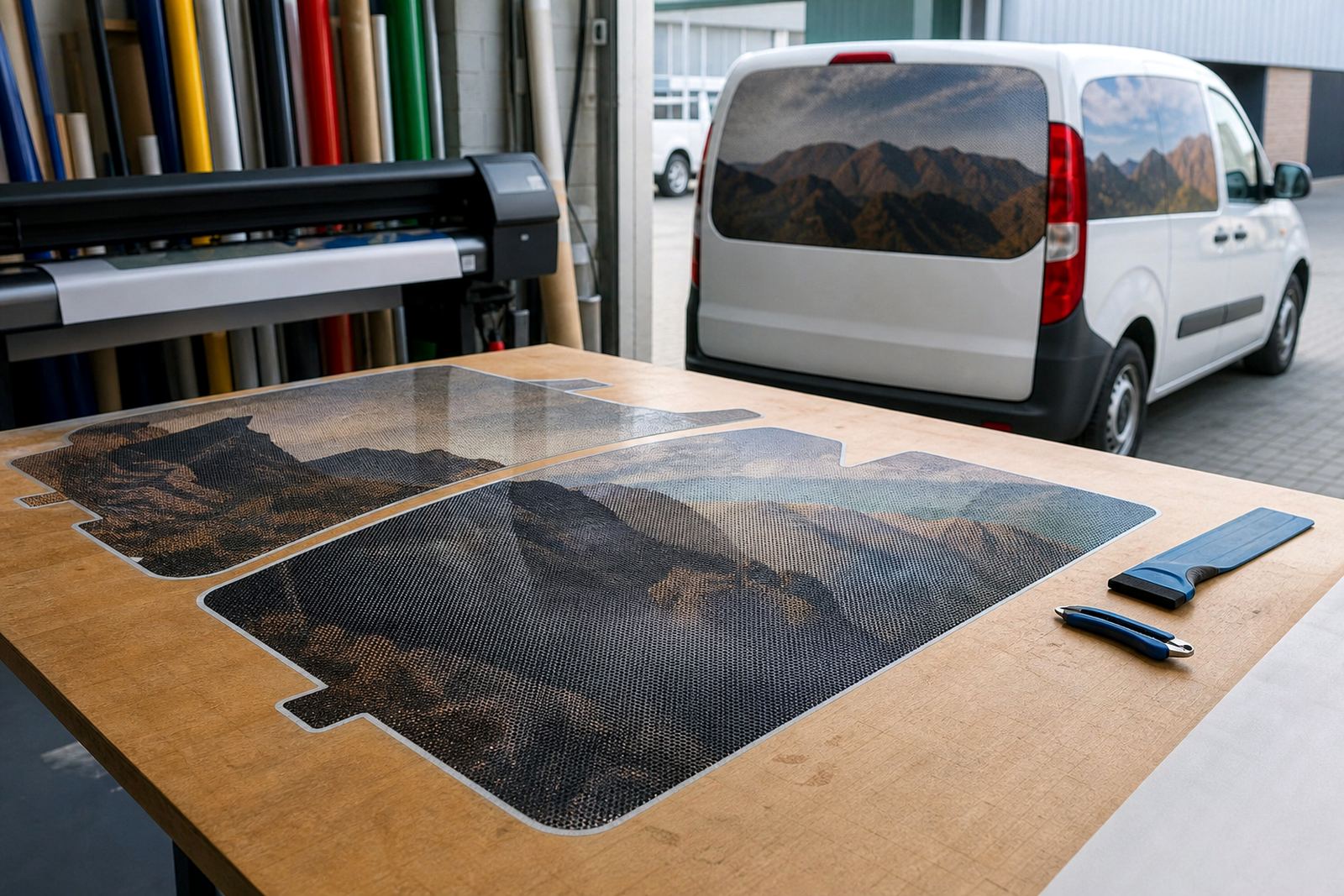
This film suits businesses that need advertising without losing the usefulness of the glass. In retail, it works well on display windows, trade counters, entry doors and internal glass partitions. On vehicles, it is often used on rear windows, side windows and panel sections where branding can be seen from outside while the driver and occupants retain a useful view. For fleets and service vehicles in Johannesburg, Pretoria and Cape Town, it gives a neat way to keep the vehicle looking active on the road.
For vehicle window film, the driver view must stay legal and current road traffic rules should be checked before ordering. Some glass areas may have restrictions on opacity, coverage or application method, and these can vary by vehicle type and use. If your vehicle is used for daily deliveries, municipal work or long-distance service calls, we will normally suggest a layout that keeps the important sightlines open and the branding where it performs best.
- Retailers needing promotional window graphics
- Service providers with street-facing offices
- Vehicle owners wanting branded rear or side glass
- Sites needing privacy without full blackout
Installation on Glass, Fleet Windows and Curved Surfaces
Glass installation starts with proper cleaning, degreasing and surface preparation. The window must be free from dust, silicone, sticker residue and any loose coating. On fresh or newly painted areas nearby, full curing time should be allowed before fitting. For vehicle work, our team can handle site measuring and vehicle templating so the artwork lines up with trims, heaters, quarter panes and window curves.
The film is applied with careful alignment and pressure to reduce bubbles and keep the perforations even across the panel. On curved or framed glass, the fitter must work methodically so the edges sit cleanly and the graphic reads correctly from outside. On-site fitment normally needs only hand tools, cleaning materials and a dry working area.
- Surface preparation before fitting
- Site measuring and accurate panel sizing
- Vehicle templating for repeat fleet work
- Old film removal where a refresh is needed
Care, Washing and Ongoing Servicing After Fitting
Once fitted, UV print film should be left to bond properly before aggressive cleaning. Gentle wiping with non-abrasive cloths and mild cleaning solution is usually enough for day-to-day care. Avoid sharp blades, harsh scourers and high-pressure washing at close range, especially on edges and seams. On shopfronts in dusty areas and on vehicles that spend time on the N1, coastal roads or site entrances, a regular clean keeps the print readable and the glass clearer.
If a panel is damaged, peeled at the corners or faded unevenly, replacement is often best done panel by panel rather than waiting for the whole set to fail. We also handle refit and refresh work when a brand changes, a branch reopens or a vehicle gets repurposed. In many cases the old film can be removed cleanly, then the glass prepared again for a new print run.
What to Check When Ordering Your UV Print Film
Before placing an order, it helps to confirm the surface type, panel sizes, visibility requirements and whether the film is for a fixed shopfront or a moving vehicle. Artwork should be checked for reading direction, logo placement, perforation layout and any text that must remain legible at a distance. If you are supplying your own design, make sure it is prepared at the correct size and resolution so the print remains sharp once applied to the perforated face.
Also check whether you need site measuring, glass installation, vehicle installation or just supply only. For businesses in Bellville, Milnerton, Montague Gardens, Johannesburg, Durban, Pretoria and Gqeberha, we can help with dispatch and the practical side of getting panels ready for fitting. The right specification upfront saves time, avoids rework and makes sure the final result suits the glass, the road and the way the space is used.
- Surface dimensions and exact fitting areas
- Indoor or outdoor exposure
- Required privacy and outward visibility
- Vehicle compliance and road use limits
- Whether lamination is needed
Key facts
| Product type | Perforated one-way vision UV print film |
|---|---|
| Print method | UV-style printing on the face film |
| Visibility | View through from inside, graphic face on the outside |
| Common perforation options | 30/70, 40/60, 50/50 open area to print area |
| Installation | Glass installation and vehicle installation |
| Service areas | Cape Town, Johannesburg, Durban, Pretoria, Gqeberha |