What Grey Back Film Is And Why It Is Chosen
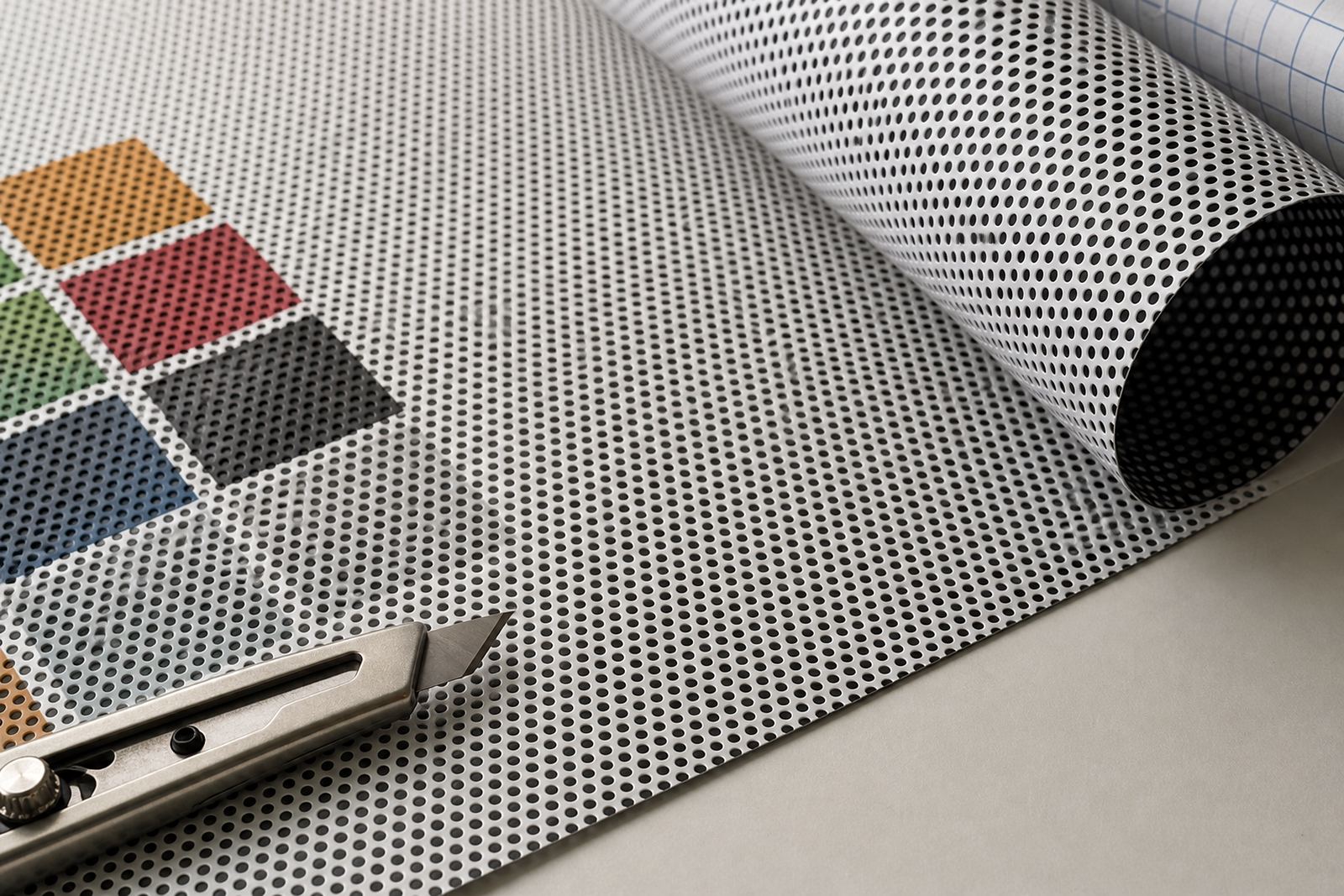
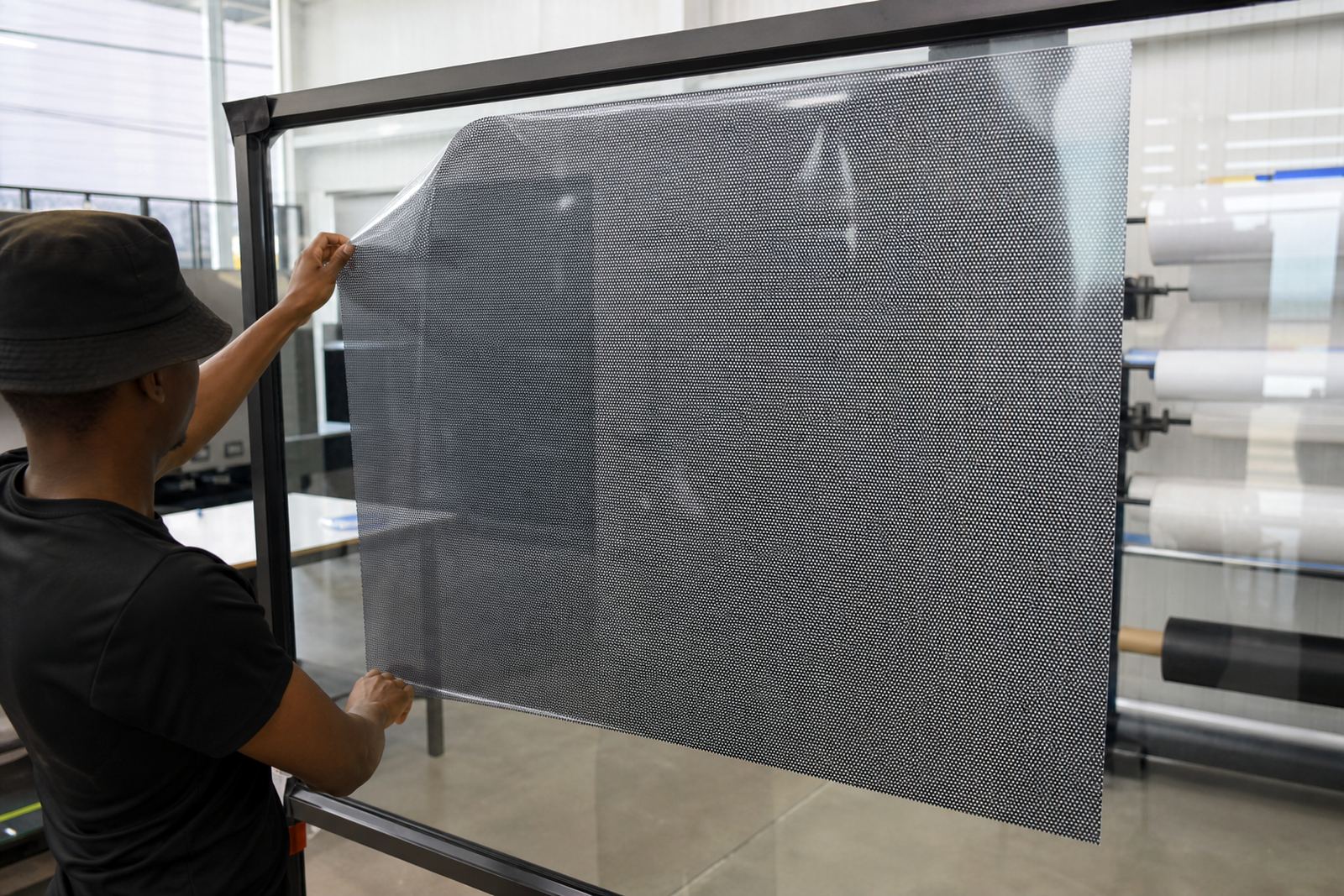
Grey-backed perforated one-way vision film is a print media with small holes across the face and a grey backing that softens the view from inside. From the outside it carries full colour graphics, while the inside view stays open enough for natural light and outward visibility. The grey back helps reduce the stark black look some people do not want on glass, especially in customer facing spaces or cab windows where a cleaner internal finish is preferred.
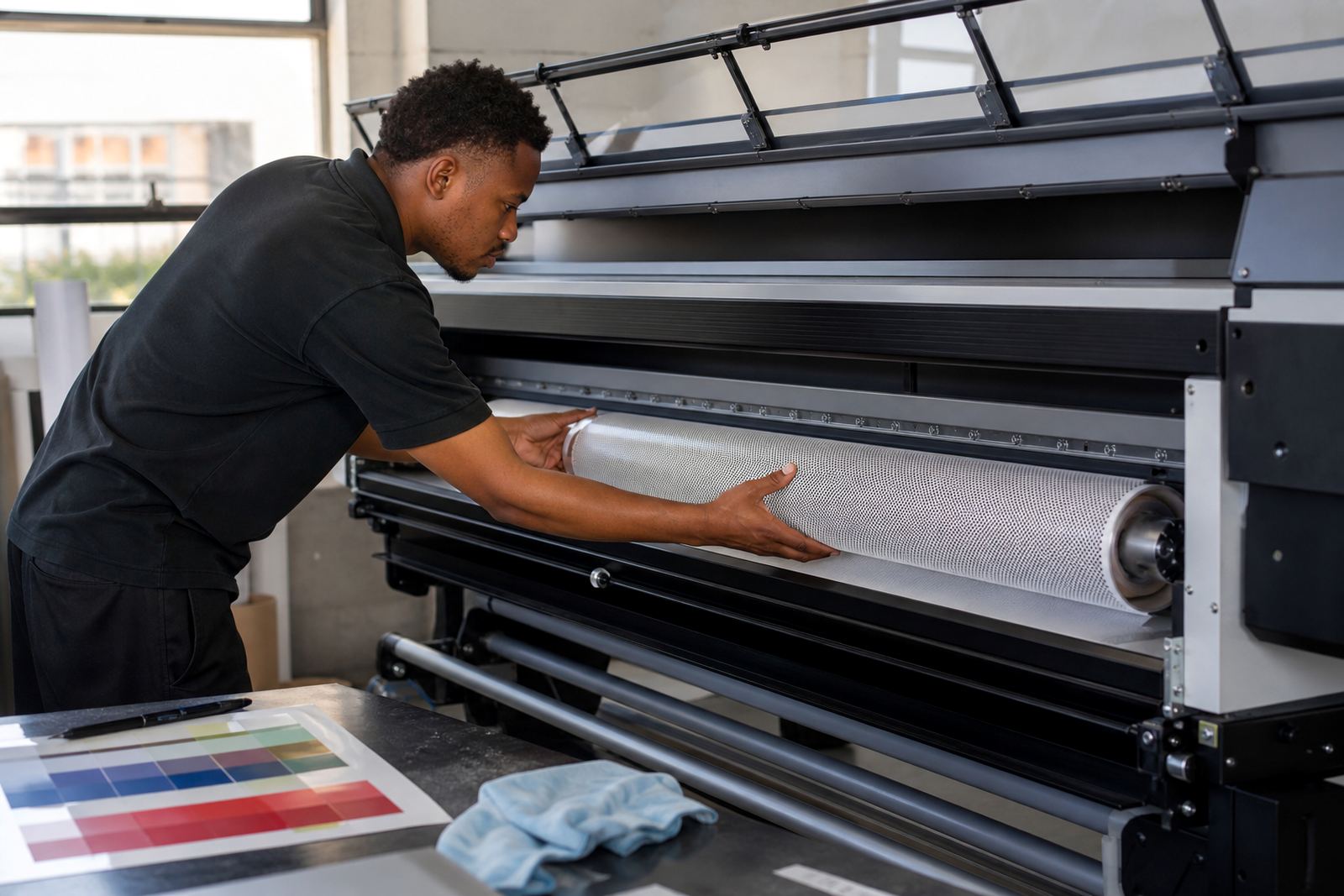
The film is normally printed on the solid face, then protected with a clear laminate where the job calls for extra scuff resistance and UV support. The exact appearance depends on the perforation ratio, print density and the glass it is applied to. On bright days it can give strong branding on the outside without closing off the space completely, although the inside view is still a filtered one, not clear glass.
Sizes, Perforation Ratios And Print Options
We work with common perforation ratios suited to different viewing needs, usually around 60/40, 70/30 and 80/20 hole to vinyl balance. A lower open area gives a stronger printed face and more privacy, while a higher open area allows a clearer inside view. The best choice depends on whether the film is going onto a shopfront, a taxi window, a panel van or a building glass section that needs daylight through the space.
- Roll widths are selected to suit the panel or window layout
- Custom cut panels can be supplied for measured glass sections
- Full colour printing is used for branding, promos and wayfinding
- Optional lamination is added where handling, washing or abrasion is expected
- Artwork can be prepared for single panels, full wraps or repeat campaigns
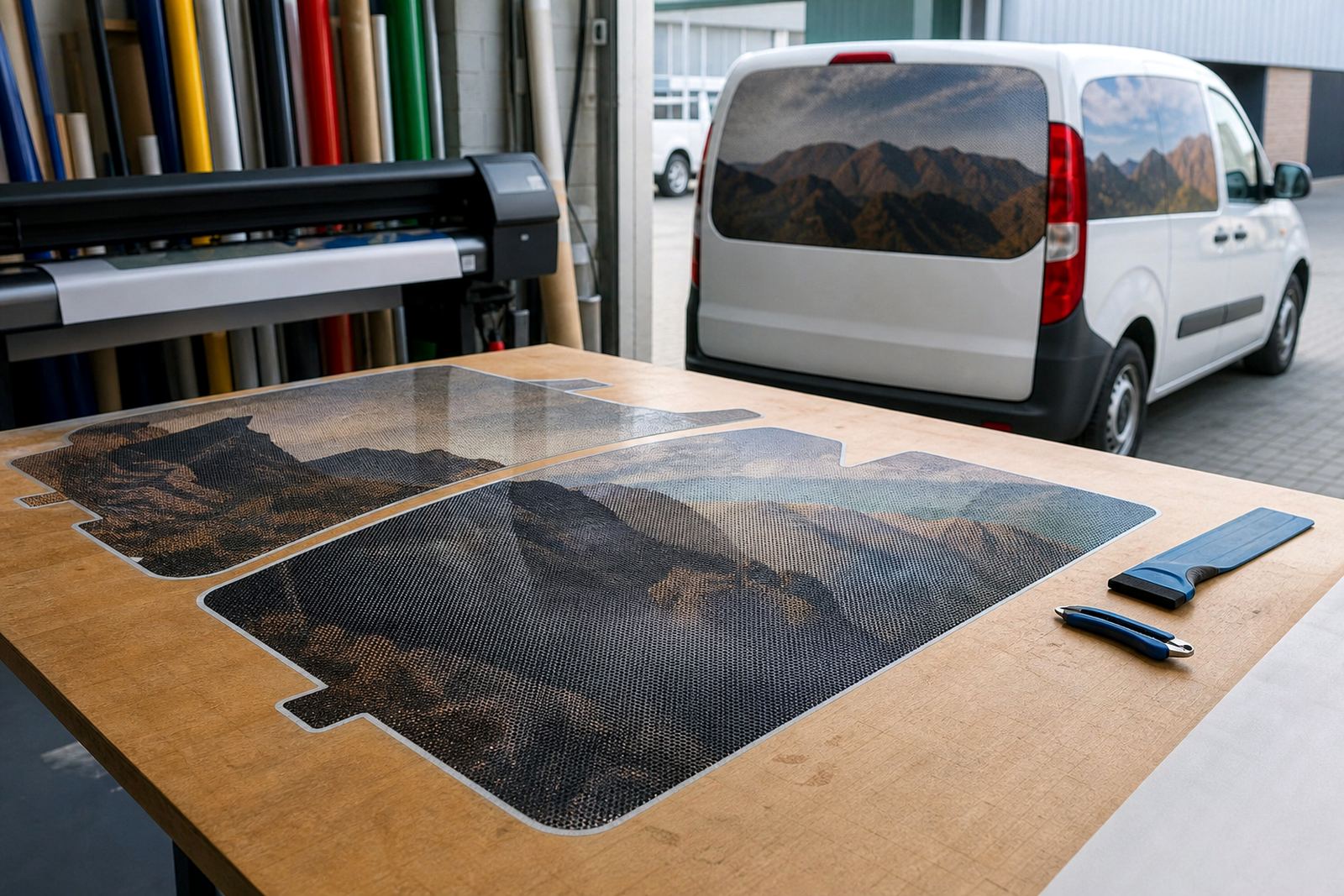
For vehicle work, the panel layout must be planned around curved glass, heater lines and window openings. That includes rear windows, side windows and split panes on vans or bakkies. If the job is for a road vehicle, the driver view must remain legal and you should always check the current road traffic rules before ordering.
Where Grey Back Film Suits Best
This product suits retail frontages, salons, clinics, offices, showrooms, food outlets and fleet vehicles that need a branded finish on glass. In Cape Town, Johannesburg, Durban, Pretoria and Gqeberha it is often chosen for street facing glass where sunlight is strong and privacy matters during trading hours. It is also useful in coastal areas where humidity and salt air can affect poorer grade adhesive products, so surface prep and correct edge sealing matter.
On buildings it works best on clean, intact glass that is not flaking, cracked or covered in loose tint residue. On vehicles it suits side and rear windows where the film can be fitted without interfering with the driver line of sight or window operation. Municipal signage rules, landlord rules and centre management rules can all affect what may be installed, so those checks should happen before production starts.
- Shopfront glass with direct street exposure
- Office glazing that needs branding without heavy blackout
- Delivery vans, service vehicles and bakkies
- Temporary campaign graphics and seasonal promotions
- Rebranding over existing clean glass after old film removal
Installation And Site Requirements
Glass installation starts with site measuring, surface preparation and a check for contamination such as dust, silicone residue or old adhesive. The film is applied wet, then squeegeed down and trimmed to the edges or into pre-cut panels. For vehicle installation the same care applies, but extra attention is given to heater wires, opening panes and weather seals. If old film is being removed first, the surface must be fully cleaned before refitting.
A fitting area with water access, clean cloths and enough space to work properly is helpful. On site, installers may need a shaded area or indoor bay to keep dust down and to manage wind. In some cases, a service vehicle is used for print handling or finishing equipment, although the install itself does not depend on permanent connections.
Freshly applied film should not be stressed too soon. Windows should stay closed during the first curing period, and vehicle glass should not be scrubbed or rolled down until the adhesive has settled. If the job is done in hot weather or near the coast, extra drying time may be needed and that is normal.
Care, Cleaning And Refit Work
Grey-backed perforated film is practical, but it still needs basic care. Clean it with a soft cloth, clean water and a mild detergent. Avoid blades, abrasive pads and harsh solvents, because these can damage the print or lift the laminate edges. On vehicle windows, pressure washers should be kept at a safe distance and never aimed directly at the edges.
For shops and fleet vehicles that are updated often, refit and refresh work can include old film removal, surface preparation and new artwork installation. If the same glass is being reused, it should be checked for adhesive shadowing, scratches or tint that may affect the new finish. Regular cleaning helps keep the viewing holes clear and the graphics sharp, especialy on busy roads where dust builds up fast.
- Wait for full curing before washing or rolling windows down
- Use mild soap and soft cloths only
- Check edges after the first heat cycle or long trip
- Book removal before refitting if the existing film is brittle
- Keep mirrors, sensors and window mechanisms clear on vehicles
What To Check Before You Order
Before ordering, check the glass type, the size of each panel and whether you need internal privacy, outward branding or both. Confirm the application surface, because curved glass, textured glass and damaged glass can change the result. If the film is for a vehicle, confirm which windows will be covered and whether the driver must retain a clear legal view. For buildings, confirm any landlord, mall or council rules that may affect exterior graphics.
It also helps to confirm the artwork format, the colours to be printed, and whether lamination is needed for extra protection. If you need the film for multiple branches, we can measure the site, set up the artwork, print, laminate and dispatch nationally from Montague Gardens, Cape Town. That keeps the finish consistent across branches in Bellville, Milnerton and other areas, while still allowing local install planning where needed.
- Glass size and exact panel count
- Perforation ratio and level of inside visibility
- Printed or plain finish
- Need for lamination
- Vehicle or building use
- Any rule, tenancy or road legality checks before fitment
For pricing, lead times and the best setup for your site or fleet, use the enquiry form on our contact page and send through your measurements or photos.
Key facts
| Product type | Grey-backed perforated one-way vision film |
|---|---|
| Common perforation ratios | 60/40, 70/30 and 80/20 options |
| Use areas | Shopfront glass, office glazing and vehicle windows |
| Finish | Printed outer face with grey-backed internal appearance |
| Application methods | Wet application to clean glass, cut-to-size panels or full sheets |
| Services available | Site measuring, artwork setup, colour proofing, printing, lamination, glass installation, vehicle installation, old film removal and nationwide dispatch |