Printed Panels Cut to Your Glass Layout
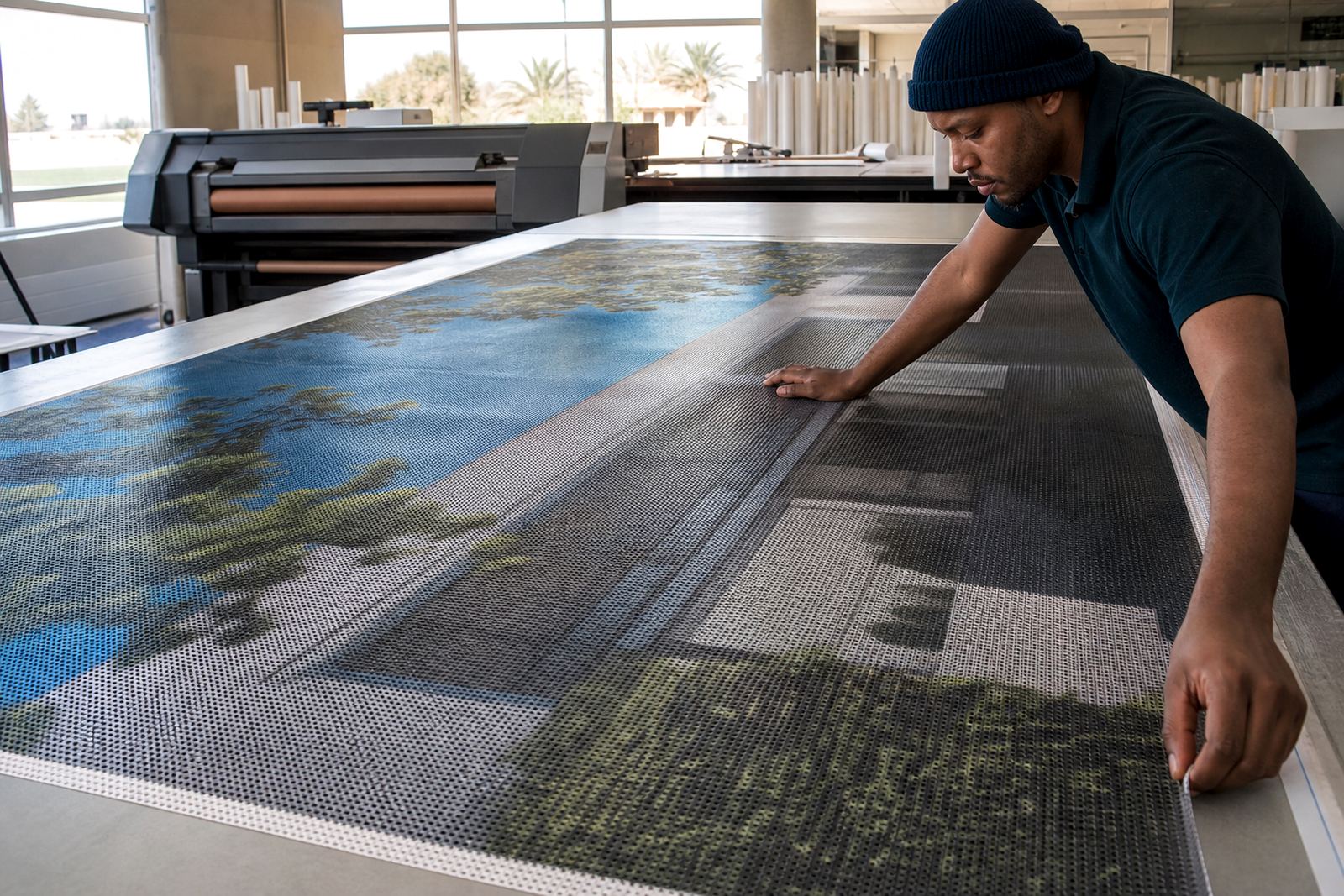
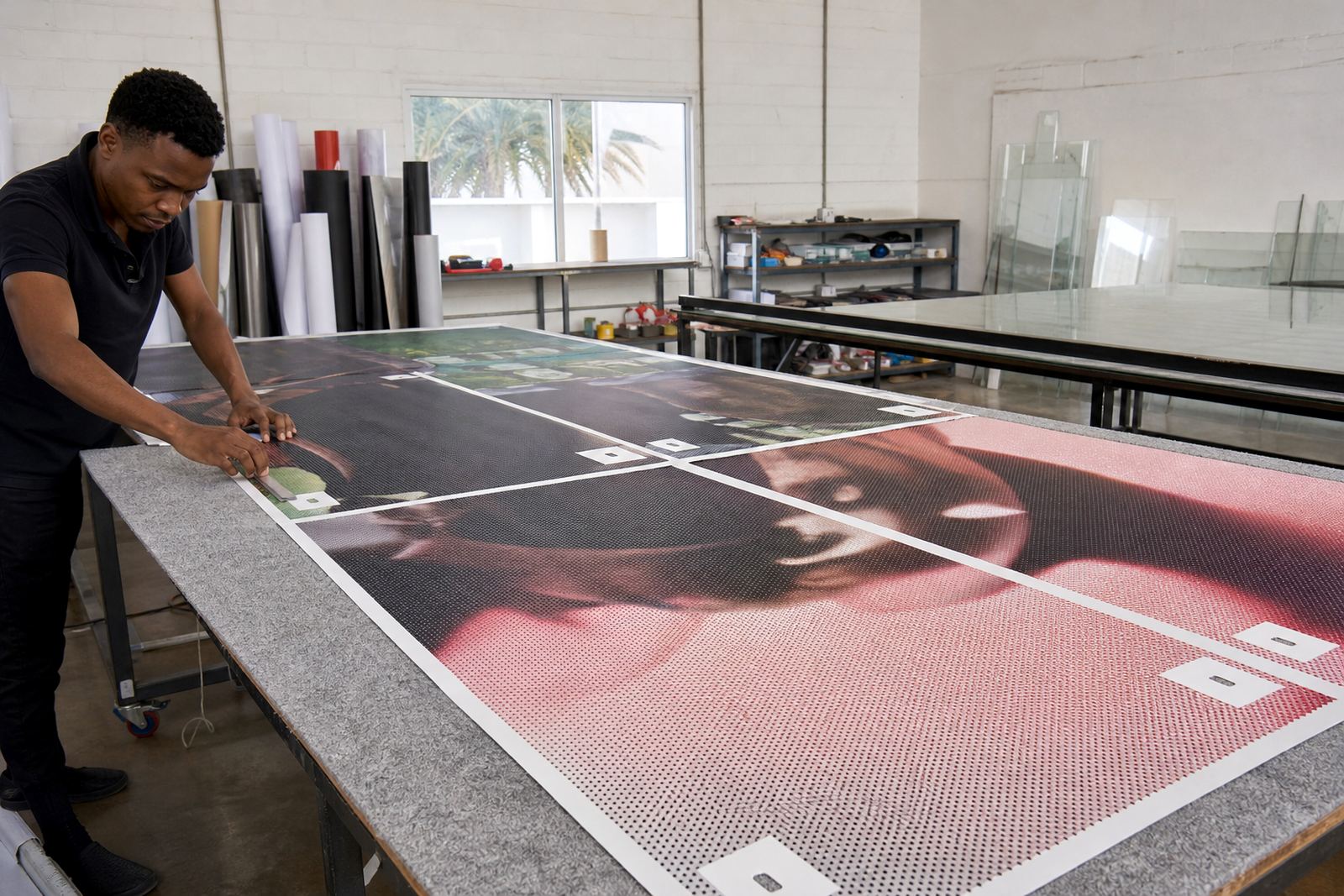
Shopfront film panels are made as custom-sized printed pieces for each pane of glass, rather than one long blanket sheet across the full frontage. That approach helps when a site has mullions, uneven window widths, doors, corner glazing or display windows that need different artwork on each section.
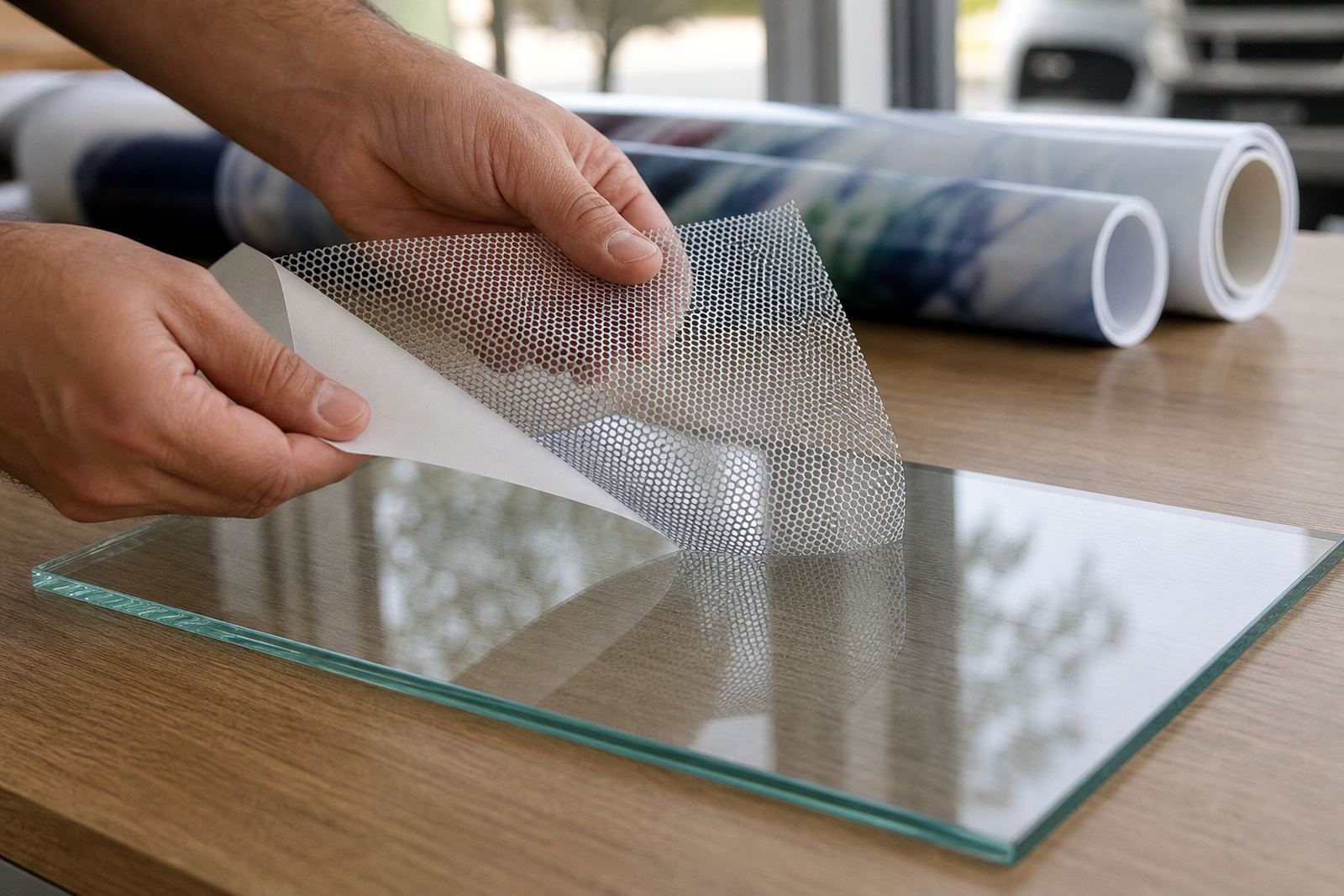
The film itself is a perforated one-way vision material with a printed face and adhesive backing. Common perforation ratios include 70/30, 60/40 and 50/50, with the choice affecting how much graphic area you get and how much visibility remains from the inside. Smaller holes can give a denser printed look, while a more open ratio can improve viewing through the glass from indoors.
For retail glazing, the artwork is usually scaled to each pane so lettering, logos and product images land correctly behind the frame lines. That makes a cleaner result and reduces awkward joins across doors or fixed panels.
- Custom cut to pane sizes
- Perforated film for printed branding and indoor visibility
- Suitable for glass with separate panes, doors and side lights
- Artwork planned around mullions, handles and sight lines
Sizes, Film Options and Print Build
Panels are prepared from site measurements and can be supplied for small frontage windows or larger retail runs. Typical panel widths and heights are set by the glass rather than a fixed stock roll, so the final size depends on the pane layout at your premises. Where needed, panels can be produced with a small overlap or trimmed edge to help with alignment during fitting.
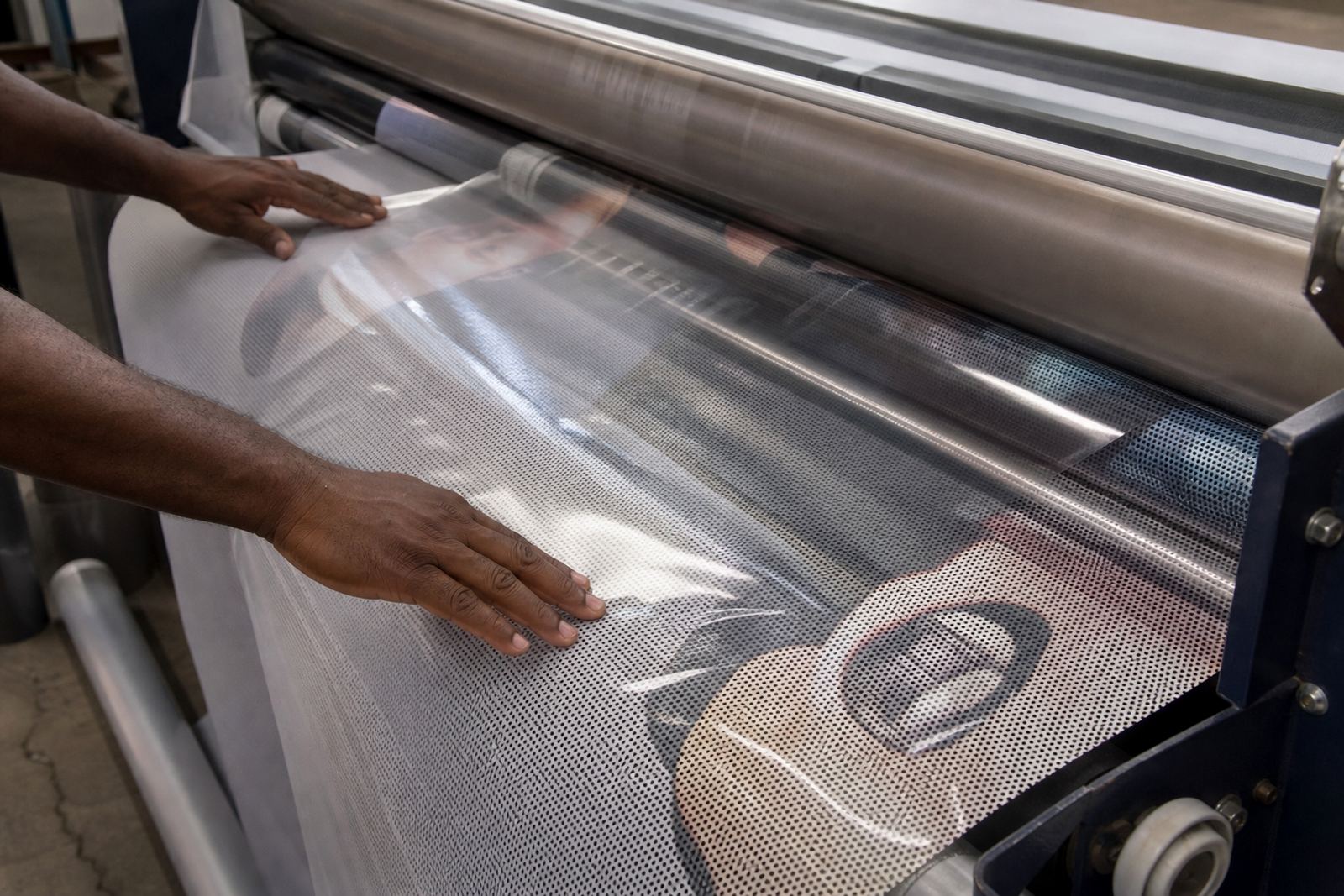
The print process is generally wide format printing onto perforated film followed by lamination where the job calls for extra surface protection. Lamination can help the printed face cope better with sun, cleaning and general shopfront wear. For exterior facing glass, the film is selected and finished so it can handle local conditions such as strong sun, sea air in coastal areas, and dust from road traffic.
On vehicle windows, the same basic material is used differently. Rear and side windows on vans or service vehicles often take perforated panels for advertising, but the driver view must stay legal. Check the current road traffic rules before ordering any vehicle window coverage, especially for front side windows and anything that may affect mirror visibility.
- Printed on perforated one-way vision film
- Optional lamination for added surface protection
- Exterior glass and selected vehicle windows
- Sizes based on measured panes, not standard poster sizes
Where Shopfront Film Panels Work Best
This product suits retailers, salons, medical reception areas, motor accessory shops, showrooms, fuel stations and service counters that want visible branding without covering every part of the glass. It is also useful where the front needs to stay bright from the inside while the outside must carry a strong message.
Shopfront film panels are a practical choice for stores in busy centres, roadside sites and mixed-use buildings where passing foot traffic, vehicle traffic and municipal signage rules all matter. They can help manage direct views into a till point, stock area or waiting area while still allowing staff to see out.
In Cape Town, Johannesburg, Durban, Pretoria and Gqeberha, the material is often used where a business needs a tidy frontage that can be refreshed later without replacing the whole window system. The panels are also suited to refits, seasonal campaigns and new tenant handovers.
- Retail windows and glass doors
- Reception areas and service counters
- Roadside premises and forecourts
- Refits, promos and regular branding updates
Installation, preparation and site readiness
Glass film installation begins with clean, dry glass and proper site preparation. Old film, adhesive and dust must be removed first, then the pane is cleaned so the film can bond as intended. At some sites, the installer may need access to water, a nearby sink and enough light for fitting and finishing tools. If the frontage is high or awkward, ladders or access gear may also be required.
For shopfront panels, fitment is usually planned around trading hours so the entrance can stay open as long as possible. If a business operates in a mall, on a street frontage or inside a shared building, the installation may need to follow centre rules or landlord approval. That can include working times, safe access, masking requirements and waste removal.
For vehicle installations, the same care applies with surface prep and temperature control. The glass should be free from wax, grease and residue, and the vehicle should be parked where the film can settle properly after application.
- Clean glass and remove old film before fitting
- May need water and safe access equipment
- Can be scheduled around trading hours and centre rules
- Vehicle fitment needs dry, clean glass and controlled conditions
Care, Cleaning and Ongoing Servicing
Once fitted, the film should be left to bond fully before heavy cleaning or scrubbing. Gentle washing with a soft cloth and mild cleaner is usually best. Avoid sharp blades, abrasive pads and harsh solvents, because these can scratch the printed face or lift the edge. In hot coastal areas, regular cleaning helps reduce salt build-up on the glass and keeps the print readable.
Shopfront film panels can be serviced later if a pane needs a refill, a section peels, or the branding changes. Old film removal, surface preparation and refit and refresh work are common when businesses update a range, shift a promotion or rebrand a site. If the glass is damaged or has residue from previous film, it should be checked before a new panel is printed.
Good care starts with correct installation, but it also depends on day to day handling. Staff should avoid pushing posters, tape or suction items against the printed face, since that can mark the film and shorten its working life.
- Use mild cleaner and a soft cloth
- Do not scrub the printed surface
- Allow proper curing before washing
- Plan for later removal or refresh when branding changes
What to Check Before You Order
Before ordering, measure each pane carefully and note where mullions, handles, vents, opening sections or decals will sit. It helps to decide whether the job is for full pane coverage, partial coverage or a mix of both. If the site has curved glass, frosted glass, or heavy tint already in place, the final effect should be checked first.
You should also confirm the artwork size, the intended viewing direction, and whether the panel is for a shopfront or a vehicle window. For vehicles, check that the driver view remains legal under current road traffic rules and that rear visibility and mirrors still work as required. If the business is in a mall, on municipal property, or near regulated signage zones, approval may be needed before installation.
When the brief is clear, the next steps usually include site measuring, artwork setup, colour proofing, wide format printing, film lamination if needed, and then glass installation or vehicle installation. That keeps the panels accurate, tidy and ready for dispatch across South Africa.
- Measure every pane individually
- Confirm glass type and opening sections
- Check artwork scale and viewing direction
- For vehicles, confirm legal visibility requirements first
Key facts
| Product type | Printed perforated one-way vision shopfront panels |
|---|---|
| Perforation options | Common ratios include 70/30, 60/40 and 50/50 |
| Print method | Wide format printing with optional lamination |
| Fitment areas | Glass doors, shopfront windows, side lights and selected vehicle windows |
| Preparation services | Site measuring, old film removal, surface preparation and artwork setup |
| Supply areas | Montague Gardens, Cape Town, Johannesburg, Durban, Pretoria and Gqeberha |