What unlaminated vision film is used for
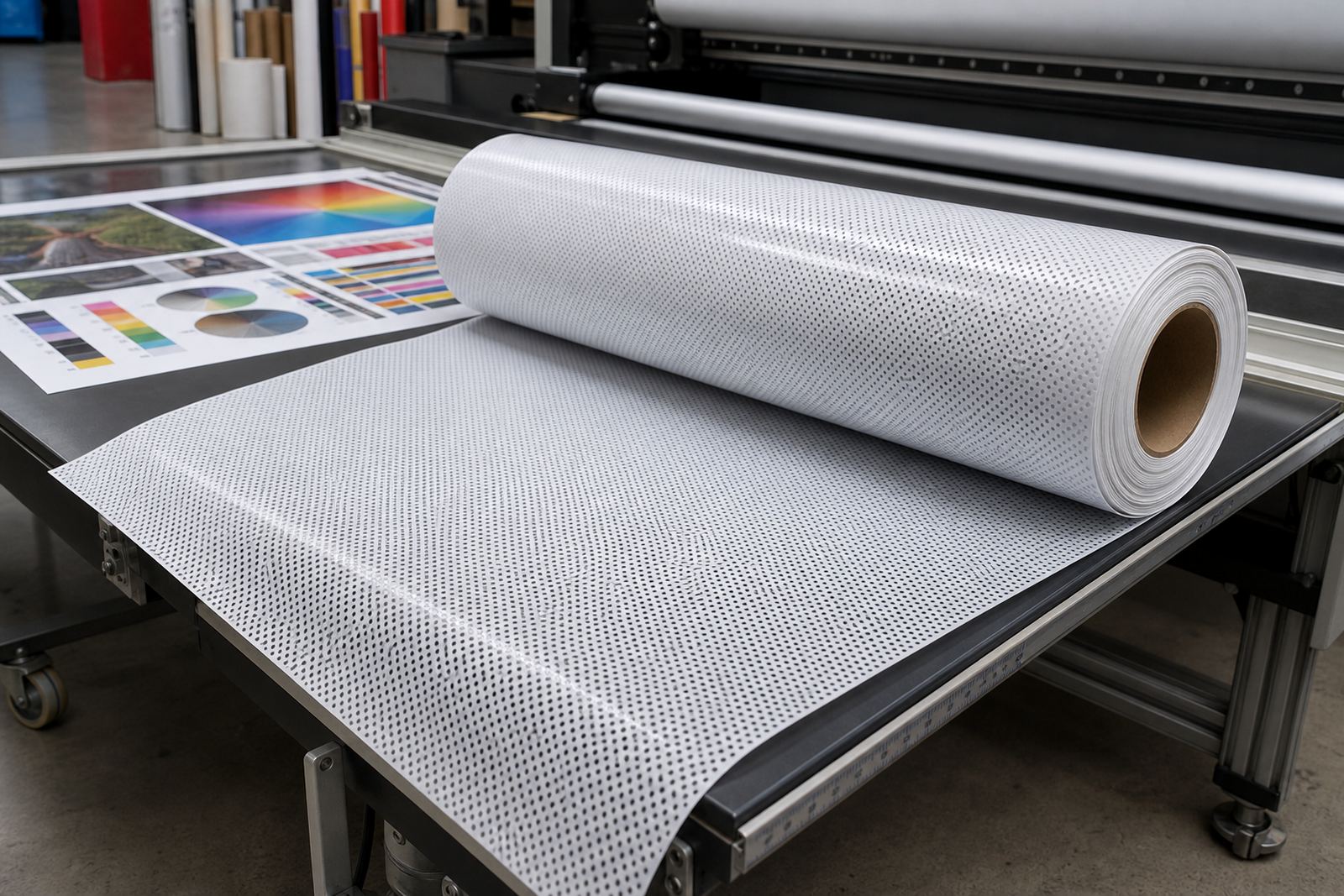
Unlaminated perforated vision film is a printed window graphic made from a PVC film with a fine pattern of holes. From the outside, the print gives you a full colour branded image. From the inside, the perforations let natural light through and maintain outward visibility, although the view is always slightly softened by the print coverage and hole pattern.
This product is commonly used on shopfront glass, office glazing, internal partitions and vehicle side windows. The unlaminated option is best when the film will not face heavy abrasion, frequent washing with harsh chemicals, or long exposure to coastal spray and road grit. In places like Montague Gardens, Bellville and Milnerton, it can be a tidy, cost-conscious solution for short to medium term campaigns or indoor graphics that need a clean printed finish.
The print is usually applied on the outside face for correct viewing direction, then the film is cut to size and installed with a wet application method. On glass, careful edge finishing matters because dust, silicone and old adhesive can affect adhesion. On vehicle windows, the layout must allow for legal sight lines and safe reversing, especially for the driver. Always check current road traffic rules before fitting any window film to a vehicle, since legal requirements can change.
Sizes, perforation ratios and finish choices
Perforated vision film is supplied in standard roll widths, with custom cutting for each job. Common widths are suitable for both small retail panels and full side windows on bakkies, delivery vans and minibuses. Because every installation is measured first, the final panel size can be trimmed to suit window frames, rubber seals and rear screen curves.
Typical perforation ratios include 50/50, 60/40 and 70/30. These figures describe the balance between open area and printed face area. A tighter print face gives a stronger outside image, while a higher open area can improve outward visibility from inside. The right choice depends on the site, the lighting and how much privacy or visibility you need. For bright shopfronts in Cape Town or Durban, the best option may differ from a shaded office window in Pretoria.
- 50/50 ratio: stronger image coverage, useful where outside branding takes priority
- 60/40 ratio: balanced option for many retail and vehicle uses
- 70/30 ratio: improved visibility from inside, suitable for some driver side or rear window applications
- Custom cut panels: matched to measured glass sizes, curves and frame gaps
Unlaminated film has a matte printed face once installed, with the perforation pattern still visible up close. It is not the same as ordinary opaque vinyl, because it relies on the contrast between light inside and darker outside conditions. That means placement and lighting are important, and a site with strong exterior glare may need a different approach. Small typo aside, careful planning is worth it.
Where this option suits best
This unlaminated option suits indoor or lower-demand applications where the graphic will not be scrubbed often or exposed to hard weather. It works well for internal glass, temporary promotions, sheltered shopfront panels, and vehicles that are mainly parked or used for local work. In Gauteng and coastal cities alike, it is often chosen when the job needs clear branding without a thick protective layer.
It is less suited to heavy-duty exterior use where the film will be touched frequently, cleaned with pressure equipment, or face daily abrasion from sand and salt air. For exposed windows on the seafront, a laminated finish may be the better choice because it adds a layer over the print and helps with cleaning. If the application is inside a mall, office foyer, or protected entryway, unlaminated film can be perfectly practical.
- Shopfronts with sheltered windows
- Internal office glass and meeting rooms
- Promotional vehicle windows for controlled use
- Temporary advertising for events, specials or launches
- Refit and refresh work where old film is being replaced
For retail sites, it can also be used as a privacy aid after trading hours. The outside face carries the branding while the inside view remains usable during daylight. At night, though, artificial lighting inside the premises can reduce the one-way effect, so this should be considered during planning.
Printing and colour setup for clean results
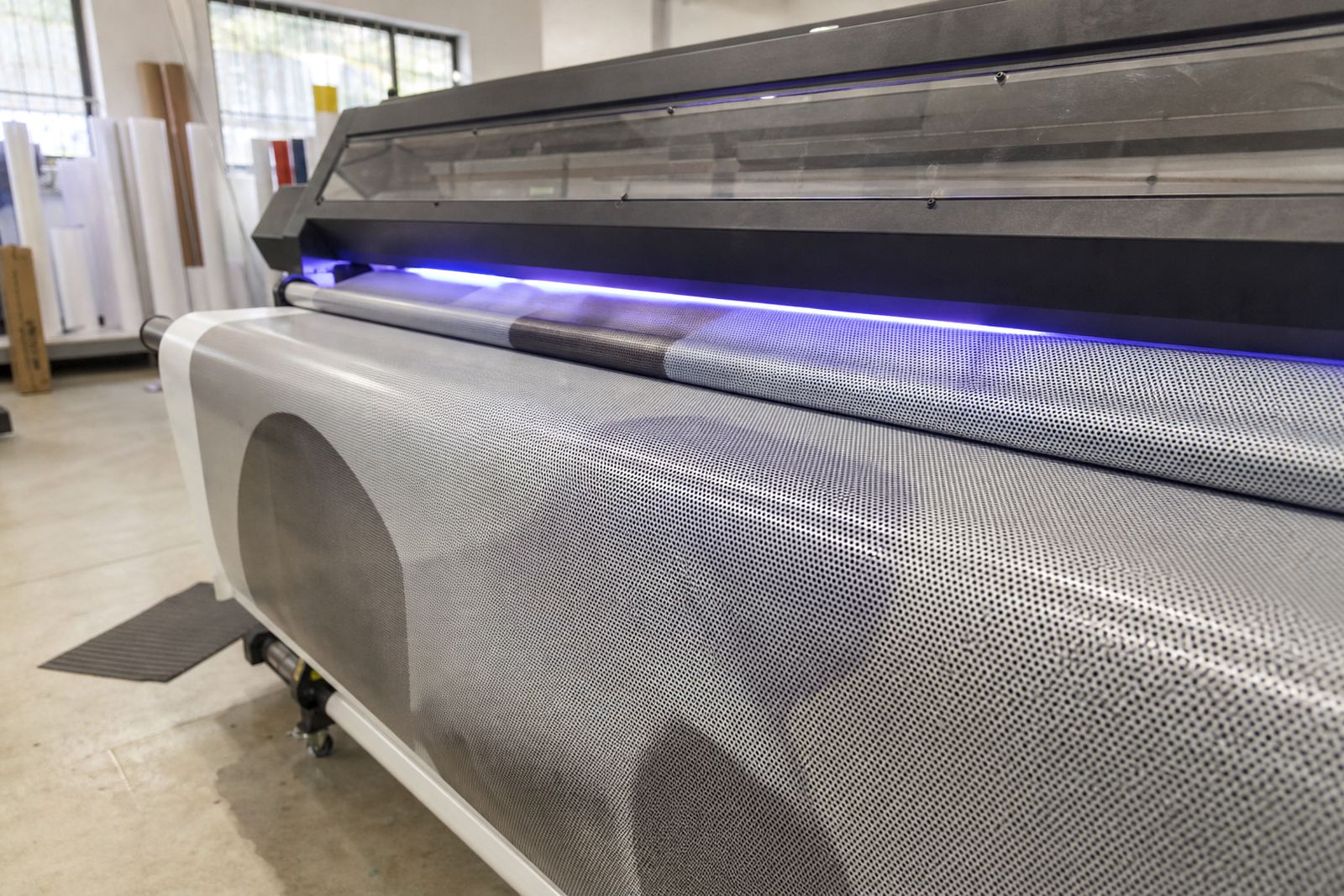
Vision film is printed in wide format using artwork prepared for the perforation pattern. Because the tiny holes break up the image, solid colours, strong logos and clear lettering generally read better than fine detail or small text. For that reason, artwork setup needs careful checking before print, especially on shopfronts where passers-by may only have a few seconds to read the message.
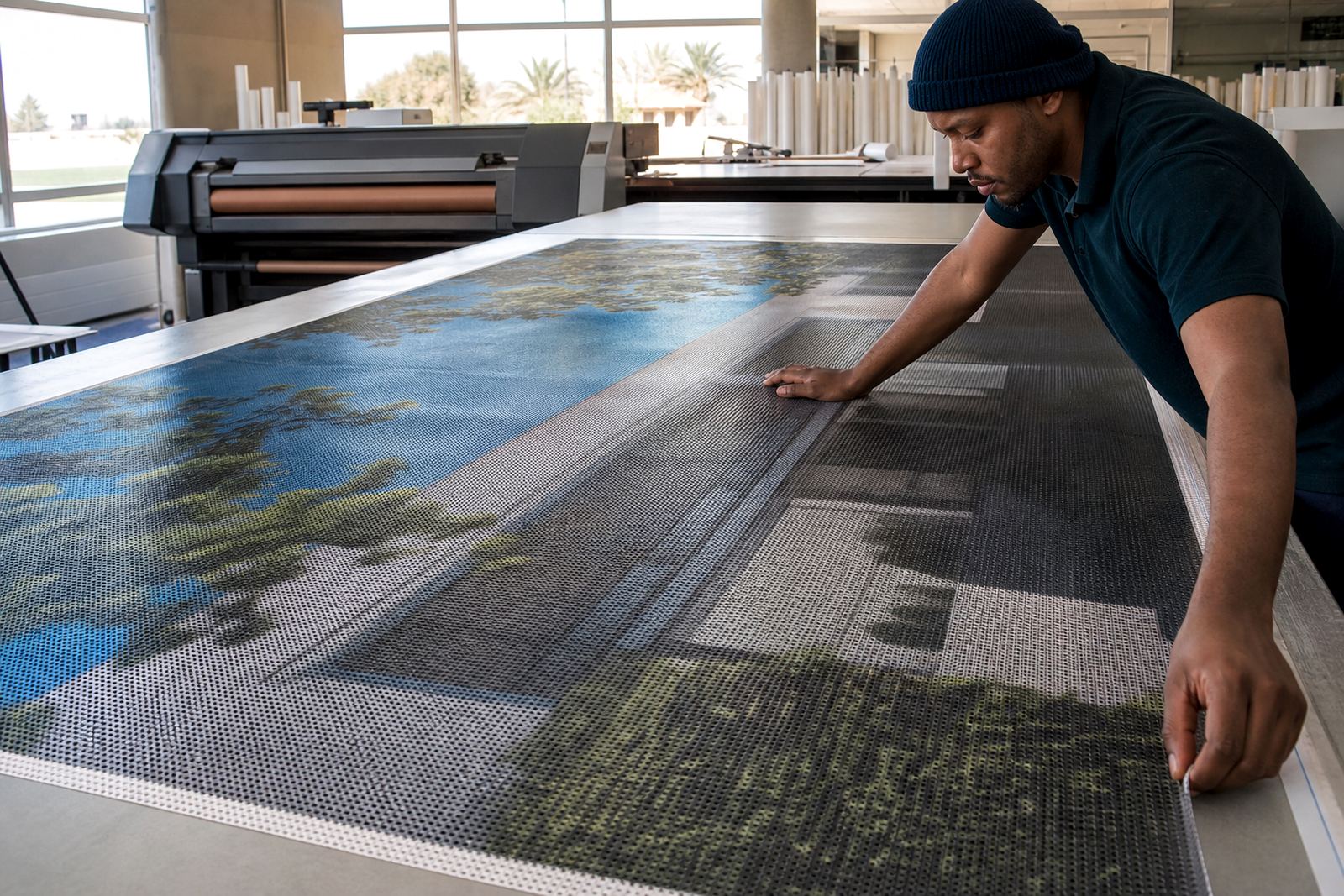
Good production starts with colour proofing, panel planning and correct scaling. If a design wraps across several windows, the joins should be mapped in advance so the image lands neatly over mullions, rubber seals and window handles. For vehicles, templating is important since rear side glass and back windows are rarely standard size from one make to another. Our print production team also checks that the image direction, bleed and cut lines are correct before dispatch.
When ordering, ask about the level of detail in your artwork, the viewing distance and the way the film will be seen at different times of day. Bright daylight, shaded loading bays and night trade all affect how the film reads from the street. If the graphic needs to perform from close range, it is worth keeping the design clean and legible rather than trying to force tiny copy onto a perforated surface.
Installation on glass and vehicle windows
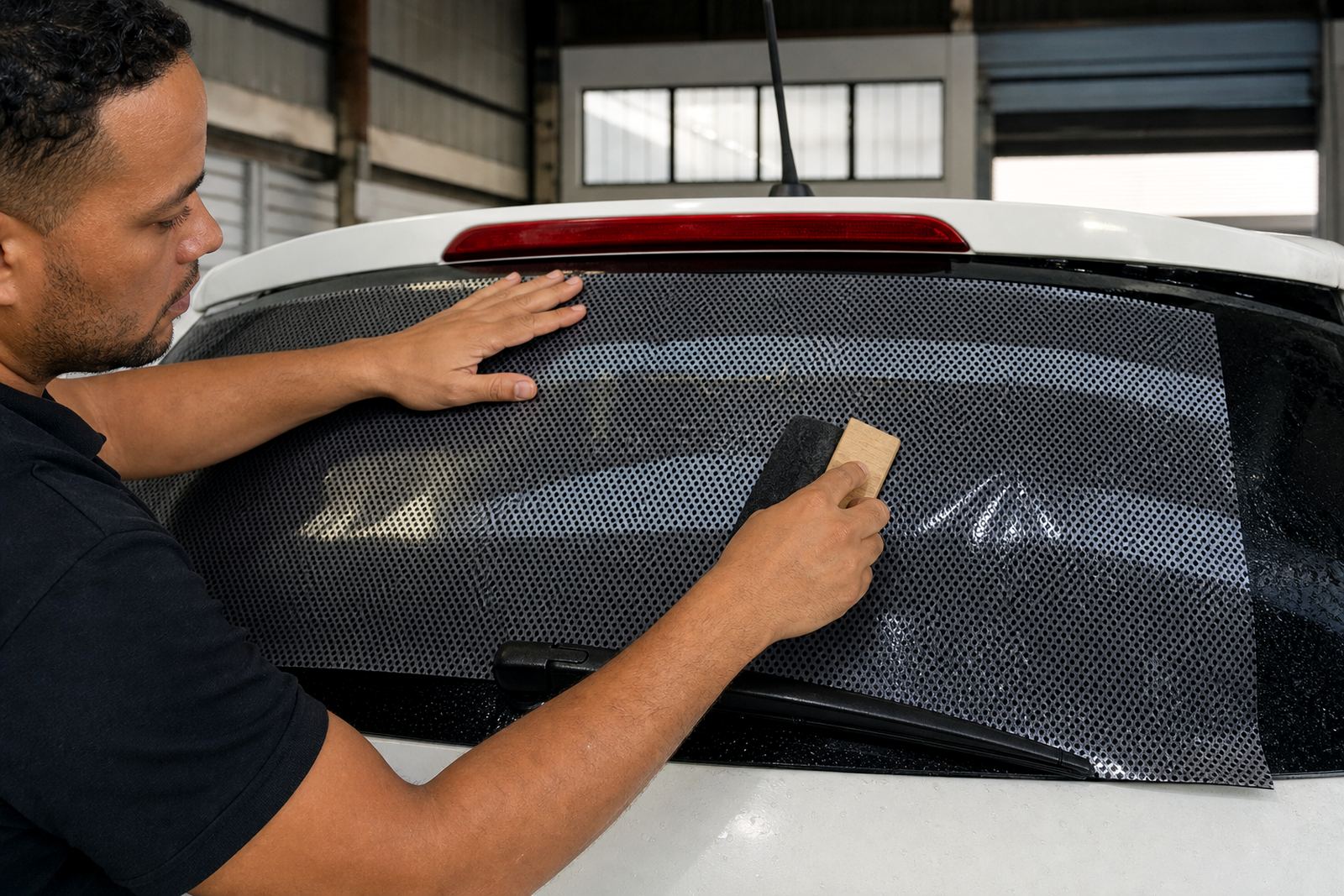
Installation starts with site measuring or vehicle templating, followed by surface preparation and a dry fit check. Glass must be clean, dry and free of silicone residue, dust and old adhesive. On vehicles, the installer also needs to work around the window seals, heating lines and any slight curvature in the glass. A careful fit makes all the difference to the final finish.
Unlaminated film is usually applied with a wet method so the film can be slid into position before final squeegeeing. Edge trimming must be neat, especially on framed glass where exposed corners can lift later. For vehicle applications, it is important not to block required driver visibility and to keep the print clear of areas needed for safe operation. Current road traffic rules should be checked before fitting the film, since compliance is the owner’s responsibility.
- Allow the glass to cure fully before cleaning
- Keep the film free of dust during application
- Avoid peeling edges when fitting near seals or rubbers
- Check line of sight for mirrors, reversing and lane changes
- Confirm whether the job is for front, side or rear windows
Depending on the site, installation may need simple access equipment, enough light for fitting, and in some cases a basic water supply for cleaning and wet application. For larger commercial sites, a planned install outside trading peaks can help reduce disruption to staff and customers.
Care, servicing and when to replace it
Unlaminated vision film should be cleaned gently with a soft cloth or sponge and a mild, non abrasive cleaner. Strong solvents, rough pads and high pressure washing can damage the printed face and affect the perforations. On coastal routes such as Gqeberha, salt build-up should be wiped off regularly instead of left to dry on the film. In dry inland areas, dust and traffic film can also collect fast.
If a panel begins to lift, the edge can often be checked before the problem spreads. For shopfronts, damage may show first at corners or along the bottom edge where people bump the glass with trolleys and crates. On vehicles, constant opening and closing of windows can shorten service life. If a campaign changes, or if the surface has dulled too much, old film removal and refit and refresh work can be arranged.
It is also worth checking the state of the glass before reusing the same area for a new graphic. Adhesive residue, scratches and chips will show through the next installation if they are not dealt with first. A proper surface clean and inspection can save time later, and it helps the new panel sit flat.
What to check before ordering
Before ordering, measure the visible glass area, note any handles, heating lines or sensors, and decide whether the film is for inside or outside face application. You should also know whether the job is for a shopfront, office partition or vehicle window, since each use has different sight line and installation needs. If the panel is going onto a vehicle, confirm the legal position for that window before production starts.
- Exact window sizes and quantity of panels
- Perforation ratio required for visibility and branding
- Print direction and whether the graphic reads left to right or right to left
- Whether the surface is glass, tinted glass or vehicle glazing
- Need for site measuring, artwork setup or colour proofing
- Whether removal of old film is included before new fitting
From our Montague Gardens base, we supply and install across Cape Town, Johannesburg, Durban, Pretoria and Gqeberha, with service into Bellville and Milnerton as well. If you need a practical unlaminated option for a controlled environment, this product gives you a clean printed face with one-way visibility and straightforward handling. The best result comes from good measurements, sensible artwork and a careful install on the day.
Key facts
| Material | Perforated PVC vision film for printed one-way viewing |
|---|---|
| Perforation ratios | Common options include 50/50, 60/40 and 70/30 |
| Print method | Wide format print with artwork matched to the perforation pattern |
| Protection | Unlaminated, for lower-demand or indoor use |
| Application | Glass installation and vehicle window installation |
| Service areas | Cape Town, Johannesburg, Durban, Pretoria, Gqeberha and surrounding areas |