Made for curved glass that still needs a clean finish
Curved glazing asks for more than a standard flat panel. The film must follow the shape without bridging, lifting at the edges or distorting the print too much. That is why curved window film is prepared with careful templating, correct panel sizing and a fitting plan based on the actual radius of the glass, not just a rough measurement.
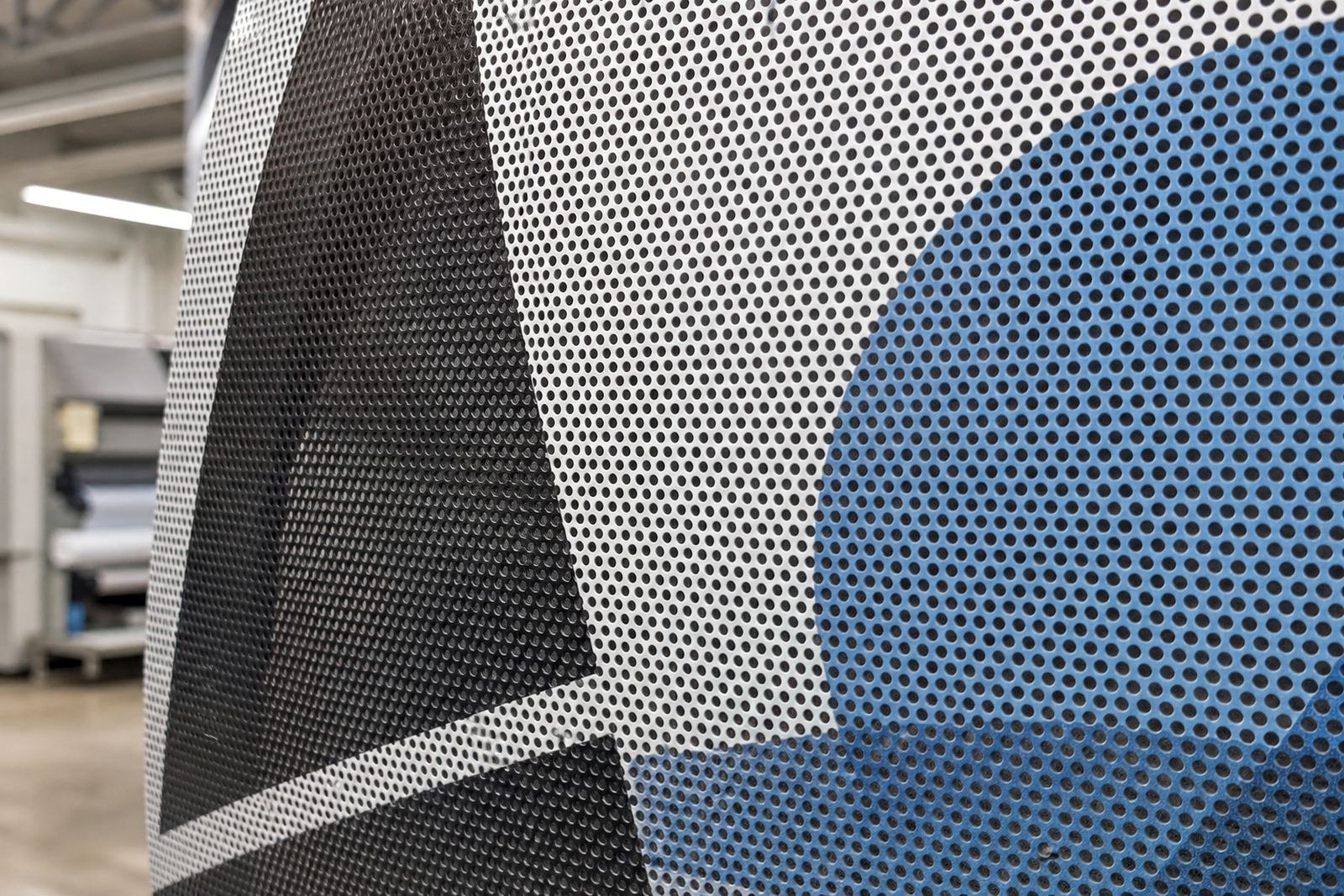
Small perforations run through the printed face of one-way vision film. Common perforation ratios include 40/60 and 50/50, with the first figure showing printed face area and the second showing open area. In simple terms, a tighter print face gives stronger graphics outside, while a more open pattern can help with visibility from inside. The right choice depends on the glass size, viewing distance and how much light comes through the window.
For curved windows, good prep matters as much as the print. Glass must be clean, dry and free of wax, silicone and old adhesive residue. Where there is existing film, it usually needs full removal before new work starts. On shopfronts in coastal areas like Cape Town and Gqeberha, moisture and salt can affect adhesion if the surface is not prepared properly, so the fitting process needs to be careful from the start.
Sizes, print options and finishing choices
Curved window film is usually supplied in made-to-measure panels rather than a single standard sheet. The final cut depends on the window width, height, frame depth and how tight the curve is. On vehicles, the side and rear window shapes are checked separately because each glass section can curve differently.
- Perforation ratio options for different visibility and print density needs
- Custom print for logos, services, promotions or full coverage graphics
- Lamination for added protection against scuffing, washing and UV exposure
- Panel sizing for small retail panes, large shopfront curves and vehicle glass
- Matte or gloss finish depending on the visual effect and site lighting
Because the film is printed to order, artwork setup and colour proofing are important. Dark colours, fine text and thin lines need checking before print so they still read clearly once they are viewed through perforations. For curved panes, it is also worth avoiding extremely detailed artwork near edges where the film may need trimming to suit the curve.
Where curved one-way vision film works best
This product suits shops, salons, forecourts, showrooms, offices and vehicle fleets where glass is slightly curved but still needs branding. It is useful on reception windows, feature glazing, display cabinets with large panes and taxi or shuttle windows, depending on the glass layout and the relevant road rules.
On vehicles, the main point is that the driver must keep a legal view. That means the chosen film, its placement and the amount of coverage must comply with current road traffic rules. If the film is being applied to side or rear windows, the vehicle use must be checked before print and fitment, especially where tint, demister lines or factory curvature are involved. Confirm the current rules before ordering, as requirements can change.
- Retail shopfronts with gentle arch windows
- Service counters and reception glazing
- Fleet vehicles, panel vans and shuttle windows
- Indoor partition glass where outward messaging is needed
- Temporary campaigns that need a neat removal later
How installation is planned on curved panes
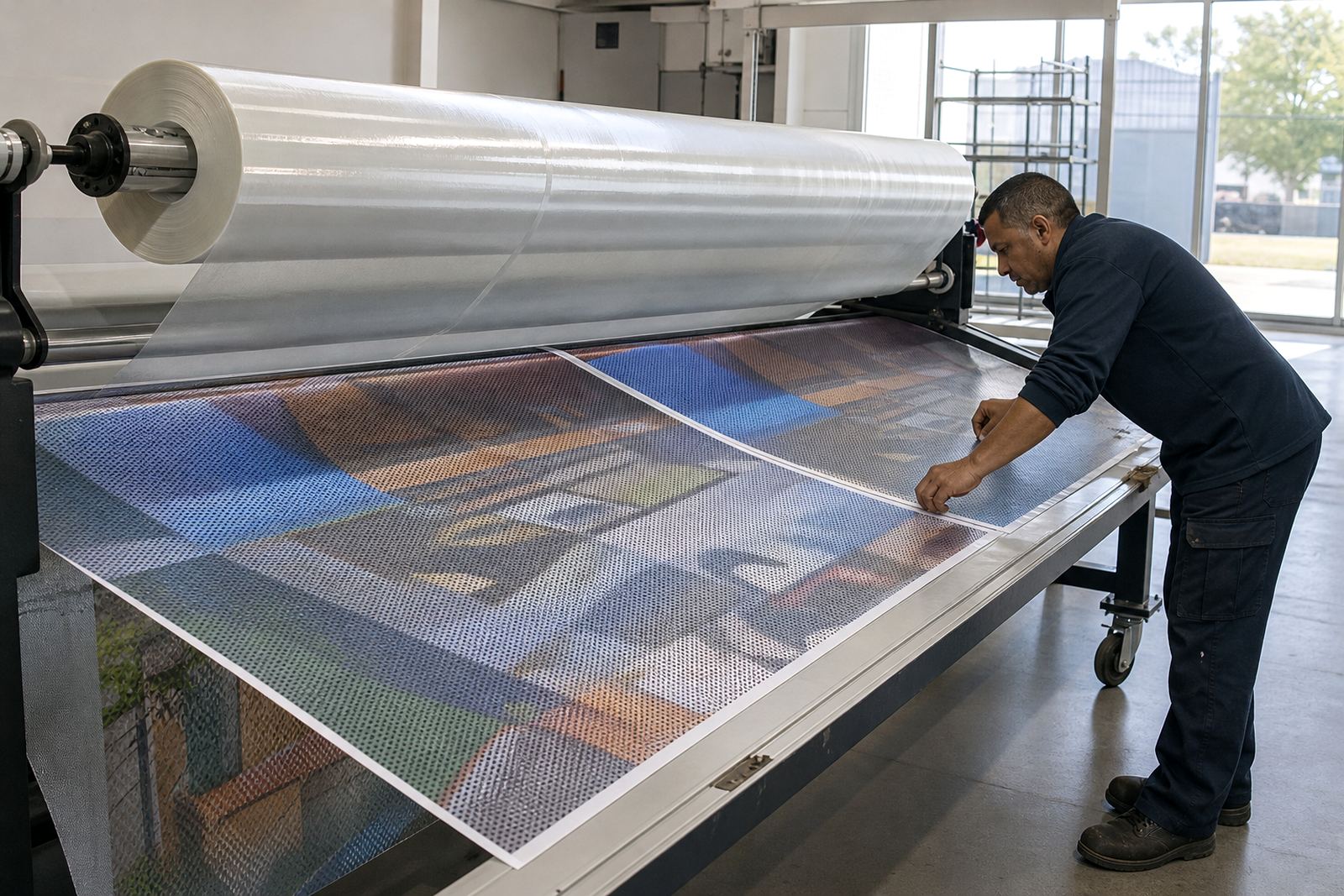
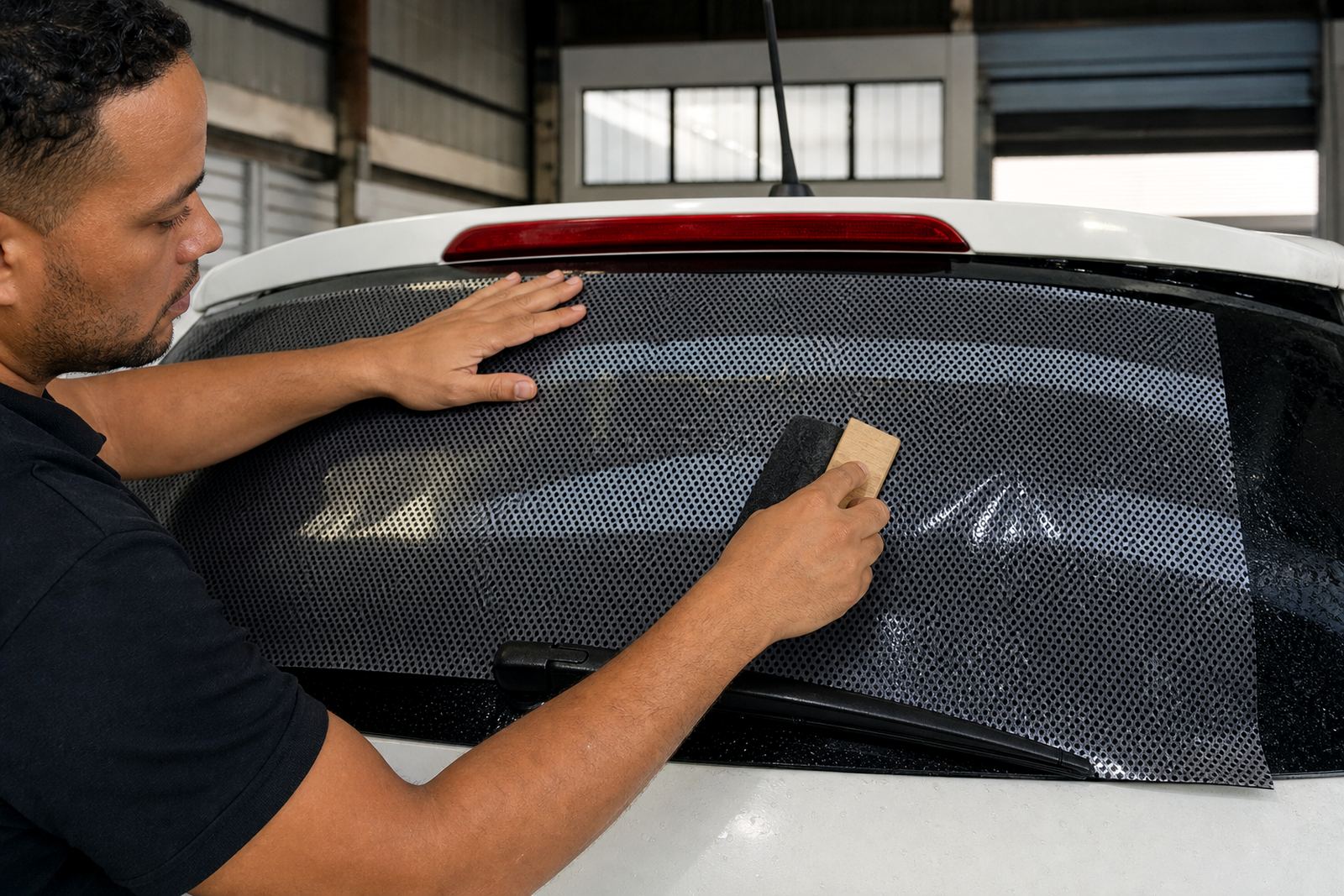
Curved glass is fitted in stages. First comes site measuring or vehicle templating, then artwork sizing, print, lamination and a dry fit check if needed. The installer must allow for the curve, because forcing a flat cut onto curved glass can cause wrinkles, tension lines and early edge failure. In some cases, smaller panels are better than one oversized sheet, especially where the glass rolls in two directions.
Glass fitting calls for a clean workspace, squeegees, trimming tools and careful edge finishing. For vehicle window film, a dry indoor bay is best because dust, wind and strong sun can affect adhesion. Some jobs need gentle heat during finishing, but not so much that the film stretches or the print marks. The film itself does not need special supply, although lighting, workshop tools and cleaning gear may be used on site.
Where the curve is slight, the film can often be fitted without cutting the visual impact into separate sections. Where the curve is more pronounced, panel breaks may be placed along mullions, frame edges or body lines so the result still looks neat. The aim is a proper fit, not a rushed one.
Care, washing and servicing after fitment
Once fitted, curved window film should be left to settle before heavy cleaning. The adhesive needs time to bond fully, especially on large shopfront panes or vehicle glass that has complex curves. After that, the surface can be cleaned with mild soap and water, plus a soft cloth or sponge. Harsh chemicals, abrasive pads and pressure washing too close to the film can shorten its life.
On vehicles, wash the glass by hand where possible and avoid catching the film edge with a blade or scraper. On shopfronts, keep an eye on sealant lines and damaged frames because water ingress from the frame can weaken the finish over time. Coastal humidity and strong sun can both test exterior film, so routine checks are sensible. If an edge begins to lift or a panel gets damaged, a refit and refresh is usually better than trying to patch a small area.
- Wait for the recommended curing period before washing
- Use soft cloths and gentle cleaning fluids
- Avoid blades, scourers and high pressure at the edges
- Inspect corners, seals and joins after storms or washing
What to check before ordering
Before ordering curved window film, measure the glass carefully and note whether the curve is simple or compound. A simple curve bends in one direction, while a compound curve bends in more than one, and that changes how the film must be cut and fitted. It also helps to note the viewing direction, since the outside message and inside visibility must work together.
You should also check the following details: whether the glass is clear, tinted or laminated, whether there is any existing film to remove, how much inward curvature there is, and whether the application is for a shopfront or vehicle. If the film is for a vehicle, confirm current legal requirements for driver visibility and window coverage before final approval. For shops and branches across South Africa, from Montague Gardens in Cape Town to Johannesburg, Durban, Pretoria and Gqeberha, proper planning helps avoid delays on fitting day.
OneWayVision has supplied perforated film and fitting support from Montague Gardens for South African projects, with services that include site measuring, vehicle templating, artwork setup, colour proofing, wide format printing, film lamination, glass installation, vehicle installation, old film removal, surface preparation, nationwide dispatch and refit and refresh. Enquiries come through the contact page form, which is the best place to start when you need curved glazing checked properly.
Key facts
| Product type | Perforated one-way vision film for curved glass |
|---|---|
| Perforation ratios | Common options such as 40/60 and 50/50 |
| Print method | Wide format printed graphics |
| Finish options | Laminated or unlaminated depending on application |
| Application areas | Shopfront glass, reception glazing and vehicle windows |
| Service area | Montague Gardens, Cape Town and nationwide supply across South Africa |