What Longer Term Film Is For
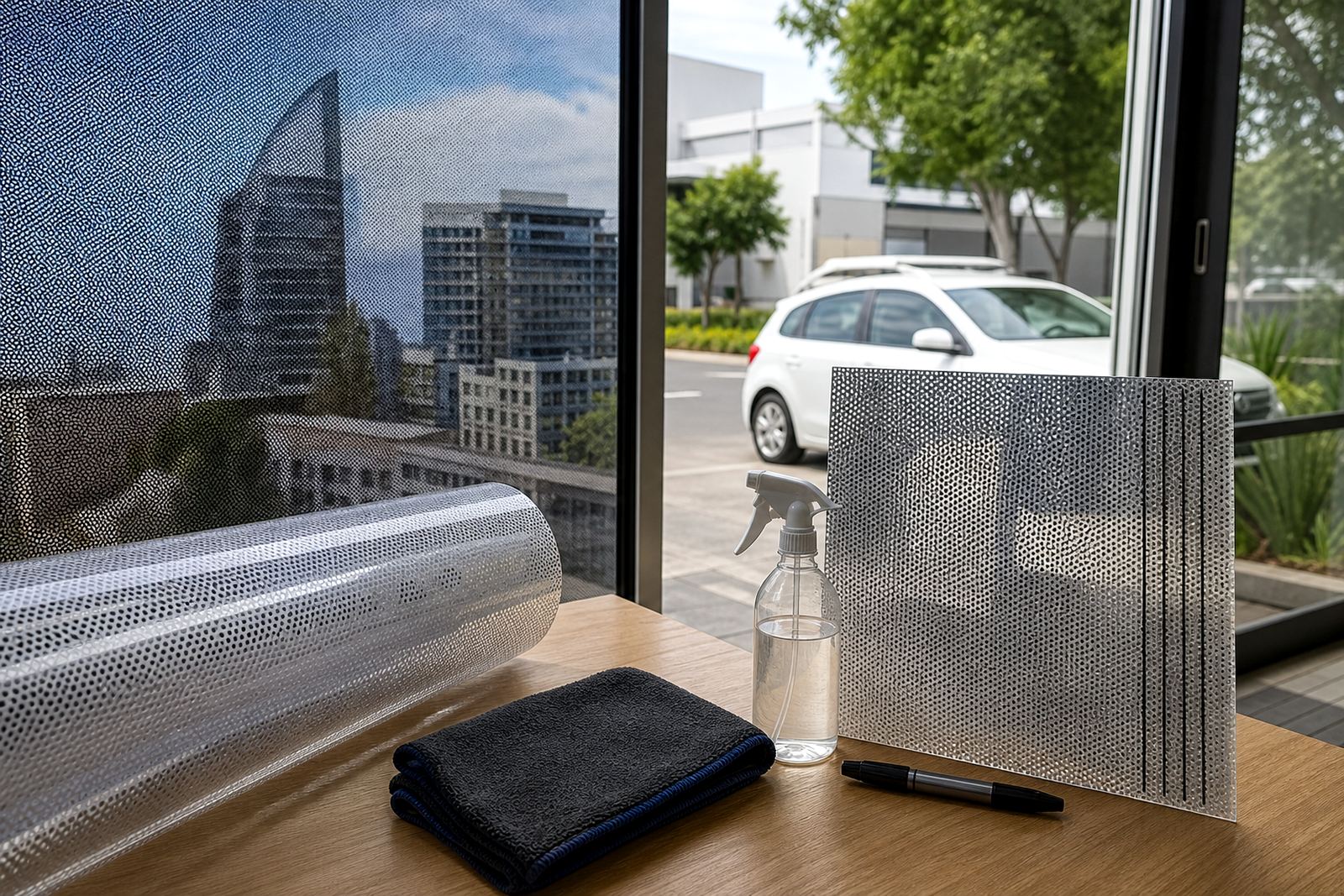
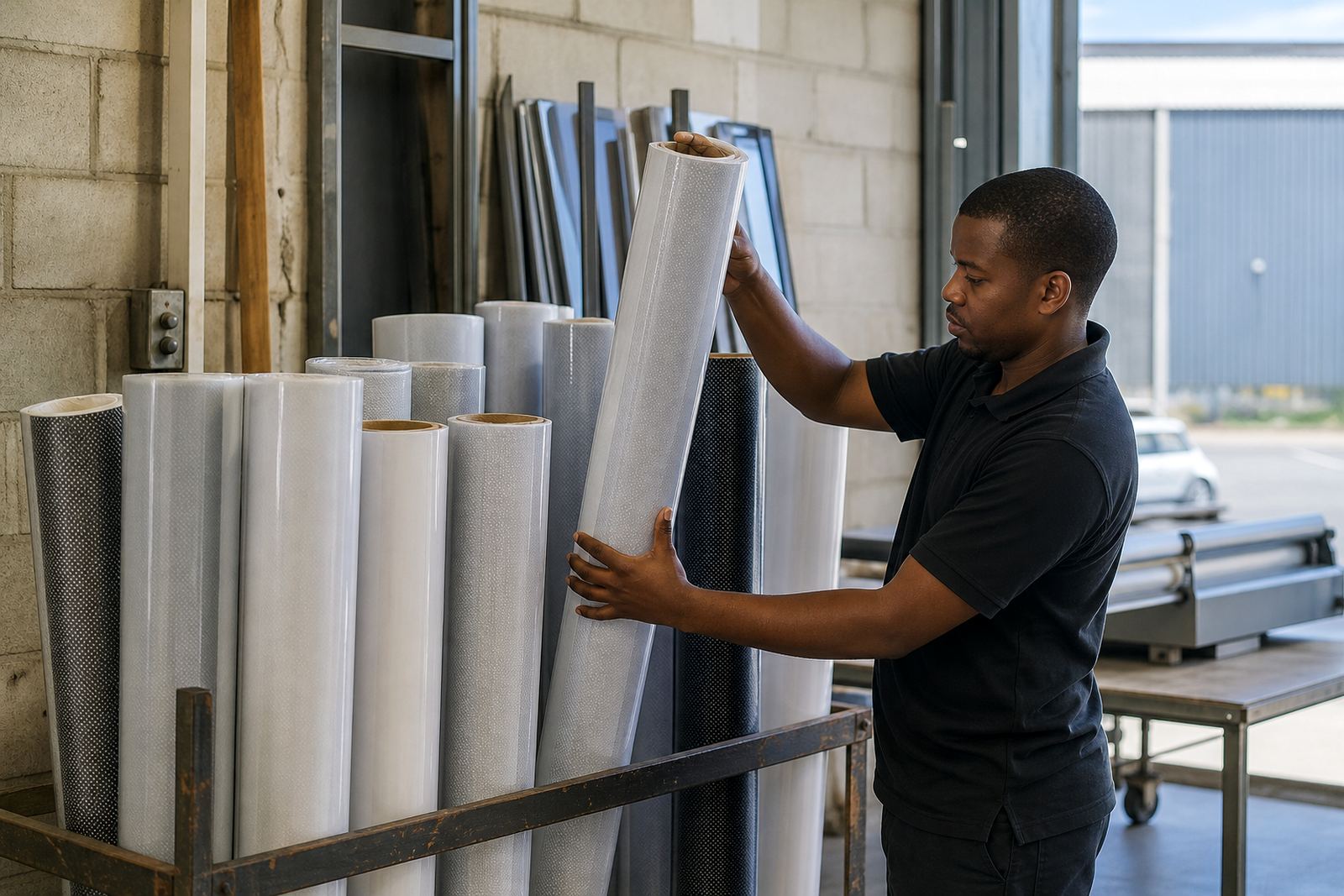
Longer Term Film is a perforated PVC window film used where a brand needs to stay visible for months, not just a short promotion. The tiny holes in the film let people inside see out through the printed area, while the outside face carries full colour graphics. On glass doors, shopfront panes and vehicle windows, it gives a clean advertising surface without blocking the whole view.
For ongoing use, the build is stronger than a basic short-run graphic. A printed face with a matching laminate helps protect colour from sunlight, weather and cleaning, which matters in Cape Town coastal air and in inland heat as well. It suits retailers, service businesses, fleets, mobile service vans and any site that wants branding which stays in place and still looks tidy after regular handling.
Perforation Ratios and Print Build
One-way vision film is supplied in different perforation ratios, usually based on the balance between image coverage and outward visibility. A tighter perforation gives more printed area and a stronger visual block from outside, while a more open ratio improves visibility from inside. The right choice depends on where the film will sit, how close people stand to it, and whether the glass is on a street-facing frontage or a vehicle side window.
- Common ratios are selected for shopfronts, full side windows, rear windows and long-term signage panels.
- Print is normally done as wide format full colour output, with careful alignment so the artwork reads well across the perforation pattern.
- Lamination is added where extra surface protection is needed against UV, dust, wiper contact and routine cleaning.
Artwork setup matters because perforated film is not read like vinyl on a solid board. Fine text, small logos and dark gradients need checking before print, otherwise the message can soften once applied. We usually recommend colour proofing for brands that need accurate tones across a full storefront or vehicle set.
Where It Suits Best
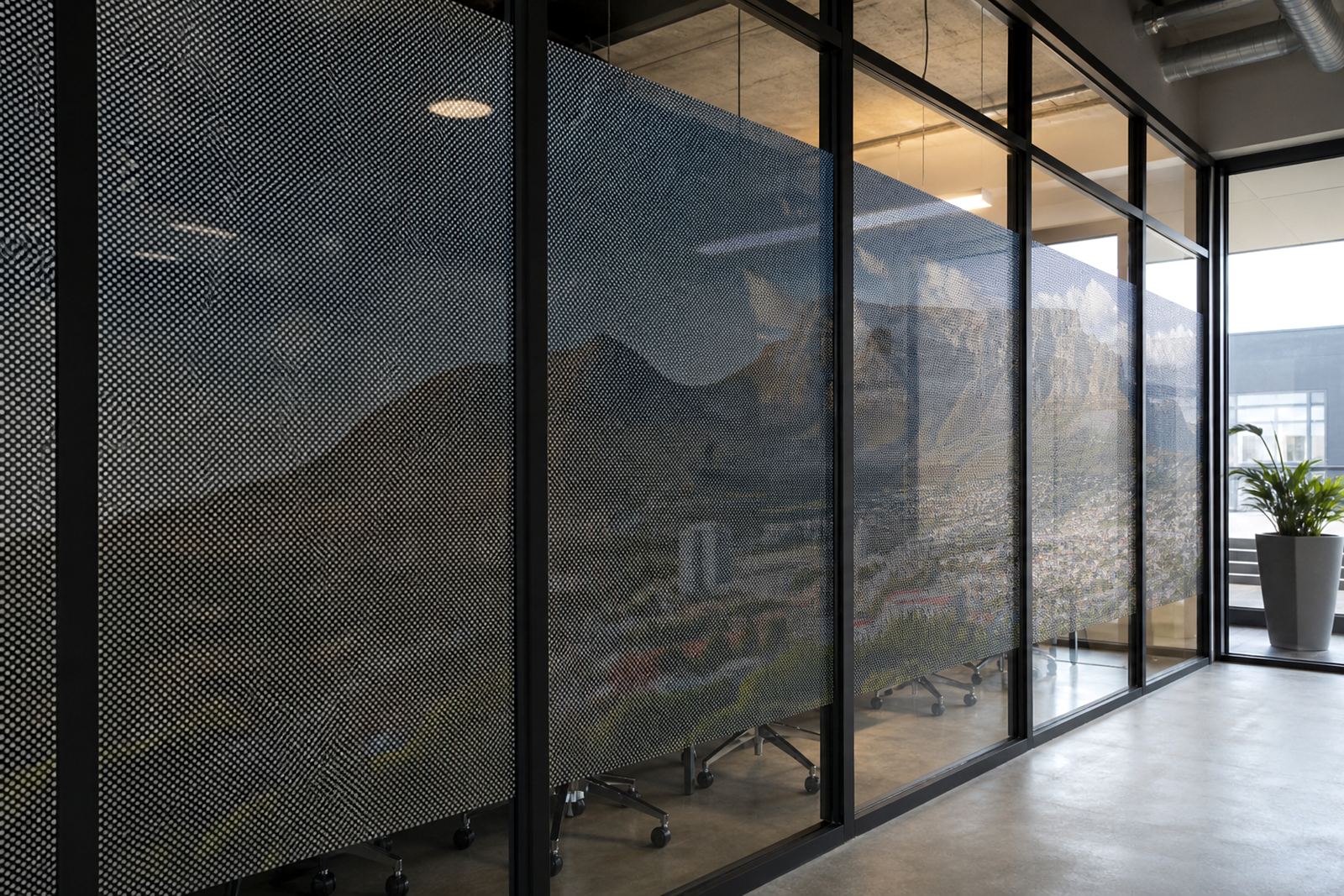
This product works well on street-facing windows where a business wants privacy by day and a clear outward view from inside. It is commonly used on retail shopfronts, medical rooms, service counters, office partitions and fleet vehicles. In built-up areas like Bellville, Milnerton and Montague Gardens, it helps make glass useful as advertising space instead of dead frontage.
It also suits vehicles that park outside clients, suppliers or job sites through the day. On vans and bakkies, the perforated film can carry contact details, service lists and branded graphics while keeping the cabin from feeling boxed in. For rear windows especially, the layout has to be planned with driver sight lines and reverse visibility in mind.
- Shopfront glazing on malls, street-facing stores and service counters
- Vehicle rear windows, side windows and fleet branding
- Temporary campaigns that need a cleaner look than loose posters or taped signs
- Privacy screens for offices and internal glass partitions
Sizes, Finishes and Ordering Options
Longer term film is usually supplied to suit the glass or window set being covered, with rolls and cut panels prepared to match the job. The actual usable size depends on the pane or vehicle template, so site measuring is the best starting point. For vehicles, templating helps avoid guesswork around curves, seals and window frits.
Options normally include standard print-only film, laminated film for longer service life, and cut-to-size panels for mixed window sets. Where a project has multiple windows, we can keep the artwork continuous across panels or separate each pane for easier handling. That makes a difference on larger shopfronts and on fleets where every unit must match, even if the body shape varies a bit.
- Custom cut panels for glass doors and fixed panes
- Vehicle templates for accurate rear and side window fits
- Laminate choice for extra handling protection and easier cleaning
- Mixed supply for shopfront glass and vehicle windows in one campaign
Installation And Site Conditions
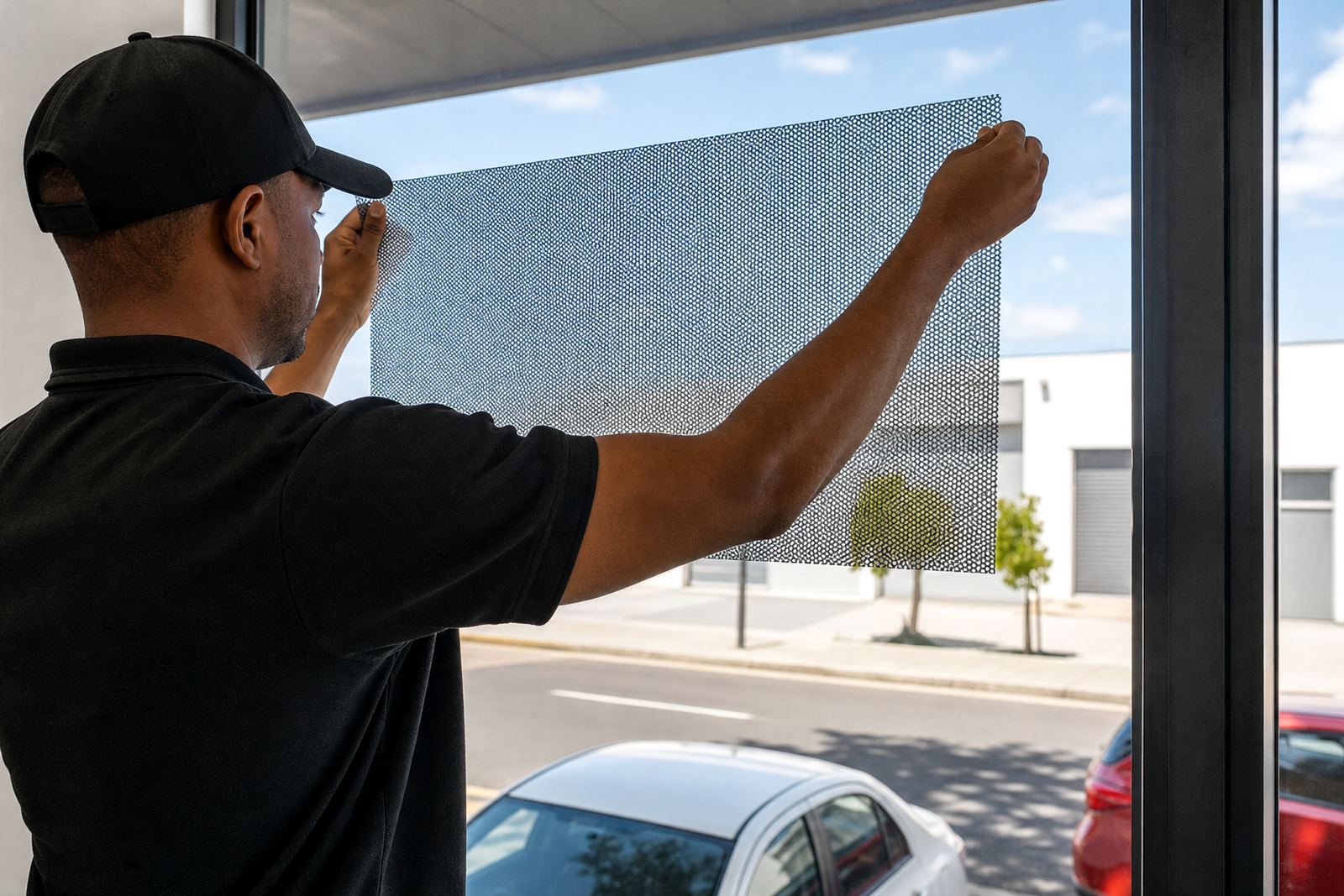
Glass installation and vehicle installation both need a clean, dry surface and steady handling. The film is applied with surface preparation first, then positioned, squeegeed and trimmed. On vehicle windows, the fitter must work around seals, curves and defroster lines without trapping dust or lifting an edge. On shopfront glass, the finish depends on proper cleaning and accurate alignment, especially where municipal rules or landlord restrictions apply to signage on the outside face.
A sheltered, dry space is useful for installation and finishing. In Cape Town and other coastal areas, wind and humidity can slow the process a bit, so installers need a protected area if possible. If the site is exposed, it helps to plan installation outside trading peaks or early in the day.
For vehicles, we also check driver visibility. The film must keep the driver view legal and practical, and the current road traffic rules should be checked before fitting any rear or side window film. A good install should look neat from outside without turning the cabin into a blind spot.
Care, Servicing and Refit Work
Once fitted, longer term film still needs normal care. Use soft cloths, mild cleaning products and low pressure wiping. Avoid sharp blades, abrasive pads and harsh solvents, because those can mark the laminate or lift edges. On shopfront glass, regular cleaning around the borders keeps the panels looking sharp. On vehicles, the edges should be checked after the first few washes because that is when any weak corner usually shows up.
If the artwork needs a refresh, old film removal is part of the service. That can involve heat, careful scraping and surface prep before a new graphic goes on. Refit and refresh work is common when a business updates branding, changes branches or reworks a vehicle livery after repairs. It is usually cheaper and cleaner to remove tired film properly than to patch over it.
- Keep the surface clean with non-abrasive products
- Check edges after the first weeks of weather and washing
- Replace damaged sections rather than trying to hide them
- Use refit work when branding changes or panes are replaced
What To Check Before You Order
Before ordering, check the exact glass size, the view you want to preserve, and whether the film is for a shopfront or a vehicle. It helps to know if the surface is flat, curved or broken by handles and seals. You should also decide how much privacy is needed from the outside and how strong the printed image must be at a distance. That part often gets overlooked until the artwork is already printed.
For vehicle work, confirm the registration, model and window count so the templating is correct. For shopfronts, confirm if the site is in Cape Town, Johannesburg, Durban, Pretoria or Gqeberha so the right supply and dispatch plan can be set up. If the job needs installation, site measuring, colour proofing or old film removal, mention that on the enquiry form so the work is scheduled properly and not pieced together later.
Key facts
| Film type | Perforated one-way vision window film |
|---|---|
| Typical use | Shopfront glass, vehicle windows, office glazing |
| Finish options | Print only or printed with protective laminate |
| Visibility | Outward view from inside, printed image to the outside |
| Installation methods | Glass installation, vehicle installation, old film removal |
| Supply areas | Cape Town, Johannesburg, Durban, Pretoria and Gqeberha |