What 60 40 Vision Film Is Made For
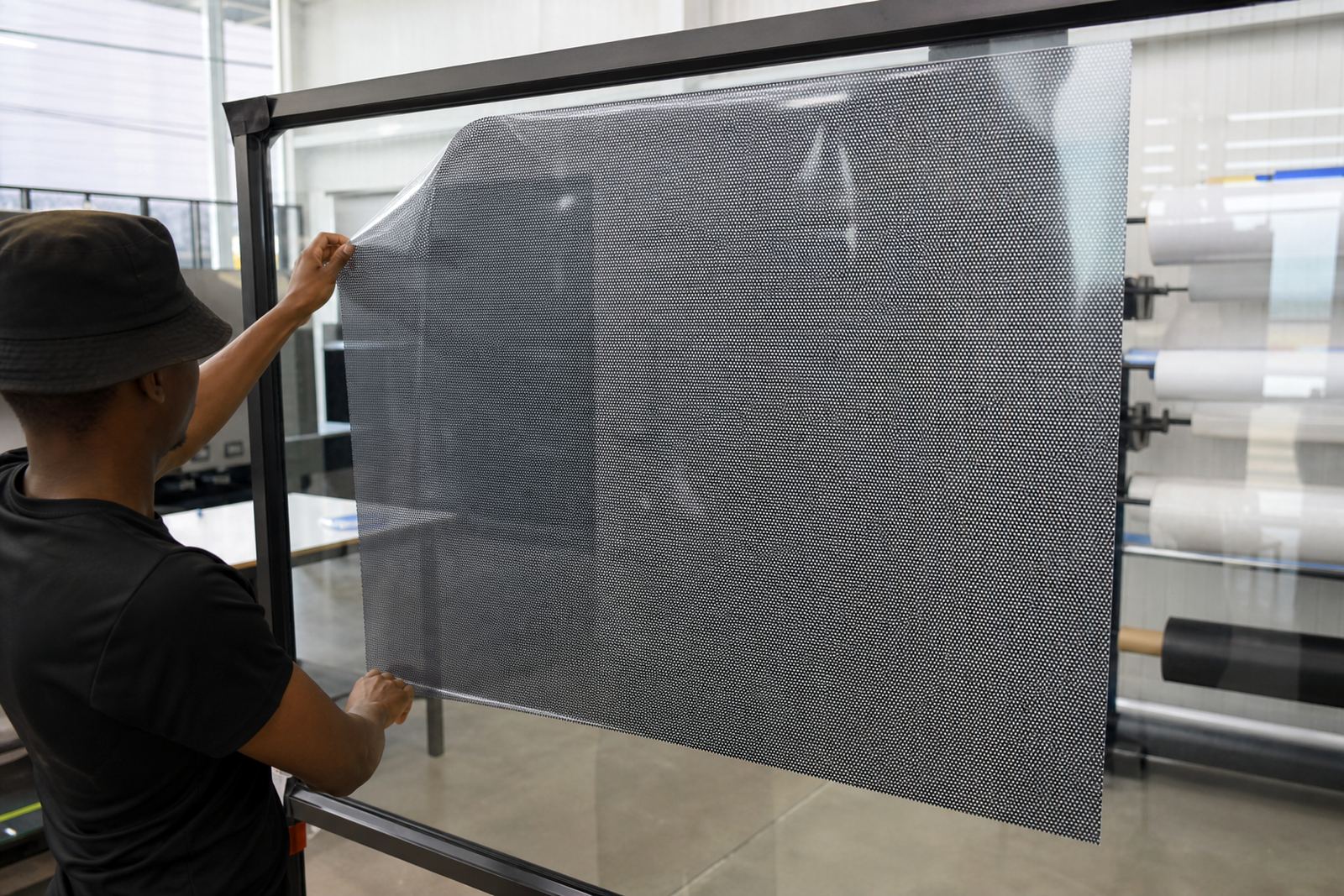
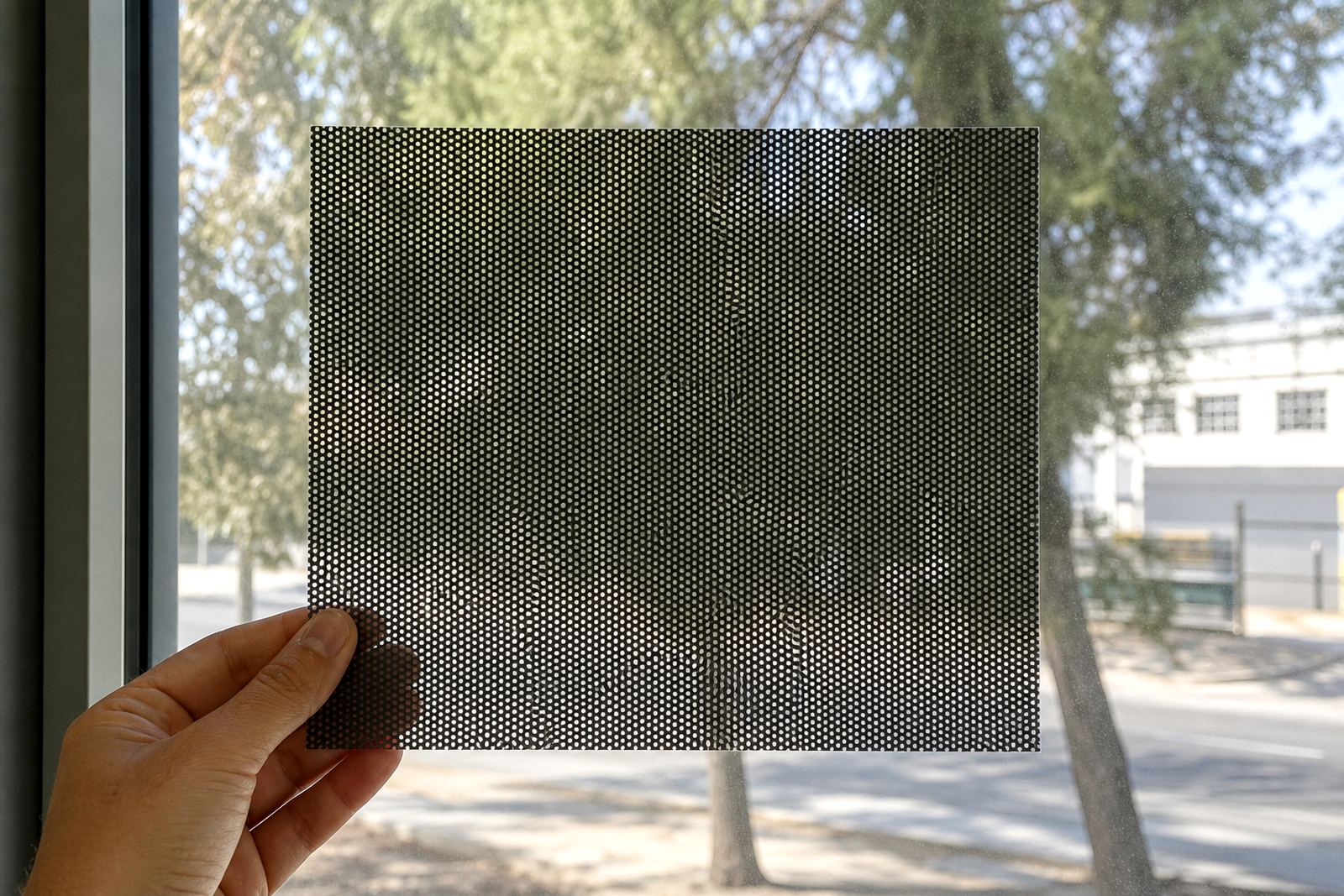
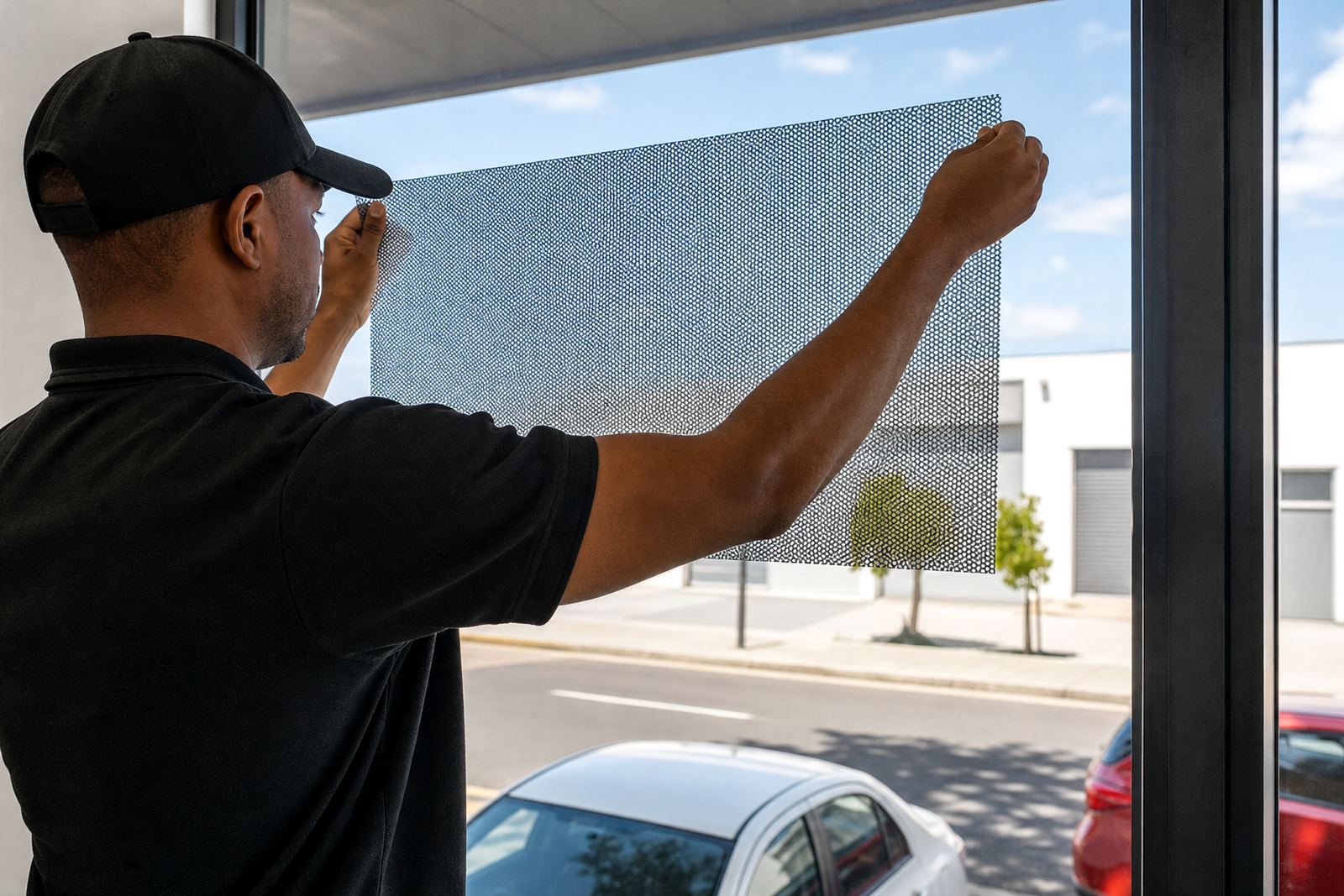
60 40 vision film is a perforated PVC film with roughly 60% printable surface and 40% open area across the face. That balance gives more graphic area than finer perforation films, so logos, product offers and full coverage artwork can read well from the street while people inside still see out through the holes. It is commonly used on retail windows, office glass, showroom panels and vehicle side and rear windows where privacy and branding need to work together.
For glass, the film is usually applied to the exterior face so the printed side shows to passers-by. On vehicles, it is fitted to approved window areas only, and the driver’s view must remain legal. Check the current road traffic rules before fitting any film to a vehicle, because the allowed visibility on front and rear windows can change and police checks do happen.
Print Quality, Lamination And Visible Detail
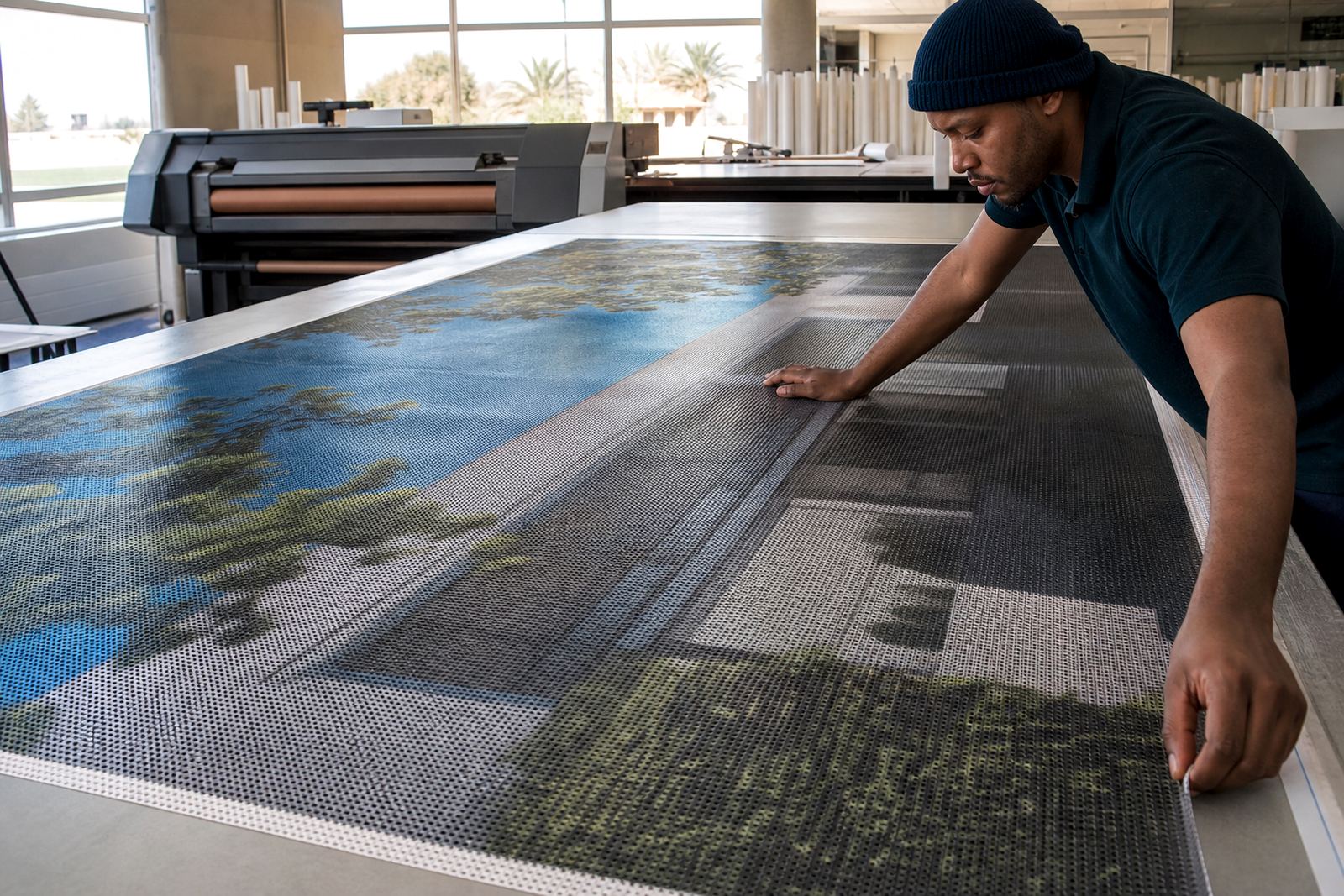
The film is normally printed in wide format with solvent, eco-solvent or UV inks, depending on the job spec and the finishing needed. Once printed, a clear laminate can be added to protect the image from scuffs, washing, sun and day-to-day handling. On a busy shopfront in Cape Town or a vehicle doing daily runs through Johannesburg or Durban, lamination helps the graphics hold colour and makes the surface easier to clean.
Because perforated film has holes, fine text and tiny detail can lose clarity. Large logos, bold type, contact details and block colours work best.
- Best for solid branding, large logos and clear calls to action
- Can be laminated for longer outdoor life and easier cleaning
- Works on flat glass and many lightly curved vehicle windows
- Needs careful artwork setup so small details do not disappear into the perforation pattern
Sizes, Widths And Finish Options
60 40 vision film is supplied in different roll widths to suit small windows, full shopfront spans and vehicle panels. The most practical size depends on the glass or window layout, the amount of cutting required and whether the job is being installed in one piece or in joined panels. For many retail sites, wider rolls reduce joins and keep the print looking neater across long panes.
Finish options usually include a standard printed face with either a gloss or matt laminate, depending on glare and viewing conditions. A gloss finish can sharpen colour for street-facing use, while matt can cut reflections on bright glass. On coastal sites such as Gqeberha or Durban, a well-sealed edge and proper surface prep matter because humidity and salt air can affect how the adhesive settles over time.
- Common roll widths can suit small panes through to long shopfront runs
- Can be cut to shape for framed windows, doors and vehicle glass
- Gloss or matt overlaminate may be used depending on reflection and branding needs
- Suitable for indoor or outdoor-facing application on glass, subject to site conditions
Where It Suits Best Across South Africa
This film suits retailers, service counters, salons, medical rooms, building entrances and transport fleets that want a strong outside message without covering the whole window with solid vinyl. In a shopping street in Bellville or Milnerton it can help turn plain glass into signage space, while still allowing staff to see customers approaching. For fleet vehicles, it is often used on rear side windows and tailgate glass where the graphics can be seen in traffic and the cabin still gets daylight.
It is not the best choice where absolute privacy is needed or where tiny typography is essential. If the window needs frequent cleaning, or if the site gets hard sun all day, the film should be specified with the right laminate and installation method from the start. That way the print stays tidy and the glass does not look patchy after the first few seasons.
- Shopfronts, mall entrances and street-facing windows
- Vehicle side and rear windows for branded visibility
- Offices, clinics and showrooms needing light and privacy together
- Sites where a full solid block-out would feel too heavy
Installation and site readiness
Glass preparation starts with clean, dry, grease-free surfaces. Old tint, stickers, silicone residue and dust need to be removed before the film is applied. On vehicles, accurate templating and careful prep help the film sit properly around rubbers, trims and curved panes. The work is carried out with hand tools and application fluid, so no special supply is needed for the fitting itself.
For larger retail or fleet rollouts, measuring on site before print helps avoid waste and reduces the chance of rework. If the glass is high, awkward or exposed to wind, the installer may need access equipment or an extra hand to position the panels cleanly.
- Site measuring helps confirm pane sizes and vehicle window dimensions
- Old film removal is recommended before new application
- Good light and clean conditions improve the final finish
- Only standard installation tools and prep materials are needed
Care and ordering checks
After installation, the film should be left to cure before heavy cleaning or rough handling. Use a soft cloth, mild soap and water, and avoid sharp scrapers or abrasive pads. On vehicles, do not roll the windows down too soon after fitting. For shopfronts, regular gentle cleaning keeps the printed side readable and stops dust from building up in the perforations.
Before ordering, check the glass or window size, whether the film is for interior or exterior application, the expected viewing direction, and how much light you need to keep inside. Also confirm the artwork, colour values, text size and whether the vehicle must meet current legal visibility requirements. If a site has old graphics, ask about removal and refit work too, because poor prep often causes the new film to fail early, and no one wants to redo a whole run for a small mistake.
- Confirm exact measurements for each pane or vehicle window
- Check whether a laminate is needed for sun, washing or abrasion
- Make sure artwork uses bold text and clear contrast
- For vehicles, check current road traffic rules before approving the final spec
Key facts
| Product type | Perforated one-way vision window film |
|---|---|
| Perforation ratio | 60% printable surface, 40% open area |
| Typical uses | Shopfront glass, office windows, vehicle side and rear windows |
| Print method | Wide format printed graphics for outside viewing |
| Finishing options | Optional clear laminate, gloss or matt |
| Service areas | Montague Gardens, Cape Town, Johannesburg, Durban, Pretoria and Gqeberha |
| Installation support | Site measuring, vehicle templating, glass installation, vehicle installation and old film removal |