A clean white print face with one-way visibility
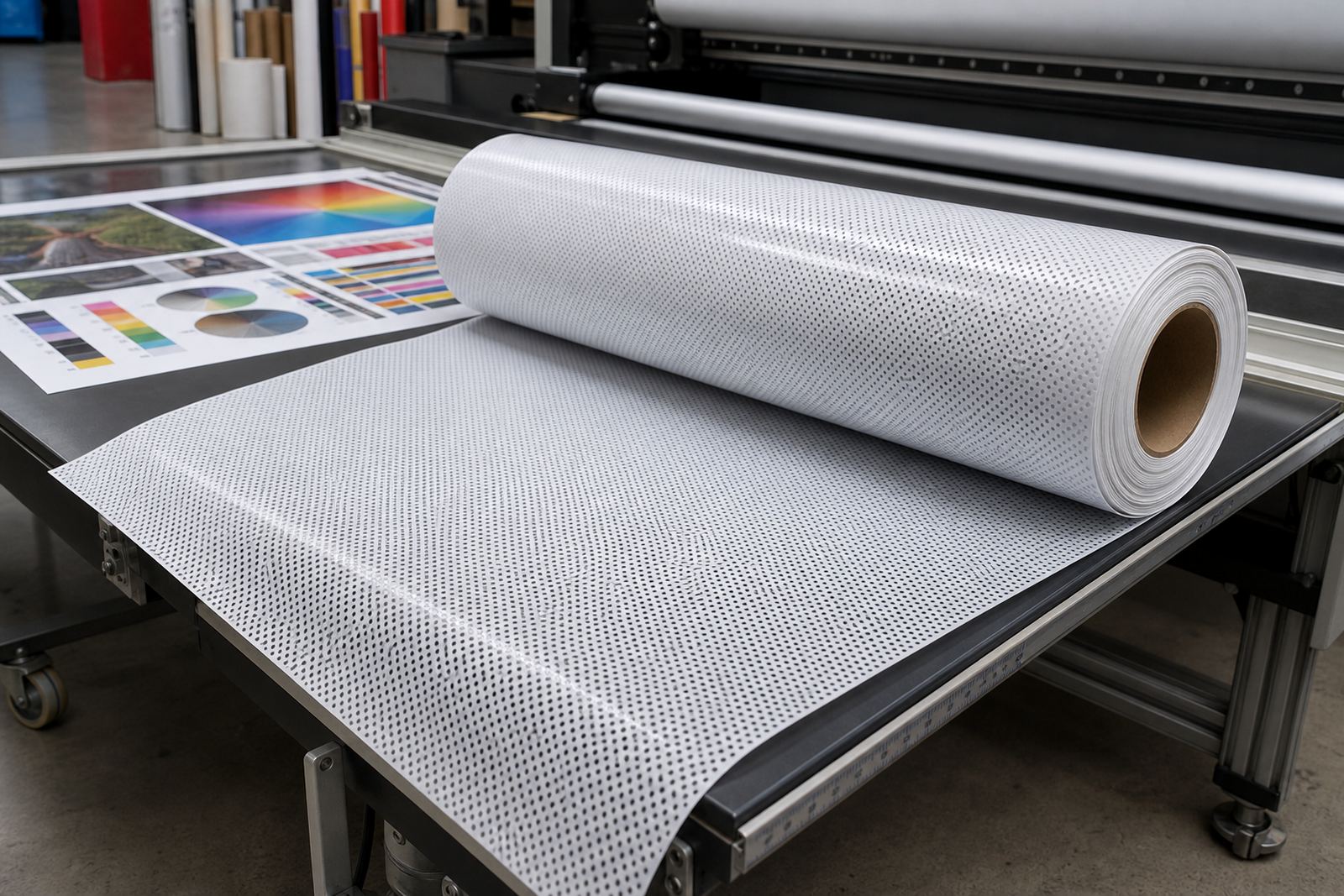
White Face Film is a perforated one-way vision window film with a white printable face and a dark adhesive side. The white front gives colour a cleaner base than dark film, so logos, product images and text can read sharply on glass and vehicle windows. From the outside the print is seen on the white face, while from the inside the perforations allow outward visibility in daylight. It is a practical option for retail fronts, clinic windows, office partitions and rear vehicle windows where advertising and visibility need to work together.
The film is supplied for wide format printing and can be used on flat glass or lightly curved window panels. Perforation ratios vary by application, commonly around 40/60, 50/50 or 60/40 open area depending on how much view through is required. A finer perforation usually gives more print area and better image density, while a more open pattern improves inside visibility. The right choice depends on the size of the glass panel, viewing distance and how much daylight comes through the window.
Where white face film works best
This product suits shopfronts that need window branding without blocking the interior, and vehicles that need side or rear window graphics. It works well for retailers in Cape Town, Johannesburg, Durban, Pretoria and Gqeberha, especially where you want strong promotion on street-facing glass and a tidy inside view for staff or passengers. In coastal areas like Cape Town and Durban, the printed face should be kept clean so salt air and moisture do not build up on the surface. On busy roads, the film also helps turn parked vehicles into moving signage.
Typical uses include seasonal campaigns, hours of trade, service lists, appointment reminders, fleet branding and privacy screening. It can also be used on internal glass where a plain frosted look is not enough and you want full colour artwork instead. For vehicles, the film is generally installed on windows that are not the primary driver view. The driver must still have a legal forward and side view, so always check current road traffic rules before fitting any window film to a vehicle.
- Shopfront windows facing streets, malls and forecourts
- Rear and side vehicle windows where printing is allowed
- Office glass that needs branding and partial screening
- Short term promotions and longer running display graphics
Sizes, print setup and finish options
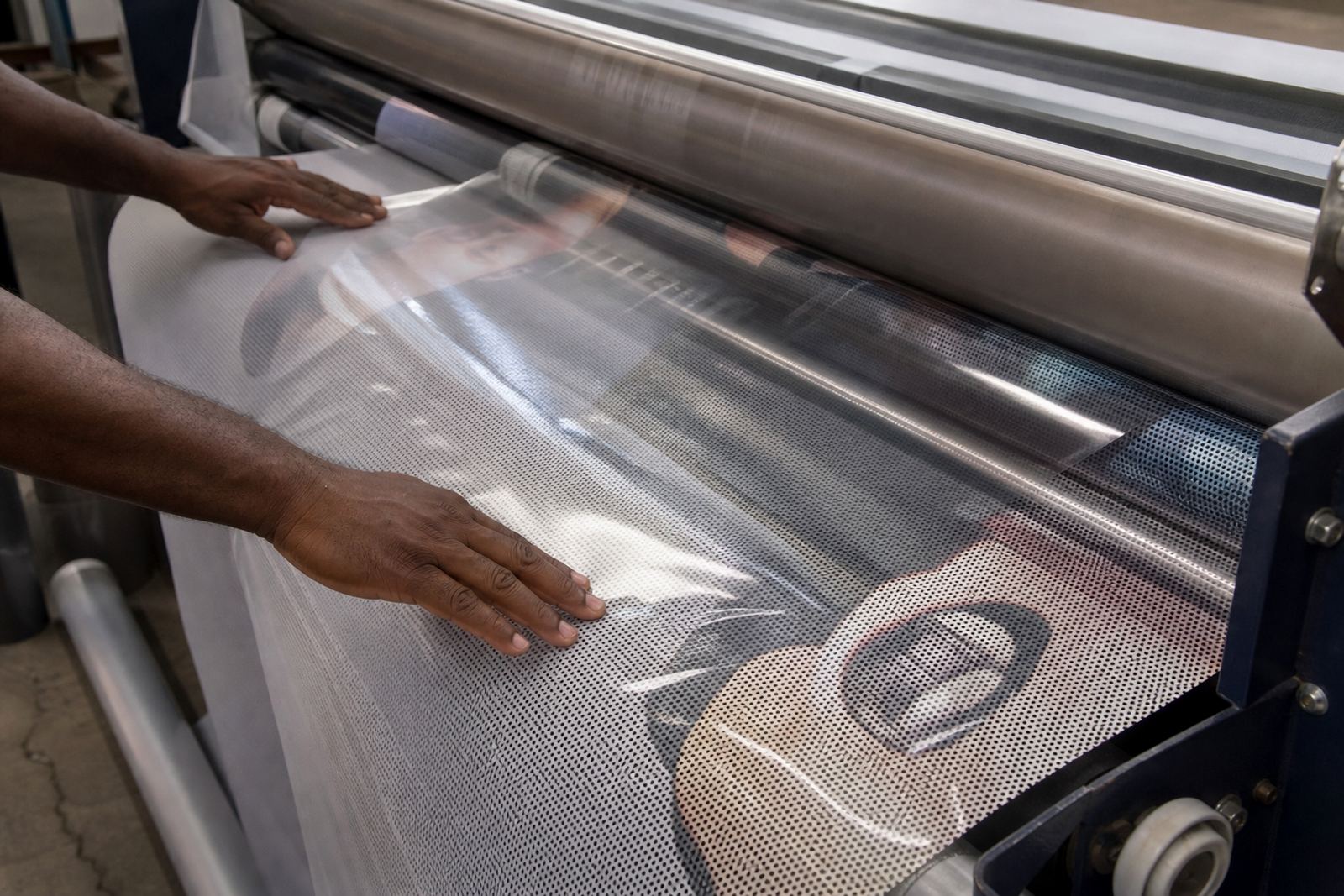
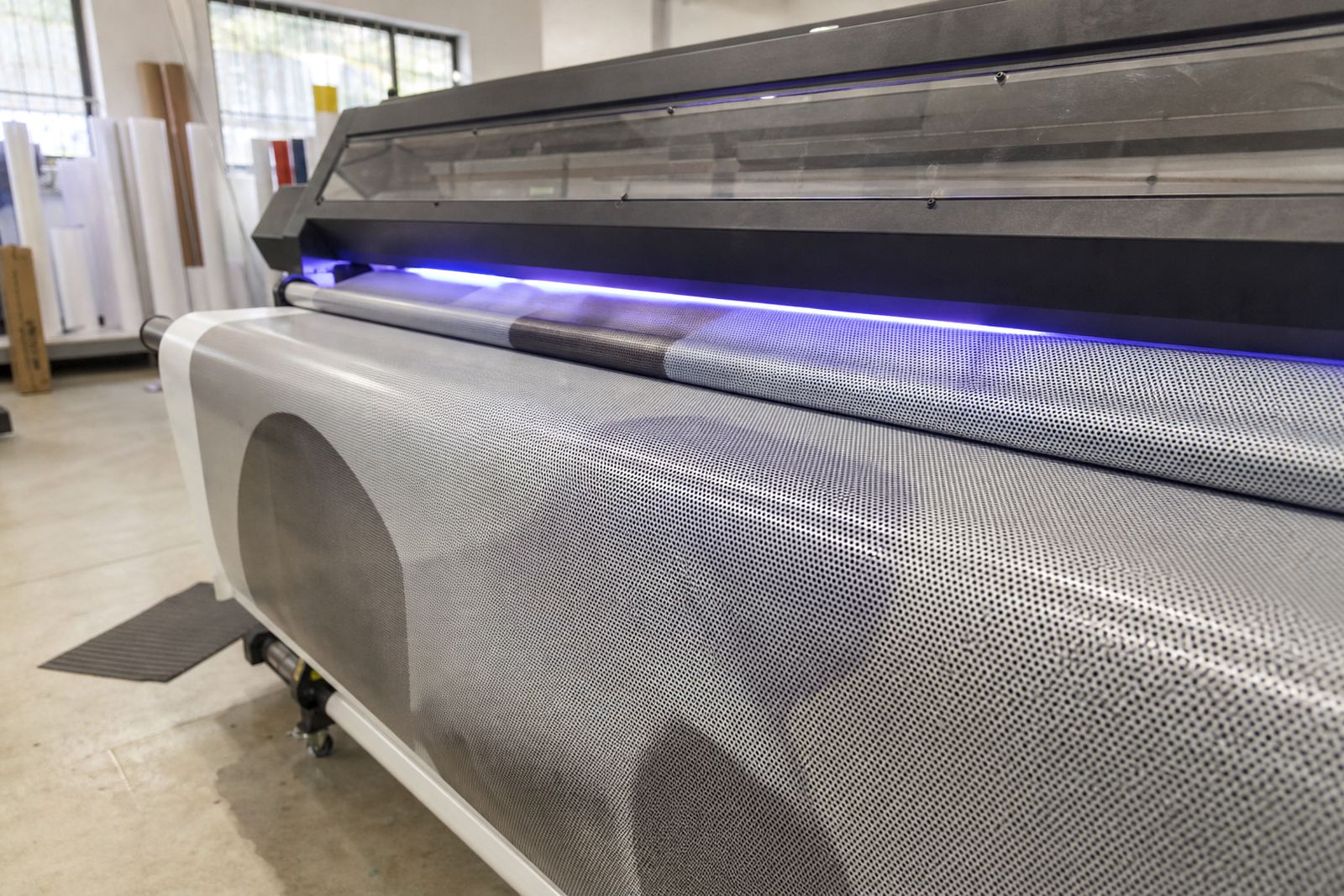
White Face Film is usually supplied in standard roll widths for wide format printing, then cut to the panel size after artwork approval. Common widths include 1.37 m, 1.52 m and other wide format roll sizes depending on the project. Large runs can be tiled for long shopfronts or full vehicle sets, while smaller windows can be cut individually. The film can be printed in full colour with white ink handling where required, then laminated for extra protection against abrasion, UV exposure and regular wiping.
Lamination is recommended for most external applications because it helps preserve colour and keeps the face easier to clean. For shopfronts that face strong sun or repeated contact from staff, a compatible clear laminate adds useful service life. For vehicles, lamination also helps with road grime, hose washing and regular handling around door frames and trims. Artwork should be prepared at the correct scale, with bleed for trimming and enough clear margins around perforated edges so the finished panel sits neatly on the glass.
- Wide format print for single panels or tiled runs
- Colour proofing before print to check tone and layout
- Optional clear laminate for added surface protection
- Cut-to-size finishing for glass and vehicle windows
Installation on glass and vehicle windows
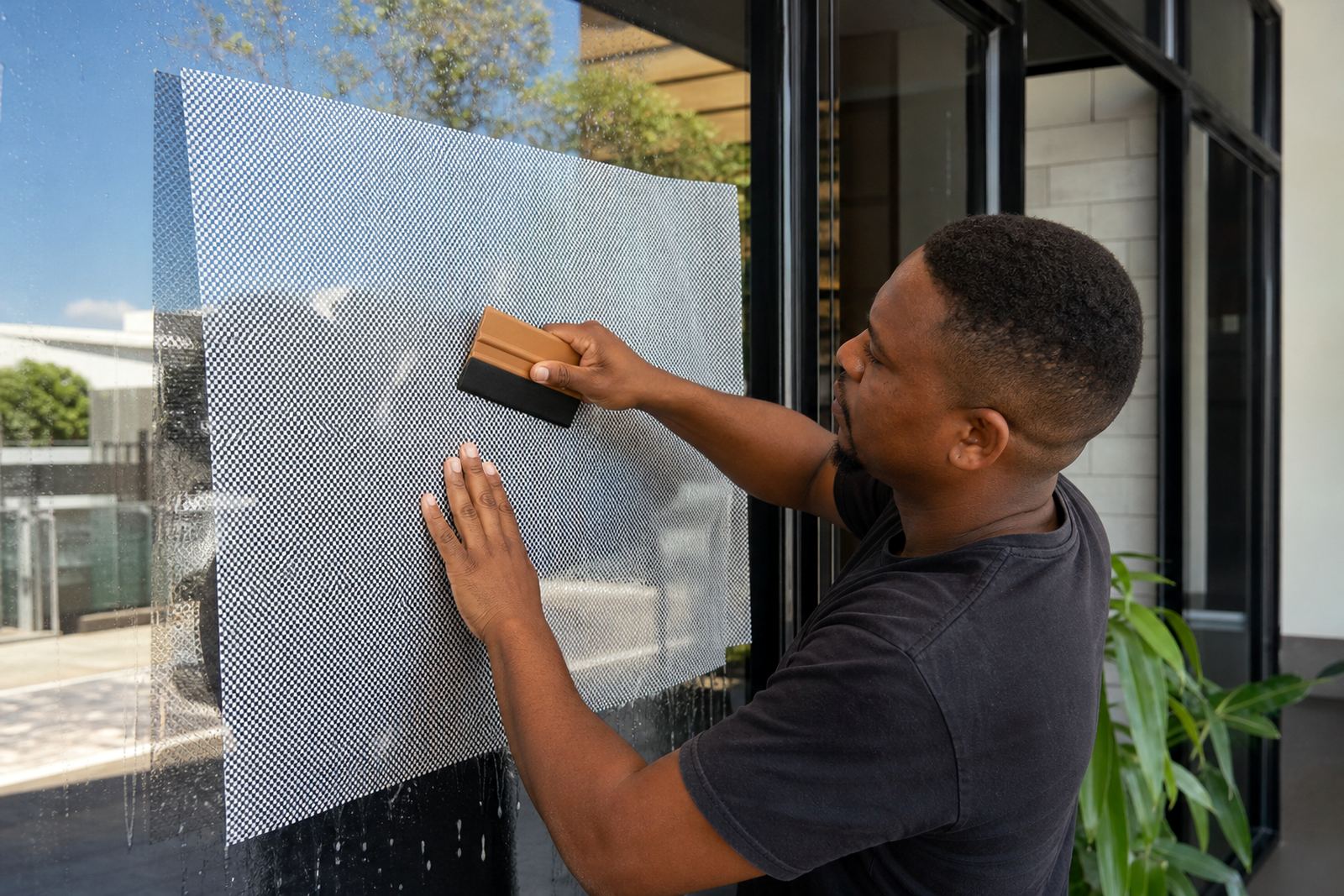
Before installation, glass should be cleaned properly and the surface prepared so dust, oil and old adhesive do not affect bonding. On new glass, installers should check for silicone, stickers or building dust. On vehicles, the interior window must be cleaned thoroughly, and rubber trims or access panels may need care to avoid lifting edges. For best results, the film is usually installed wet on glass, then squeegeed flat and trimmed clean at the edges. Heat may be used on curved vehicle windows so the panel settles without creases.
Site preparation is important. The production stage uses normal workshop equipment, while installation on site needs a clean working space, water for application and, in some cases, heat tools. For larger site work, access to shade, parking and safe working height helps the team keep panels aligned and avoid dust contamination. On buildings, the installer must also take note of municipal rules or landlord requirements if access gear or temporary road space is involved.
- Surface cleaning, degreasing and edge inspection
- Wet application on glass with squeegee finishing
- Careful trimming around seals, handles and corners
- Heat shaping for curved vehicle windows where needed
Care, servicing and refits over time
White Face Film is made for regular use, but it still needs sensible care. Wash it with clean water and a soft cloth or sponge, not abrasive pads or harsh solvents. Avoid pressure washing directly at the edges, especially on vehicles and windswept shopfronts. In hot areas and on glass exposed to the afternoon sun, check the corners after the first few weeks to make sure they remain sealed. Small lifts can often be corrected early before dust reaches the adhesive line.
If a panel becomes faded, scratched or no longer matches updated branding, it can be removed and replaced. Old film should be lifted carefully so the glass is not marked, then any adhesive residue must be cleared before the new print goes on. This is useful for seasonal campaigns, changed contact details or fleet refreshes. For tenants and vehicle owners, a planned refit avoids rushed removals at the end of a lease or when the vehicle is sold.
- Use soft cloths and mild cleaners only
- Do not pick at corners or edges
- Inspect after heavy rain, heat or road grime
- Remove and replace when the branding changes
What to confirm before ordering
When ordering White Face Film, start with the exact glass size, the viewing direction and whether the panel is for a shopfront or a vehicle. Confirm if the print should read from outside only or if the inside view must stay as clear as possible. Check the perforation ratio, the colour match, the need for lamination and whether the window has curves, heater lines or opening sections. For vehicle work, confirm the registration details and the intended placement so the film does not interfere with legal driver visibility.
It also helps to advise whether you need site measuring, vehicle templating, artwork setup, colour proofing, old film removal or refit work.If a site is in Bellville, Milnerton or Montague Gardens, the glass may be close to busy traffic and dust, which should be allowed for during fitting. Clear measurements and a clean checklist make the final result neater and more reliable.
- Glass or window dimensions in millimetres
- Print direction and required visibility from inside
- Perforation ratio and whether lamination is needed
- Vehicle or building details, plus site access notes
Key facts
| Product type | White-faced printable perforated one-way vision film |
|---|---|
| Perforation options | Common open-area ratios around 40/60, 50/50 and 60/40 |
| Print method | Wide format full-colour print with optional white handling |
| Finish options | Clear lamination, cut-to-size finishing, site or workshop fitting |
| Typical applications | Shopfronts, office glass, rear and side vehicle windows |
| Supply area | Montague Gardens, Cape Town and nationwide dispatch across South Africa |