What laminated vision film is and how it works
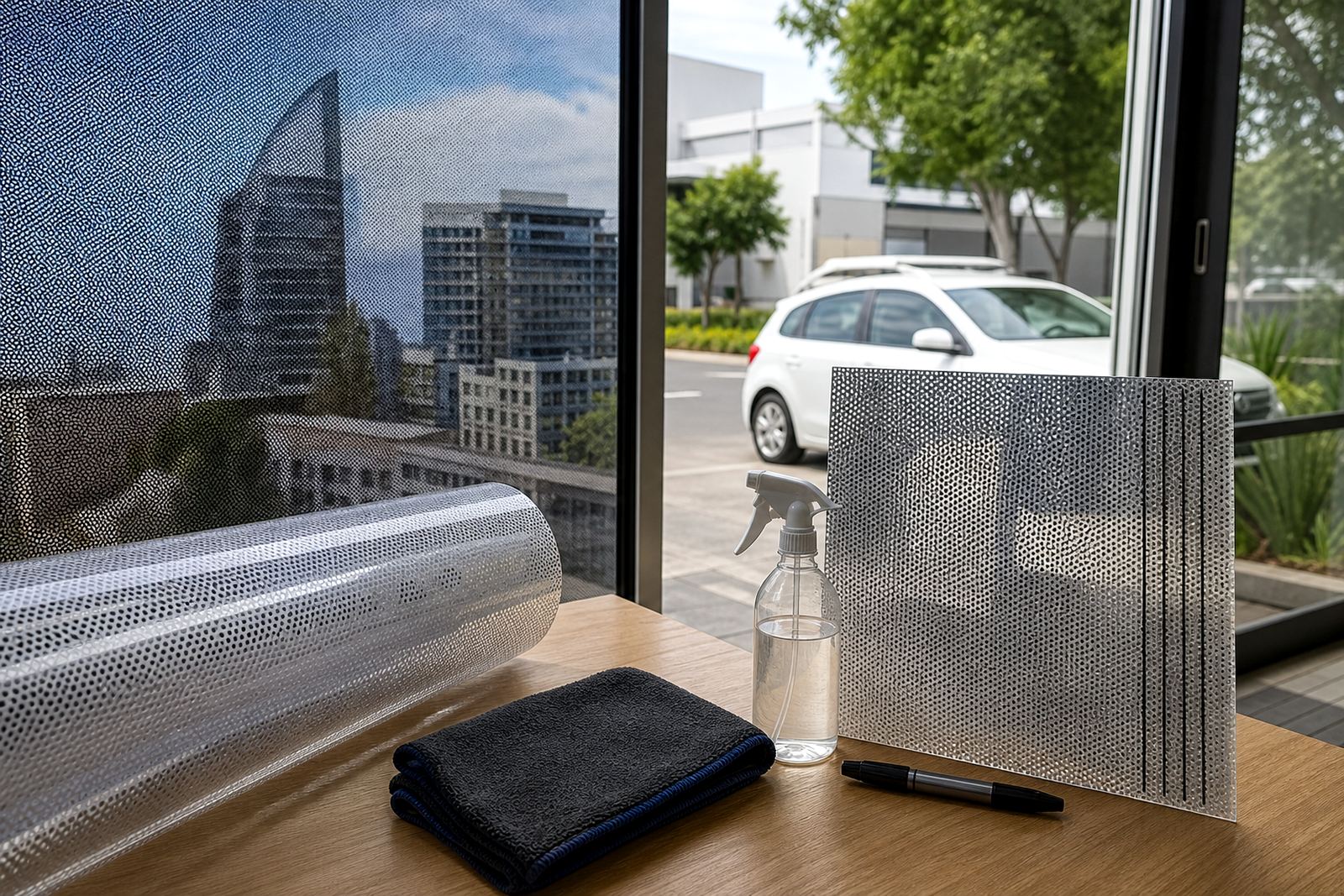
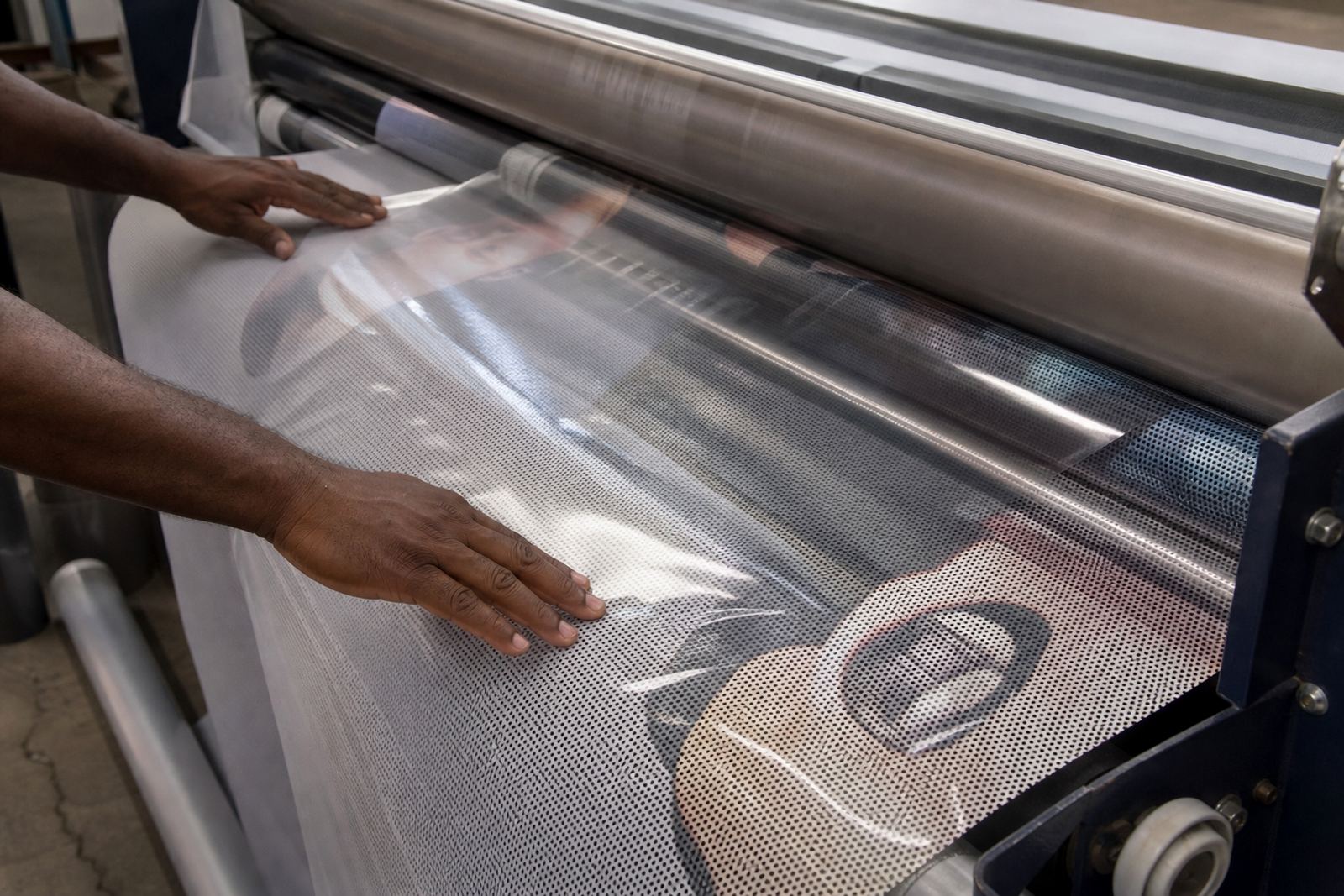
Laminated vision film is a printed perforated window film with a clear overlaminate applied over the face print. The base film carries the image, then the laminate protects the print from scuffing, UV exposure, road grime and regular cleaning. The perforation pattern lets people inside see out through the open area, while people outside see the printed graphics across the solid print side.
Common perforation ratios are 60/40 and 70/30, meaning roughly 60 or 70 per cent print area and the balance as open perforations. A tighter pattern can give stronger image density from the outside, while a more open pattern can improve daylight and outward view from inside. Choice depends on the glass size, distance viewing and where the film is going, whether on a shopfront in Cape Town or on a back window in Johannesburg.
Sizes, print choices and finish options
We supply laminated vision film for measured shopfront panes and vehicle windows, cut to suit the site or supplied in wider format panels for larger glass areas. Standard applications usually start with site measuring, then artwork setup, colour proofing and print production before lamination and finishing. For curved vehicle glass or segmented shopfronts, panels are planned to reduce joins and make installation neater.
- Perforation ratios: 60/40 or 70/30, selected for view out and image density
- Print method: wide format printing for full colour graphics, text and branding
- Laminate: clear overlaminate for extra surface protection and easier cleaning
- Finish: gloss or matt depending on reflection, lighting and the look you want
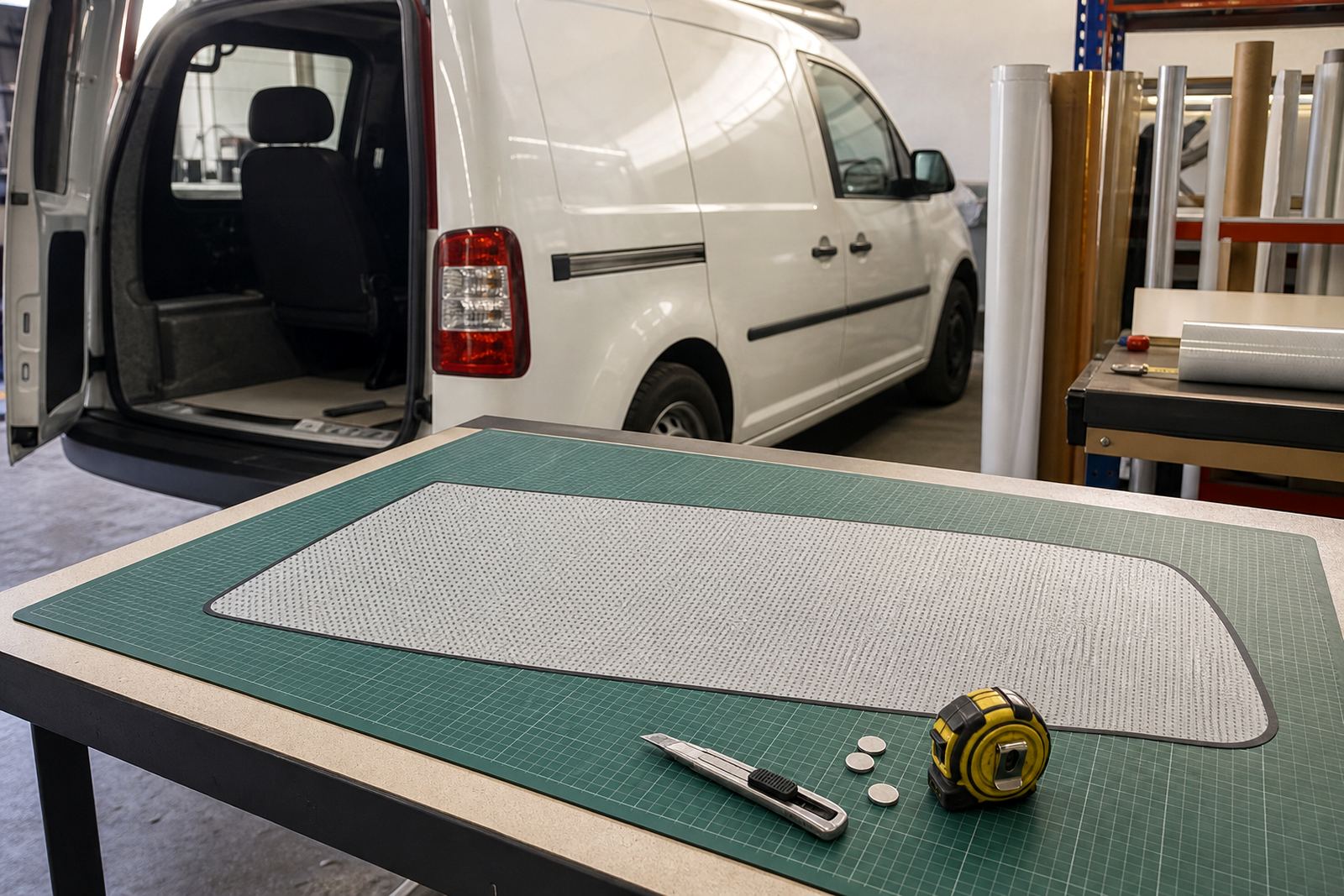
- Cutting: panel cut to size for glass installation or vehicle installation
If you need a simple business message, opening hours or a full graphic wrap on glass, the film can be set up to carry both image and plain areas. The final layout should suit the viewing distance and the amount of inside light available.
Where it suits best in shops, offices and fleets
This product suits shopfront windows, glass doors, internal glass partitions that face public areas, and rear or side vehicle windows. It is often used where a business wants privacy for staff or stock while still promoting a special, service or brand message to passers-by. In coastal towns such as Durban and Gqeberha, laminated film is also useful where salt air and regular washing can affect weaker prints.
For vehicles, it is common on rear window glass, rear side windows and promotional fleet panels. It is not meant to block all light, so the layout must be planned around the driver view and passenger safety. For any vehicle window film, the driver view must stay legal and current road traffic rules should be checked before ordering or fitting.
- Retail shopfronts with street-facing glass
- Service counters and office glass facing public walkways
- Fleet vehicles, bakkies, delivery vans and trailers
- Showroom windows and seasonal promotions
Installation on glass and what the job needs on site
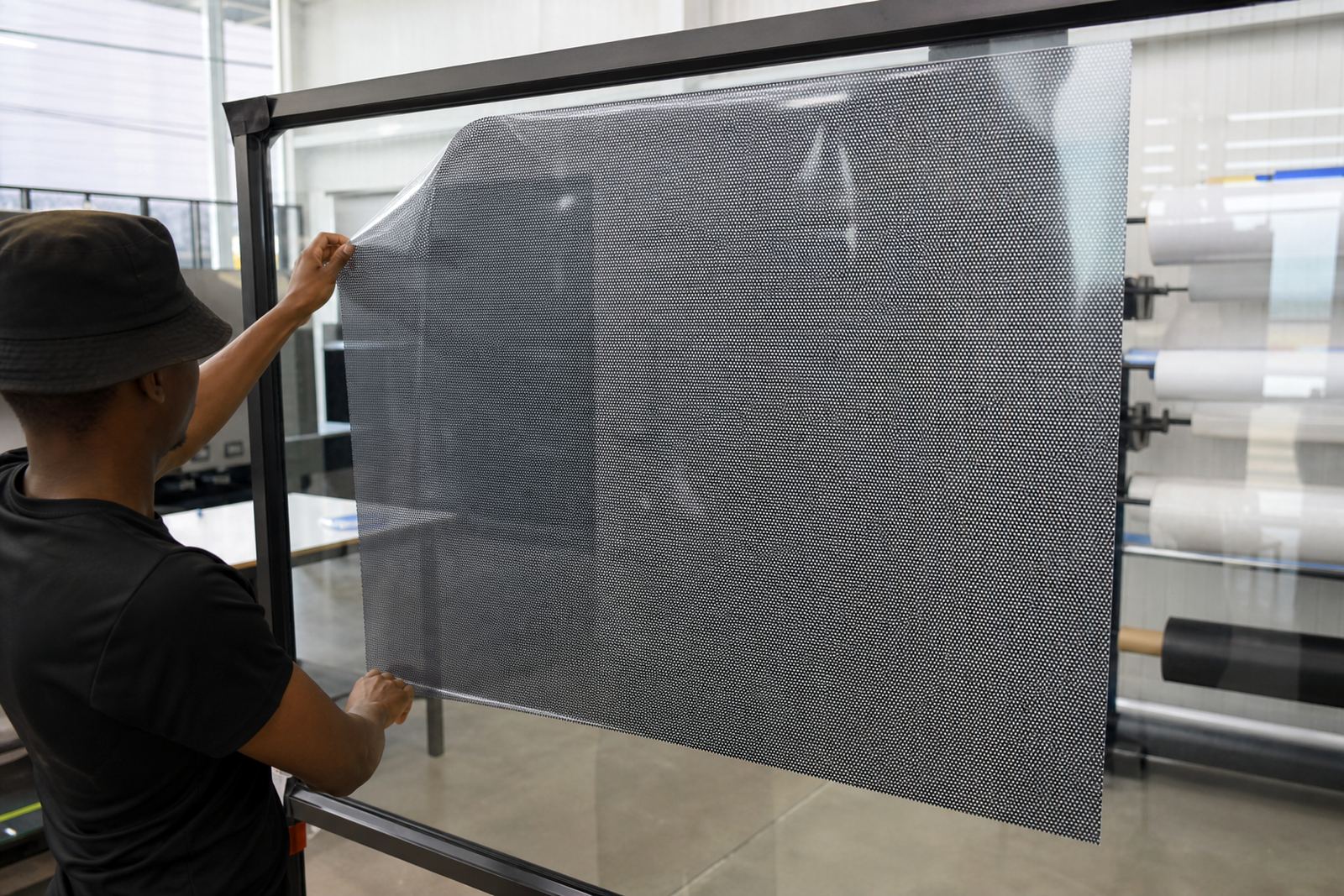
Glass installation starts with surface preparation. The glass must be clean, dry and free from dust, silicone residue, stickers and old adhesive. Old film removal may be needed if there is existing tint or an older printed panel. Edges and corners are checked carefully because trapped dirt can show through the print and shorten the life of the finish.
For site work, the main needs are access to the glass, enough working space, clean water for application and a stable setup for printing and production before installation. On larger shopfront jobs, space is needed for the printer, cutter and lamination equipment.
Vehicle fitting needs a dry bay, shade where possible and enough room to open doors, tailgates or rear hatches. On hot days, glass can warm quickly, so installers often plan early morning or late afternoon work. In windy coastal areas, careful handling matters because dust can settle on the adhesive during application.
How to care for it after fitting
After installation, laminated vision film should be left undisturbed before any vigorous cleaning. Do not scrub the surface straight away, and avoid sharp tools, scourers or solvent based cleaners. For everyday care, a soft cloth, mild soap and clean water will usually do the job. On vehicle windows, keep pressure washers well back and do not target the film edges directly.
The laminate adds a useful extra layer, but the film still needs sensible care. If the panel is on a busy shopfront, regular wiping will help with dust and hand marks. If it is on a delivery vehicle that runs daily between Cape Town, Pretoria and Johannesburg, check the leading edges from time to time for lifting, stone marks or repeated rubbing from door seals.
- Wait before cleaning newly fitted panels
- Use mild soap and soft cloths only
- Check edges after strong wind or frequent washing
- Book servicing if lifting, cracking or print fade starts to show
What to check before ordering
Before ordering, confirm the glass size, whether the panel is for shopfront or vehicle use, and whether you need one sided graphics or a more open view from inside. You should also decide if the design needs privacy, full branding or a mix of both. If the window is curved, tinted, heated or fitted with a defroster grid, the artwork and panel joins must be planned properly.
Ask for the intended perforation ratio, laminate type, finish, and fitting method. For vehicles, make sure the driver area stays compliant. For glass, check whether the site needs old film removal, surface preparation, or refit and refresh work. A proper brief helps reduce wasted material and means the printed panels arrive ready for the job at your branch or site.
- Glass or vehicle dimensions, including curved areas
- Perforation ratio and finish preference
- Use case: promotion, privacy, branding or a mix
- Existing film, stickers or adhesive that must come off
- Location and access for fitting anywhere in South Africa
Supply from Montague Gardens to major South African centres
From our Montague Gardens base in Cape Town, laminated vision film is supplied to retailers, service providers and vehicle owners across South Africa, including Cape Town, Johannesburg, Durban, Pretoria and Gqeberha. Branch areas include Bellville and Milnerton supply routes, with nationwide dispatch available where the job calls for it.
The team handles site measuring, vehicle templating, artwork setup, colour proofing, wide format printing, film lamination, glass installation, vehicle installation and old film removal. If you need a refresh on an existing panel or a fresh print for new branding, the enquiry form on our contact page is the right place to start. Marius Ntsele and the team will then work through the job details, measurements and fitting plan.
Key facts
| Product type | Printed perforated one-way vision film with clear overlaminate |
|---|---|
| Common perforation ratios | 60/40 and 70/30 |
| Typical uses | Shopfront glass, office glass, rear and side vehicle windows |
| Print format | Wide format printed panels with artwork setup and colour proofing |
| Protection layer | Clear laminate for added weathering, colour stability and surface protection |
| Service areas | Cape Town, Johannesburg, Durban, Pretoria, Gqeberha and nationwide dispatch |