What Removable Adhesive Perforated Film Does on Glass
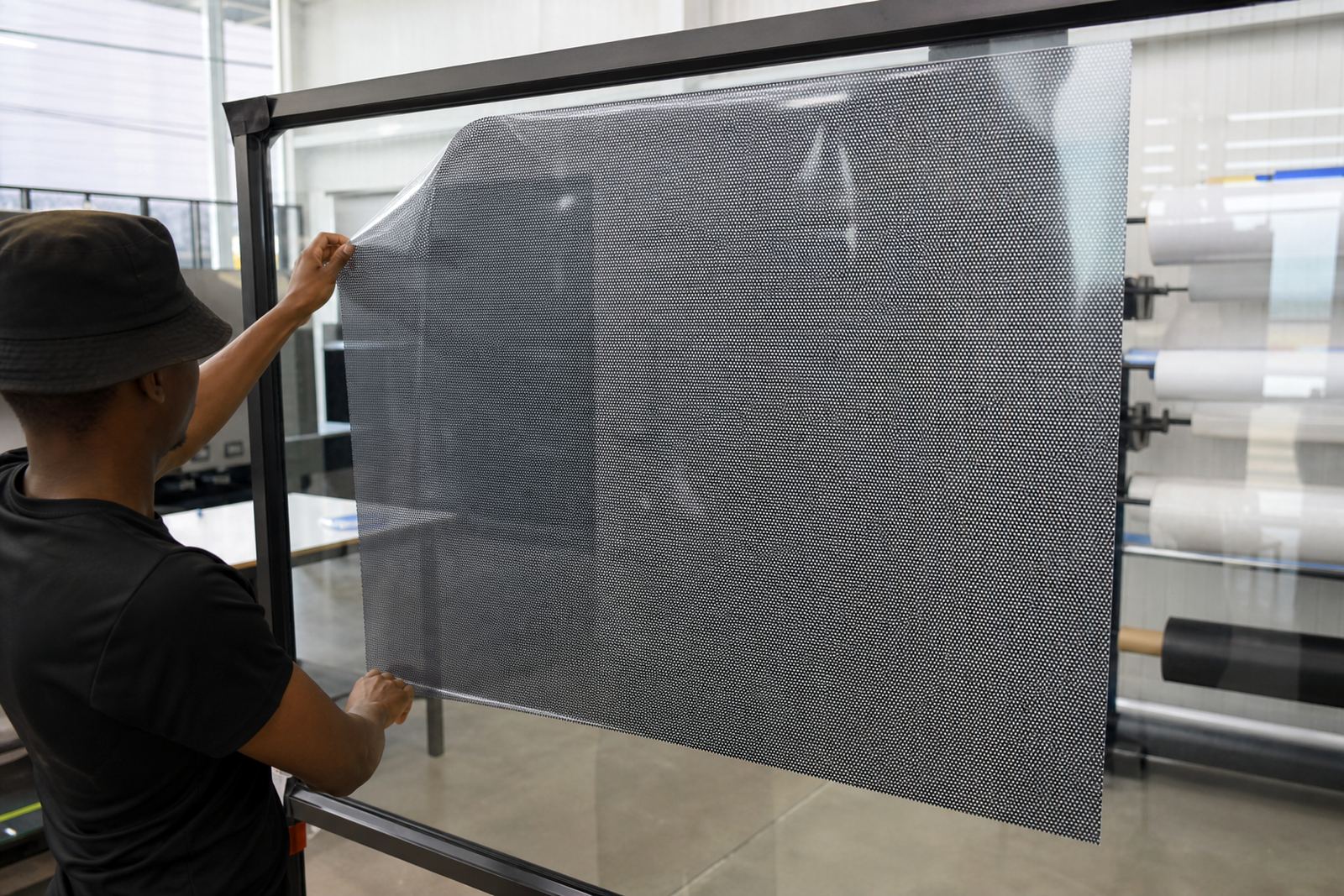
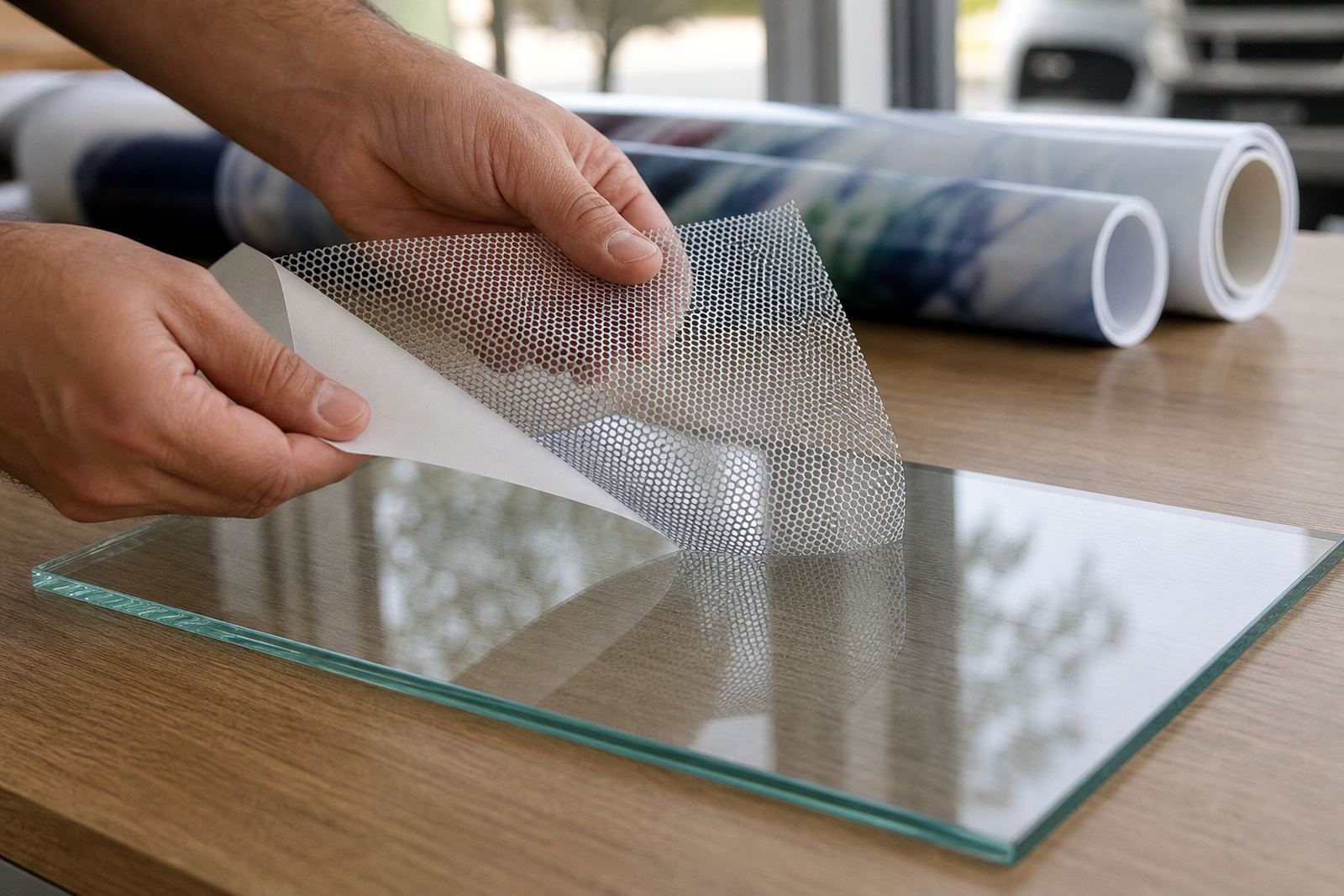
Removable adhesive perforated film is a printed window film with small holes across the face so the outside carries the graphic while the inside still allows daylight and outward visibility. The adhesive is designed for easier removal than long-term permanent films, which makes it a practical choice for seasonal promotions, tenancy changes, campaign refreshes and vehicles that need a cleaner debranding later on. On the outside, it can carry solid colour fields, logos, product messaging or full coverage artwork. On the inside, the perforation pattern lets occupants keep a view out through the glass.
Typical perforation ratios are 40/60, 30/70 and 50/50, depending on how much visibility and print density is needed. A lower open area generally gives stronger print coverage, while a higher open area can improve the inside view a bit. The best choice depends on the window size, viewing distance, interior lighting and whether the film is for a shopfront in Montague Gardens, a retail site in Cape Town CBD, or a vehicle operating between Johannesburg and Pretoria.
Because the film is perforated, the glass should be clean and the installation area dry before fitting. Good edge sealing matters as well, especially on coastal sites where humidity and salt air can work into the edges if preparation is rushed.
Sizes, Print Options and Finish Choices
Removable adhesive perforated film is usually supplied to suit the glass or vehicle panels rather than in a single standard size only. For shopfronts, the film is often printed in wide-format panels for large windows, sliding doors or full frontage runs. For vehicles, the film is cut to suit rear side windows, rear windscreens and certain body glass areas. If the artwork spans multiple panes, panel alignment needs to be checked before print so that logos and text read correctly across joins.
The normal production flow is artwork setup, colour proofing, wide format printing and then lamination where needed. Lamination can help protect the printed surface from scuffing, cleaning chemicals and sunlight. For exterior-facing window film, a matching laminate also helps when the film will be handled often during installation or when it is exposed to traffic spray and dust. Not every job needs the same laminate, so the right choice depends on the route, the duration of the campaign and the finish required.
- Common perforation ratios: 40/60, 30/70 and 50/50
- Suitable for UV print and similar wide-format print processes
- Optional lamination for added surface protection
- Available for flat glass, slightly curved vehicle glass and larger shopfront panes
For campaign work in Durban or Gqeberha, a carefully chosen finish can help the print hold up better in sun and coastal conditions, but the surface must still be cleaned with care.
Where It Suits Best Across Retail and Fleet Work
This film suits retail promotions, estate agents, clinics, gyms, service counters and fleet branding where a neat future removal is important. It is often used on leased premises, temporary activations and short term campaigns where the tenant wants to leave glass in better condition at the end of the lease. For vehicles, it is useful on branded windows for delivery fleets, service bakkies and sales vehicles that may be resold or rebranded later.
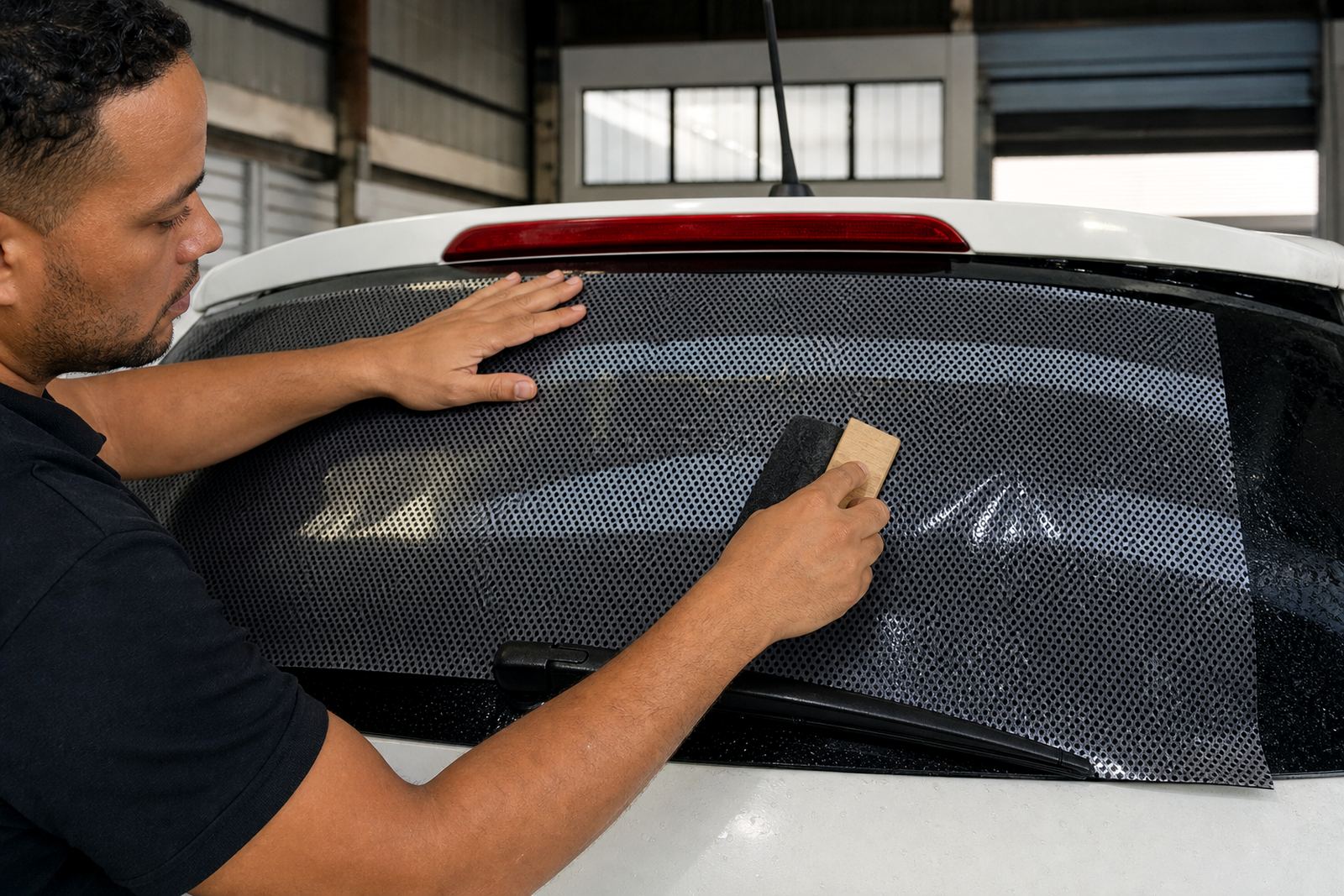
It also works well when a site needs privacy during business hours but still wants outside messaging. In a shopfront, the printed outer face can show trading hours, a promotion or a brand image while the internal side remains practical for staff. On vehicles, it can support branding on rear windows and cargo-area glass without fully blocking the view from inside. That said, vehicle window film must keep the driver view legal, so current road traffic rules should always be checked before fitting any rear window or side window coverage. Compliance can differ by vehicle type and glass position.
- Shopfronts with frequent campaign changes
- Leased offices and retail sites where removal must be cleaner
- Fleet vehicles that will need later debranding or resale
- Temporary events, launches and seasonal promotions
For buildings in Bellville, Milnerton and central Cape Town, this kind of film is handy where glass frontage gets strong foot traffic and the message needs to be readable without making the interior feel closed in.
Installation, preparation and site readiness
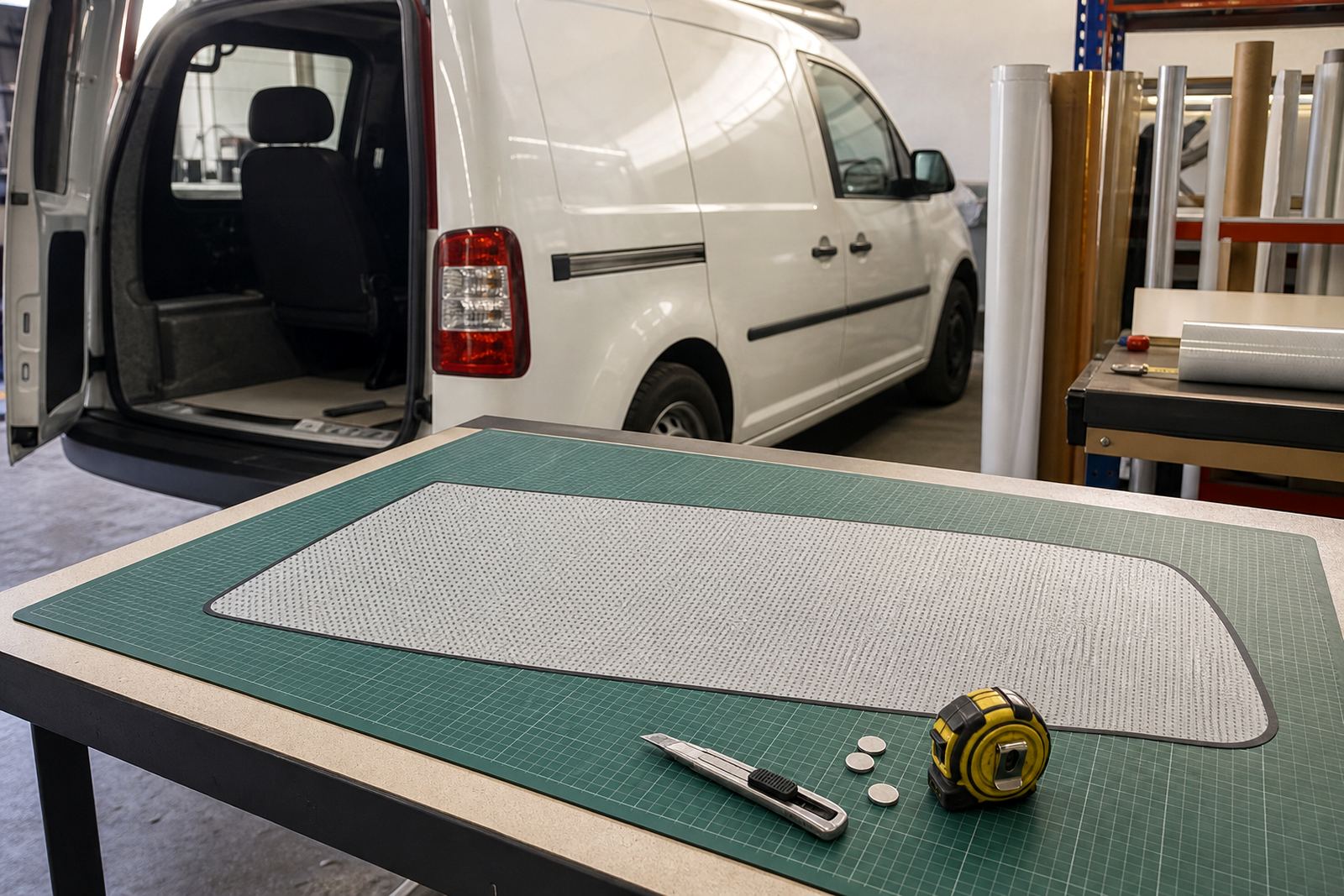
Installation starts with site measuring, surface preparation and artwork checking. On glass, installers need a clean, dry, grease-free surface and enough time to align the panel before the adhesive sets. For vehicles, templating helps shape the film around the window size and any curves so the finish sits neatly with no lifting at the corners. Old film removal may be required first, especially on older shopfronts or second-hand vehicles.
Most special requirements are fairly modest. Standard window film fitting does not require unusual site services. In the workshop, precise cutting and finishing depend on a properly set-up work area. On site, the practical needs are clean water for washing the glass, enough space to work and clear access to the windows. For larger projects across Johannesburg, Pretoria and Cape Town, planning also needs to allow for traffic, parking and site access rules.
If the film is going onto a vehicle that has fresh paintwork or recently detailed glass, curing times should be respected first. On commercial premises, surface prep around frames, silicone beads and dusty edges makes a big difference to how well the film sits over time.
Care, Cleaning and When to Refit
Once fitted, perforated removable adhesive film should be cleaned gently. Soft cloths, mild soap and water are usually enough. Avoid harsh solvents, high-pressure washing at close range and abrasive pads, because these can lift edges or damage the printed surface. On vehicles, wash pressure should be kept light around the edges, mirrors and rear windows. On shopfronts, staff should also avoid sticking tape or posters on top of the film unless that is part of the plan.
The film can be serviced when edges begin to lift, the surface becomes scratched, or the campaign artwork changes. For long-running sites, a refit and refresh can keep the frontage looking tidy without replacing the whole glass treatment. If the film needs to come off, the removable adhesive should make the process cleaner than a permanent bond, although age, sun exposure and the original surface condition will still affect removal. Coastal sites and vehicles parked outdoors in direct sun may need checks sooner than shaded sites.
- Clean only with soft materials and mild detergents
- Avoid close-range pressure washing and scraping tools
- Inspect edges after strong wind, heavy rain or long sun exposure
- Plan removal before the adhesive has aged too long in direct heat
For businesses in Durban or Gqeberha where salt and humidity are part of daily life, a regular inspection can prevent small edge issues from becoming bigger ones.
What To Confirm Before Ordering
Before ordering, check the glass size, the intended viewing direction, whether the film is for internal or external application, and whether the artwork needs to line up across several panes. Confirm the perforation ratio, the print side, the finish and whether lamination is required. If the film is for a vehicle, check the exact window position, vehicle model and the latest visibility rules so the driver view stays legal. If the film is for a shopfront, check any landlord or municipal signage rules that may affect size, placement or glare.
You should also confirm how long the film needs to stay in place, whether the site wants old film removed first, and whether the fitment team will be working at a branch, depot or customer premises. For multi-site rollouts across Cape Town, Johannesburg, Durban, Pretoria and Gqeberha, the order should note each address clearly so the production and dispatch teams can sequence the work properly.
One useful check is to ask what the message must do from the street and from the inside. That simple question helps choose the right perforation balance, print density and finish. It saves time later and keeps the job practical, not just eye-catching.
Key facts
| Product type | Perforated window film with removable adhesive |
|---|---|
| Common perforation ratios | 40/60, 30/70, 50/50 |
| Print method | Wide-format printed graphics |
| Finish options | Print only or laminated print |
| Application surfaces | Shopfront glass and vehicle windows |
| Service areas | Cape Town, Johannesburg, Durban, Pretoria and Gqeberha |