What solvent print film is and how it works
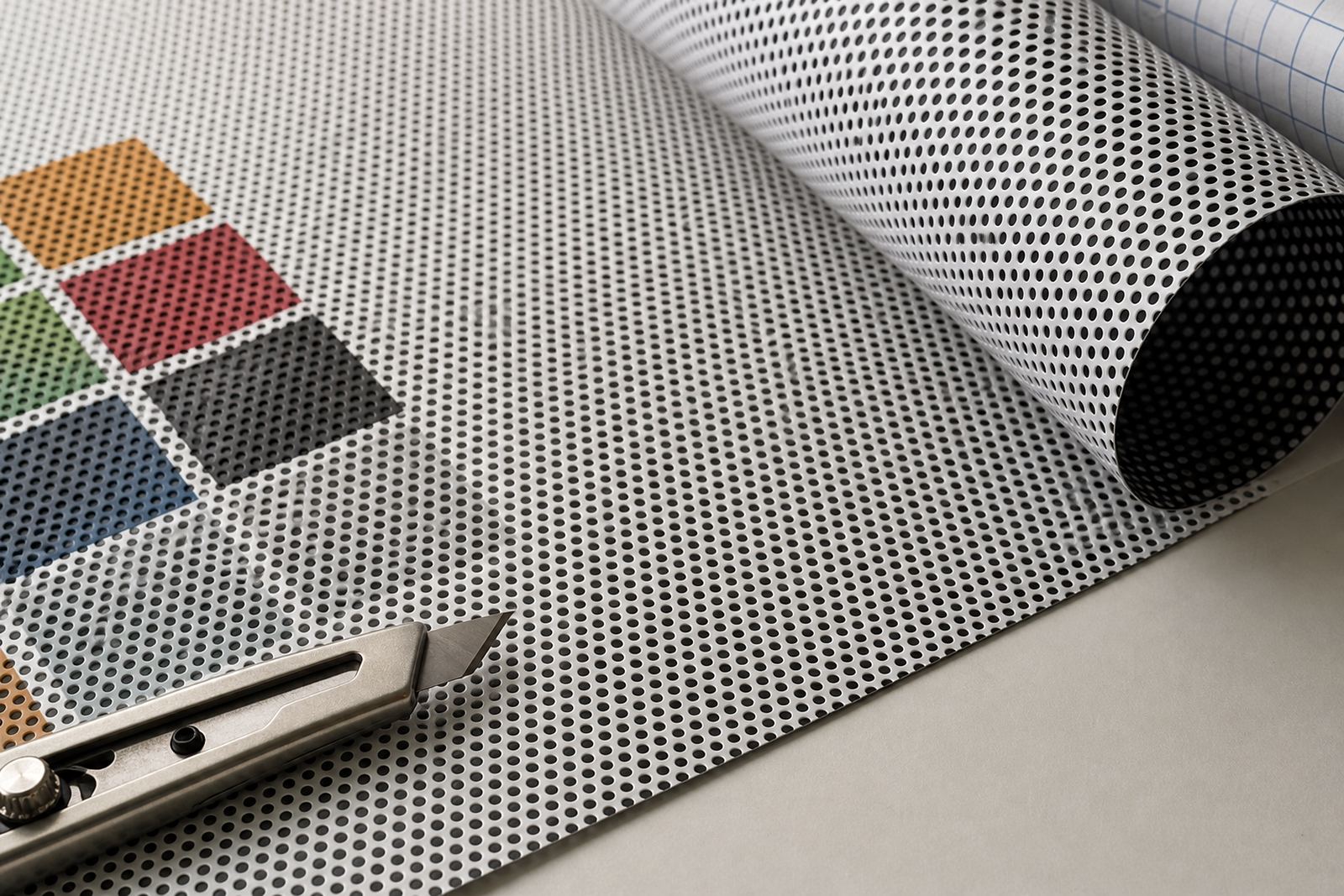
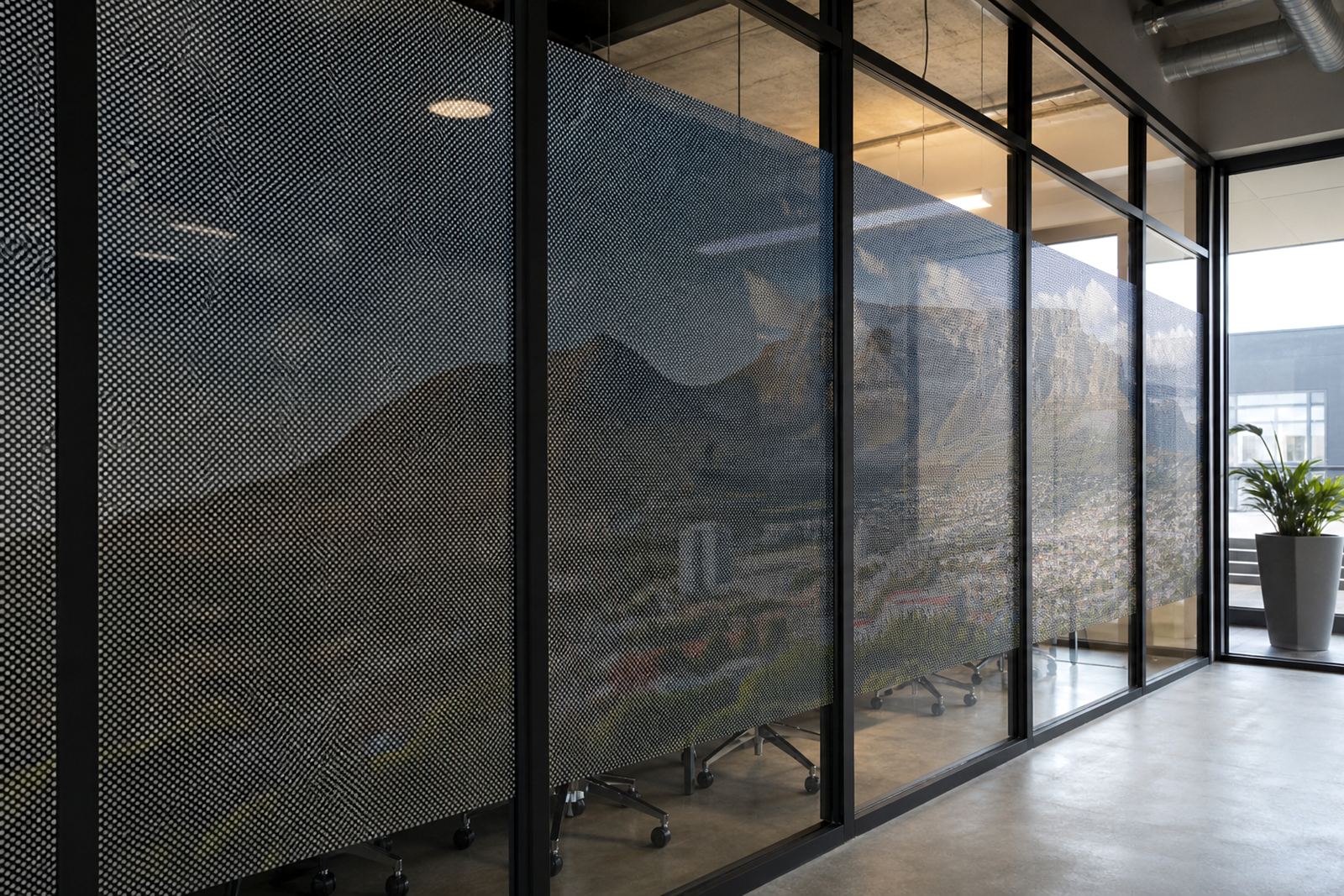
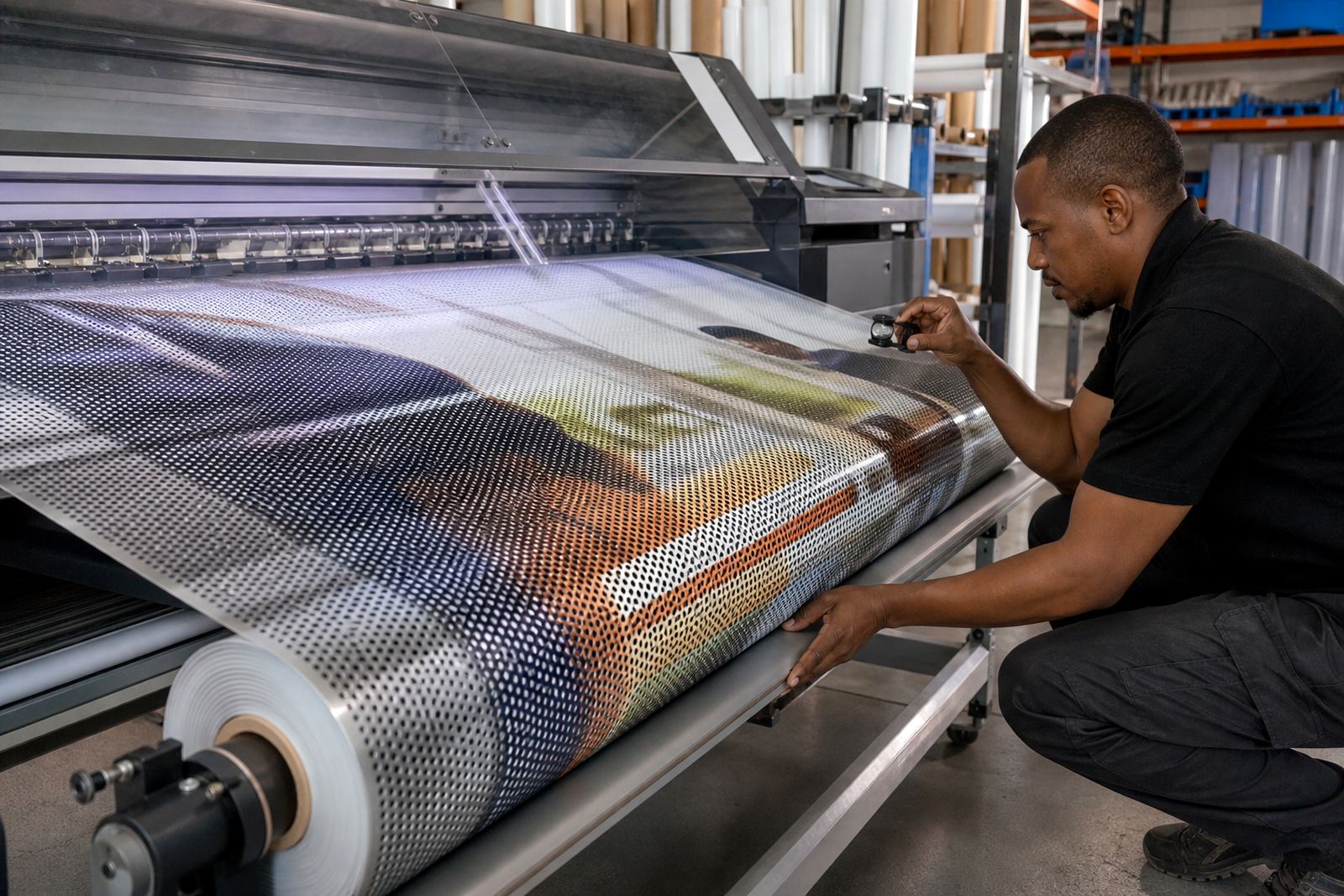
This self-adhesive vinyl film has tiny holes across the face. From the outside, the printed image reads as a full graphic. From the inside, the holes allow a clear view out, which is why it suits shopfront glazing and rear vehicle windows. The darker the space inside, the stronger the one-way effect, so lighting conditions matter when choosing where to use it.
This product is commonly supplied for solvent-style printing, where the inks bond well to the printable face and hold up in sun, rain and daily handling. The finished film is then applied to clean glass or vehicle windows with a squeegee and fitting solution, then trimmed neatly to suit the opening. On glass, the adhesive faces the inside or outside depending on the brief and access, while on vehicles it is usually fitted to rear side windows and back glass only where allowed.
For most jobs, the key balance is visibility versus coverage. A tighter perforation pattern gives a stronger printed image but reduces inside-out visibility slightly. A more open pattern improves the view out, though the graphic can read a little lighter from a distance. We help match that to the site, the vehicle, and the way people will use the space.
Available options, sizes and finish choices
Solvent print film is usually ordered in roll form for wide format printing and cutting. Common widths are suited to shopfront panels and vehicle sections, while the exact roll size depends on the production line and the panel layout. The film can be supplied with a printable white face and pressure-sensitive adhesive backing, with either permanent or removable adhesive depending on the application and the planned replacement cycle.
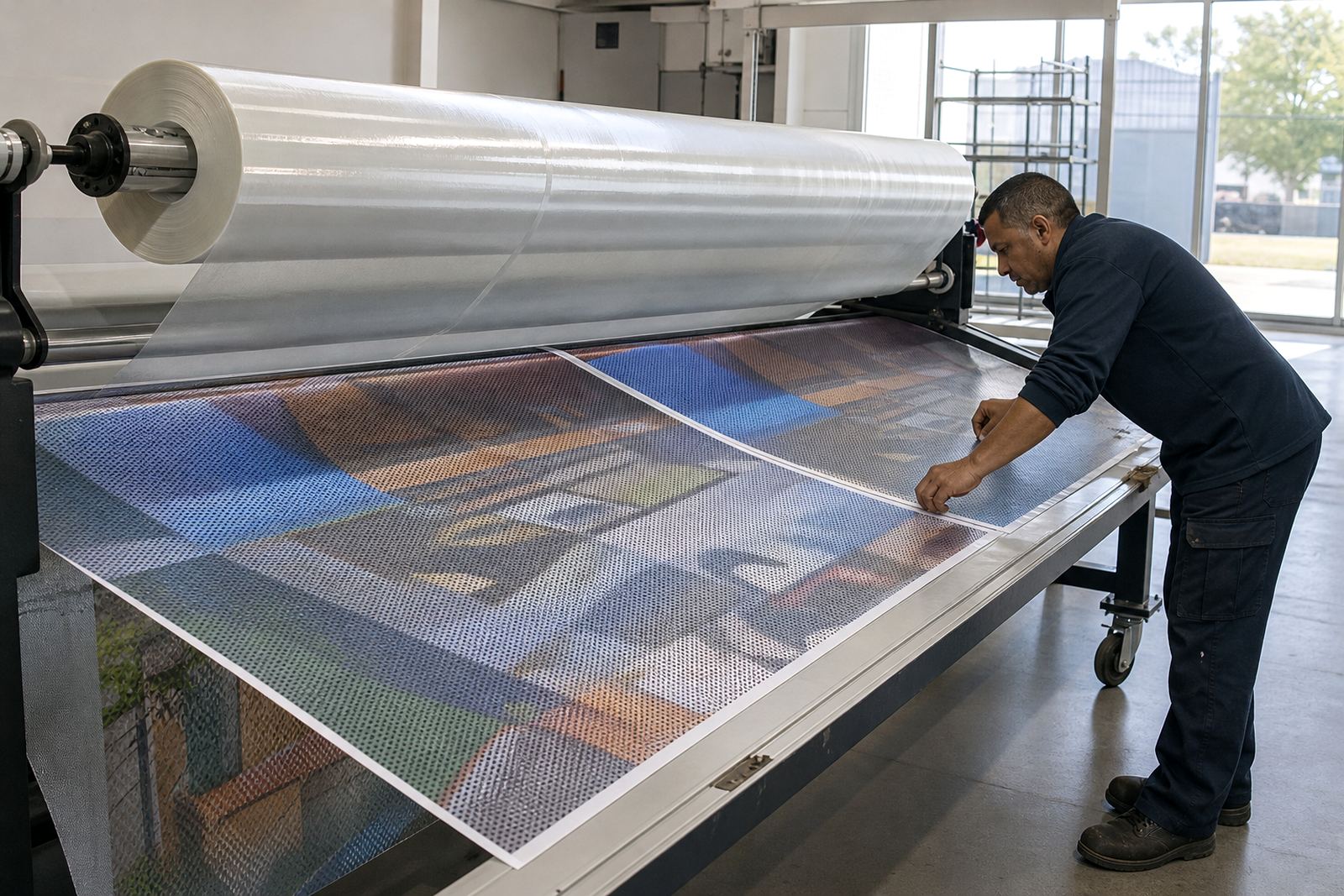
Where a stronger image is needed, the printed film can be laminated after printing. Lamination helps protect against abrasion, cleaning chemicals and prolonged exposure. For vehicle work, it also improves the chance that the print stays crisp through daily use, washing and road grime. For glass installations in exposed coastal areas like Milnerton, Muizenberg and Durban, lamination is often worth considering because salt air and wind-blown dust can shorten the life of unprotected print.
- Perforation ratios can vary to suit visibility and print density
- Printable face for solvent-style exterior graphics
- Lamination available for added protection
- Roll supply suitable for shopfront panels, fleet windows and display glazing
- Choice of permanent or removable adhesive depending on the job
If your artwork has fine text, light colours or small logos, it is best to confirm the intended viewing distance before production starts. A panel that looks sharp at close range can lose detail if the perforation is too open for the job.
Where it suits best across shopfronts and fleets
This film is a practical fit for retailers, service counters, offices, clinics, showrooms and any premises with large glazed areas that need to carry messaging without blocking the whole view. It is also used on cars, vans, bakkies and buses for branding on rear and side windows. It works well where you want to turn glass into paid media space without losing natural light inside.
For shopfronts, the film is useful on street-facing panes, entrance glazing and side panels. It can be used for promotions, privacy, operating hours, directional messaging or general branding. On vehicles, it is common on rear screens and rear side windows where the driver view must remain legal. Current road traffic rules should be checked before specifying coverage on any vehicle window, because legal requirements can change and they may differ by window position and vehicle type.
- Retail shopfronts and malls
- Corporate and service office glazing
- Fleet vehicles and delivery vans
- Shuttle and passenger transport windows where permitted
- Temporary promotions and seasonal graphics
In a busy city or on a roadside site, the printed face does a lot of the work for you. A clear, well placed graphic can be read by pedestrians, motorists and people waiting at traffic lights, while the inside view stays usable for staff or passengers.
Printing, lamination and production checks
Artwork for solvent print film needs to be set up with the perforation in mind. Thin lines, tiny lettering and very pale colours can disappear or lose strength once the film is applied to glass. Solid fills, bold type and clean logo shapes usually give better results. White ink handling, if required in the workflow, should be checked before printing because the background and the inside view both affect how the final piece reads.
During production, the film should be laid flat, printed in the correct orientation and allowed to dry before cutting or lamination. If the job is laminated, the laminate must suit perforated media so the holes do not trap bubbles or distort the view. On larger runs, it is worth doing a proof panel first, especially where the print must align across multiple panes or wrap around a vehicle body line.
- Confirm artwork scale and panel size before printing
- Check whether the film will be read from close range or across a road
- Allow drying time before installation or finishing
- Use suitable laminate for perforated media if extra protection is needed
- Keep registration marks and panel notes clear for multi-pane work
For complicated glazing, site measuring and vehicle templating make a real difference. A clean template saves trimming time, reduces waste and helps the graphic sit properly against handles, rubbers and curved corners.
Installation on glass, windows and vehicles
Good installation starts with proper surface preparation. Glass must be clean, dry and free from polish, dust, wax and adhesive residue. Old film removal may be needed if a previous sign is still in place. On vehicles, the window area should be wiped down carefully and any trim or rubber edges checked before fitting. In coastal areas, moisture and fine sand can affect adhesion, so a clean install day matters.
For shopfronts and internal glazing, the film is positioned, squeegeed and trimmed to the window line. Larger panes may need two installers for alignment and tension control. For vehicles, rear windows often require more care because of curves, heaters and seals. Careful handling may be needed on complex shapes, though too much heat can damage the film or soften the adhesive too quickly. In some sites, the crew may also need a safe working area and enough space around the glass to fit cleanly.
It also helps to consider access. If the site is on an upper floor, in a mall, or in a windy loading area, the installer needs room to work safely. For repeated branding changes, refit and refresh planning can save time and keep the glass looking tidy between campaigns.
Care, Servicing And Ordering Checks
Once fitted, solvent print film should be cleaned with a soft cloth or sponge and a mild cleaner, not harsh solvents or abrasive pads. High-pressure washing close to the edge is not recommended on vehicle installations. For shopfronts, avoid scraping labels or tape over the printed area. If the film is laminated, it will take ordinary cleaning better, but it still needs sensible handling to keep the print sharp.
Before you order, check the window size, the exact surface type and whether the view out must stay clear for staff, drivers or passengers. Confirm if the application is inside-facing or outside-facing, and whether the site has tint, frosting, safety film or heater wires that may affect adhesion. For vehicle work, confirm legal visibility requirements for the driver view and check the current road traffic rules before sign-off. It is also wise to decide whether the job is for short-term promotion or longer-term branding so the adhesive choice and lamination can be matched properly.
- Measure the visible glass area, not just the frame
- Confirm inside or outside application
- Check if the window has tint, frost or existing film
- Decide if the graphic needs removable or permanent adhesive
- Ask for colour proofing if brand colours must stay accurate
- Confirm whether lamination is required for abrasion or weather protection
For supply across Cape Town, Johannesburg, Durban, Pretoria and Gqeberha, it helps to order with the final use in mind. A well planned panel fits better, lasts longer and gives a cleaner finish on both glass and vehicles.
Key facts
| Product type | Printable perforated one-way vision film for exterior branding |
|---|---|
| Print compatibility | Suitable for solvent-style wide format production methods |
| Perforation | Available in different perforation ratios to balance visibility and image density |
| Finish options | Printable face with optional protective lamination |
| Application surfaces | Glass shopfronts, office glazing, vehicle windows and approved transport glazing |
| Supply areas | Montague Gardens, Cape Town, Johannesburg, Durban, Pretoria, Gqeberha and nationwide dispatch |