
Printed Rear Window Film That Still Works From The Driver Seat
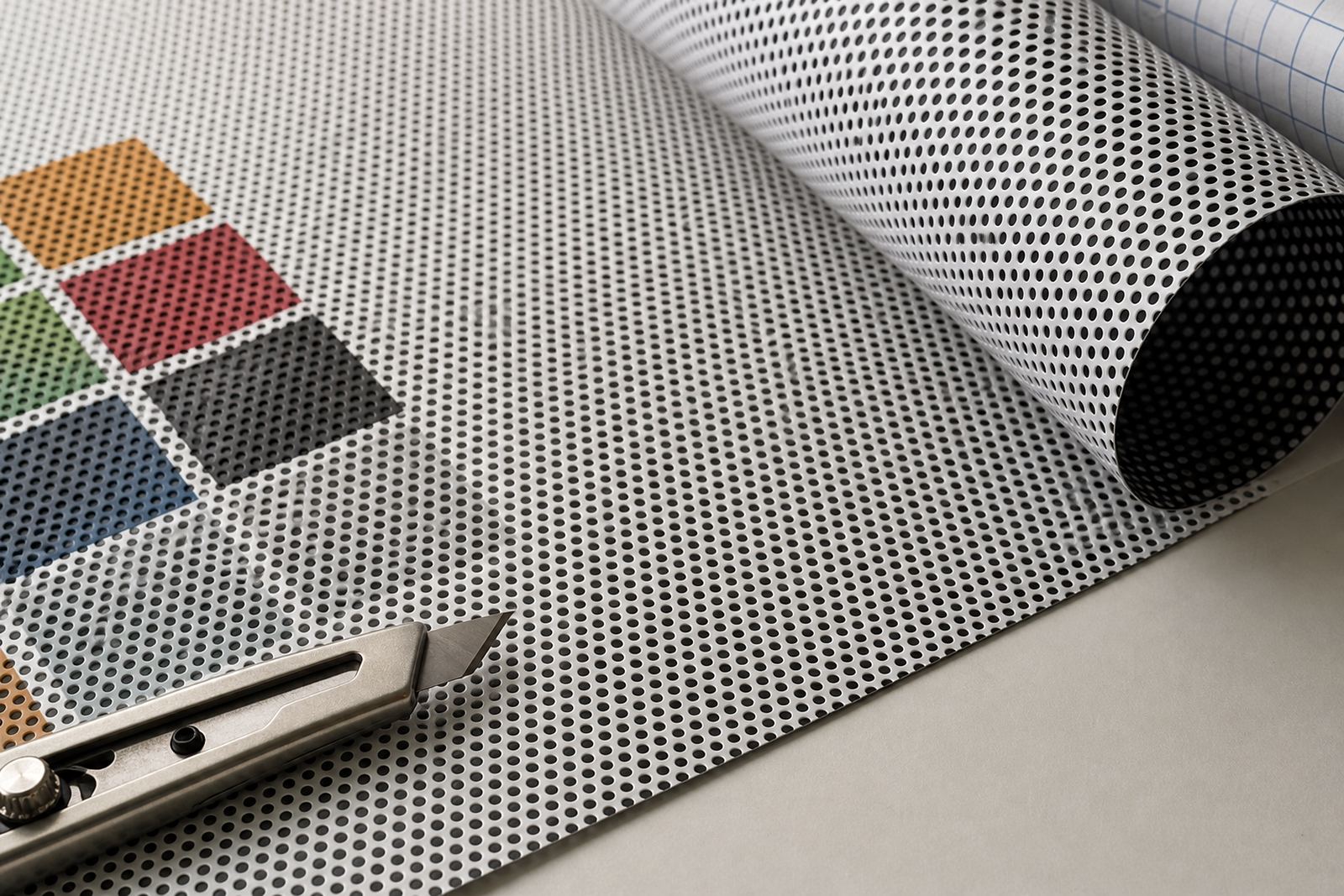
Rear screen film is a perforated one way vision film fitted to the back window of a vehicle so graphics show clearly from the outside while the driver and passengers can still see out. The film uses a matrix of tiny holes in the printed face, usually with an open area ratio in the 40/60, 30/70 or 50/50 range depending on the balance needed between image coverage and see through. A finer perforation generally gives a fuller print, while a more open pattern gives better rear visibility.
For fleet branding, service vehicles and delivery traffic, this is one of the neatest ways to use the back glass as advertising space. It is also useful for vehicles that park in public view all day, where the rear window can carry contact details, a logo or full colour artwork without blocking the cabin view completely. The key is correct artwork setup, because small text, thin lines and pale colours can close up once printed on perforated material, so layout choices matter more than people think.
- Suitable for rear passenger windows and rear windscreens
- Printed on perforated self adhesive film with a clear removable liner
- Can be colour matched through proofing before print
- Designed to work with glass and curved rear panels
Sizes, Perforation Options And Print Build
Rear screen film is normally supplied as a made-to-order printed panel or as a set of panels cut to the vehicle window shape. The most common build starts with surface preparation, then wide format printing, followed by lamination where required for added protection against sunlight, washing and light abrasion. On some rear windows, especially vehicles kept outdoors in Cape Town, Durban or Gqeberha, lamination helps slow fading and gives the printed face a cleaner wipe down.
Panel sizing depends on the vehicle type and on what clearances are needed around the demister lines, rear wiper sweep and the dark frit border on the glass. On some hatchbacks the available print area is generous, while on a small panel van the usable space can be more limited. We also check whether the rear glass has a steep curve or a tighter edge seal, because that affects how the film should be trimmed and applied. For vehicles with heated rear screens, the film must sit cleanly over the glass without trapping bubbles along the lines.
- Perforation ratios typically selected to suit visibility and print density
- Gloss or matte overlamination can be used where needed
- Single panel, split panel, or full rear window coverage available
- Artwork can be prepared for left and right viewing angles
Where Rear Screen Film Suits Best
This product suits company cars, service bakkies, shuttle vehicles, panel vans and light delivery vehicles that need advertising space without losing sight through the back window. It also suits shop vehicles that spend long hours on the road between Cape Town, Johannesburg, Durban, Pretoria and Gqeberha, because the rear window is often the last free surface that can carry a clear message. If your work depends on parking in municipal bays, loading zones or customer sites, rear screen film can help the vehicle look organised and current.
It is a practical option for trades, food delivery, maintenance teams, estate agents, mobile services and any operator that wants a cleaner look than loose signage or magnetic panels. On vehicles with rear wipers, the design has to allow for the blade path or the wiper will mark the print over time. On vehicles with strong rear demisters, the film should be placed so the heating lines are not damaged during fitting. That kind of setup is what keeps the job tidy and long lasting.
- Best for fleet branding and route vehicles
- Works on glass with demister lines and rear wipers
- Useful for daily road use and regular parking outdoors
- Can be matched to other vehicle graphics for a full set
Installation and vehicle checks
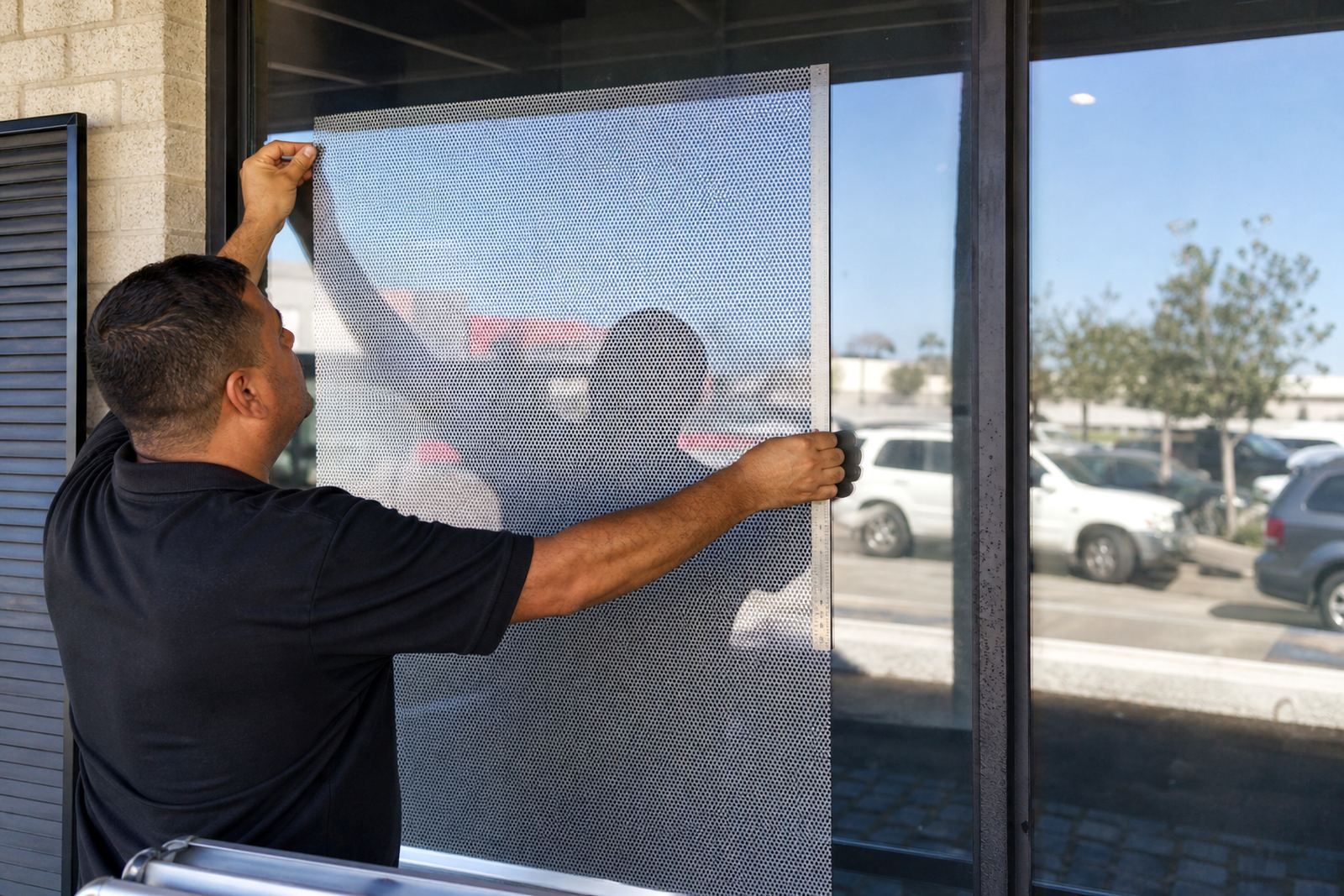
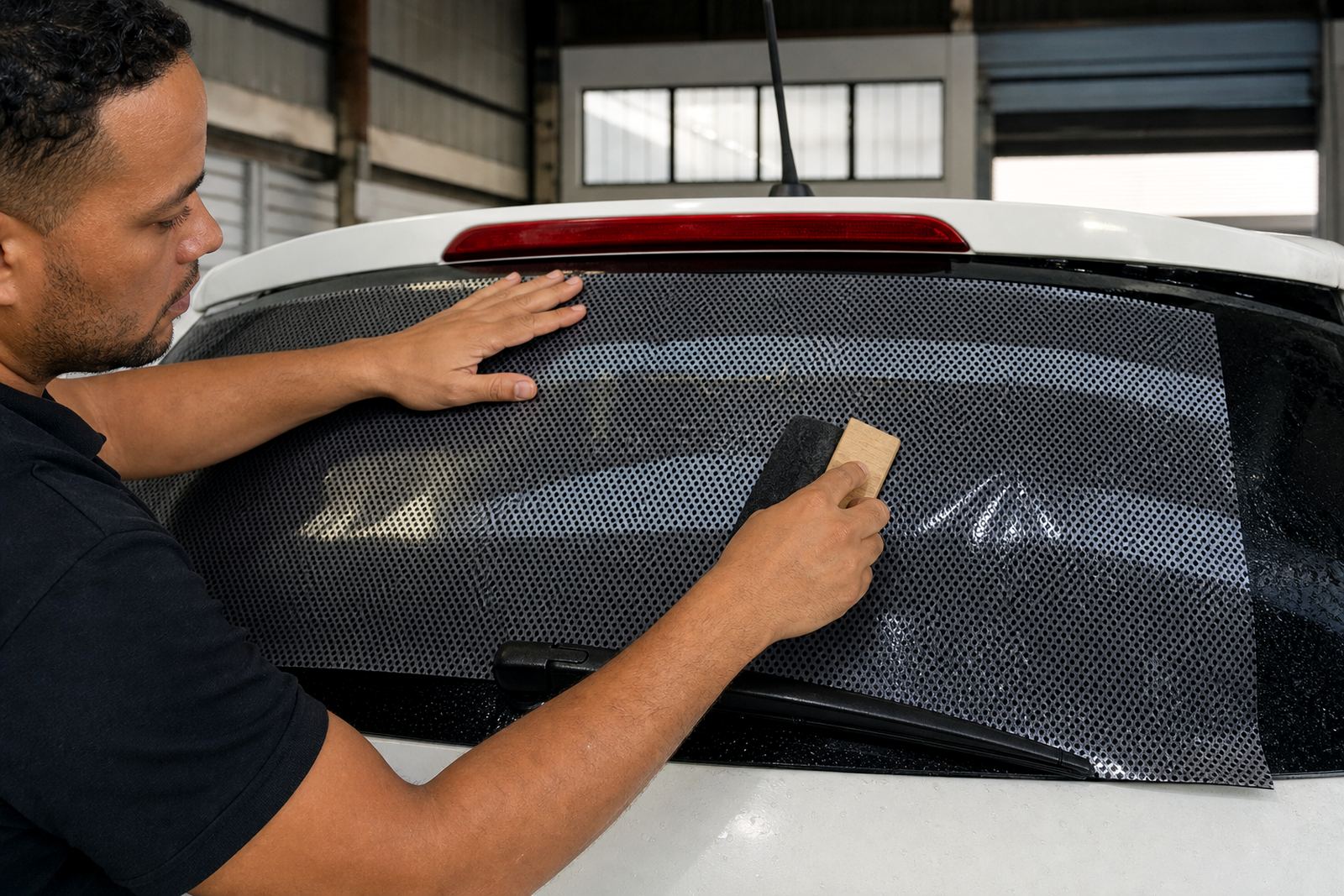
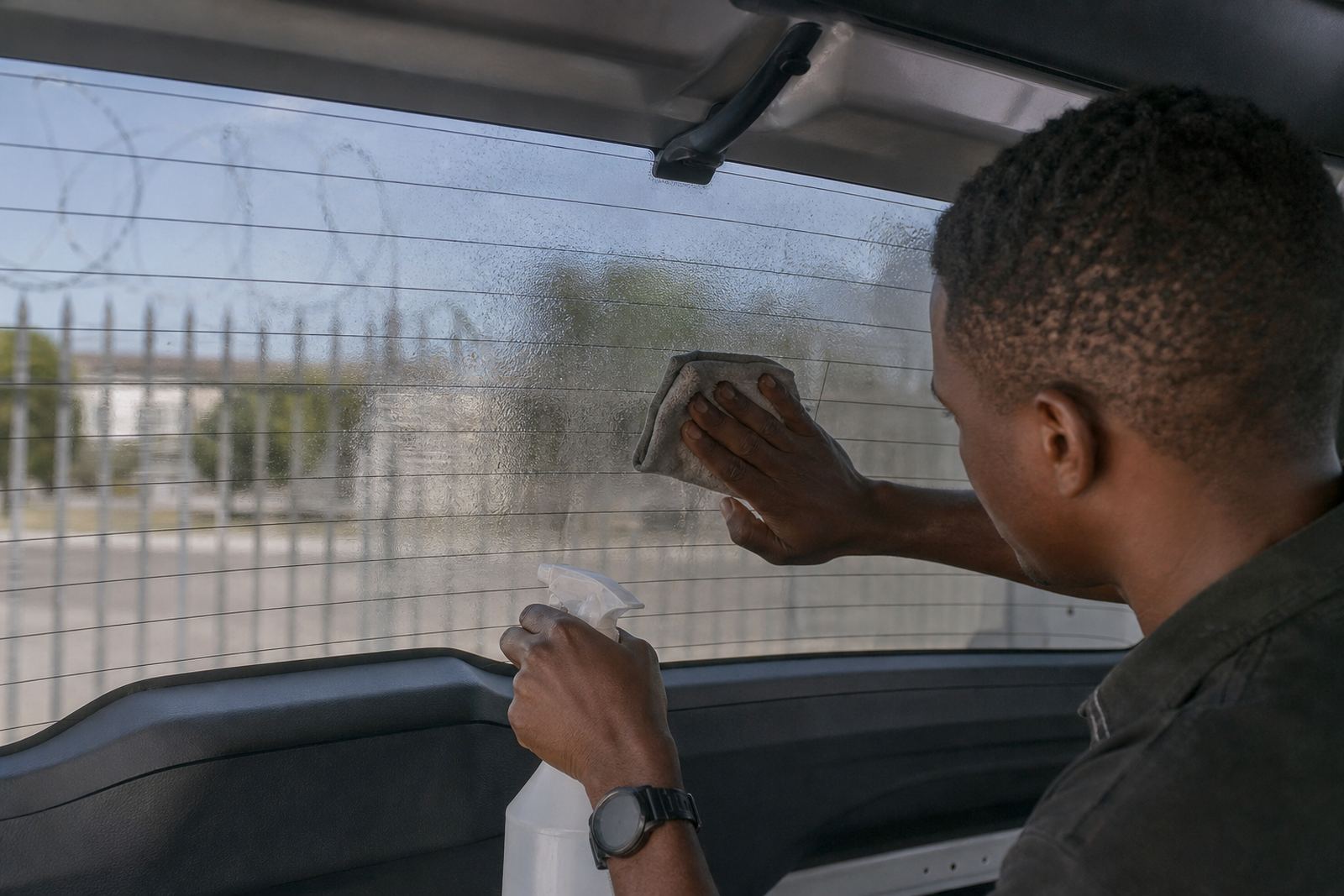
Rear screen film does not need any special supply to work, and once fitted it relies on proper adhesion and a clean glass surface. Installation starts with careful surface preparation, including removal of dirt, wax, silicone and old adhesive if the rear screen has been used before. If the vehicle already has old film, removing it properly matters just as much as fitting the new film. A rushed strip can leave residue that stops the new film from bonding correctly, especially on heated glass.
Vehicle templating is used where possible so the film follows the curve of the window and does not pull off at the corners. The fitter also checks that the rear demister and wiper stay usable after install. On some vehicles, the top brake light or antenna area has to be kept clear. If the rear screen opens as a hatch, the installer needs to make sure the edge does not catch when the door is closed. These checks are simple, but if missed they cause trouble later. We take them seriously because small faults show quickly on a rear window.
- No special supply required
- Clean glass, dry fit conditions and correct cure time are essential
- Rear wiper and heater line clearance must be checked before cutting
- Surface prep helps with adhesion in coastal humidity
Care, Washing And Ongoing Servicing
After fitting, rear screen film should be left to settle before the vehicle is washed. This curing period gives the adhesive time to grab properly, especially in cooler weather or in damp coastal conditions. Once cured, the film can be cleaned with a soft cloth and mild soap solution. Avoid sharp scrapers, high pressure spray held too close to the edge, and harsh chemicals that can dull the print. The rear glass often carries road film and exhaust dust, so a gentle wash routine is enough for most vehicles.
If the vehicle is rebranded, sold, repaired or repainted, the film can be removed and replaced. That is often part of a fleet refresh when logos change, phone numbers change or the old design no longer matches the rest of the vehicle set. We also handle refit and refresh work for businesses that want one panel replaced after an accident repair or window repair. The important thing is to remove the old film carefully so the glass is not marked and the heater lines are left intact.
- Wait for the adhesive cure period before washing
- Use mild soap and soft cloths only
- Do not pick at corners or scrape the print
- Replacement is straightforward when branding changes
What To Check Before You Order
When ordering rear screen film, send clear vehicle details and tell us whether the vehicle has a rear wiper, demister lines, a split rear window or a hatch that opens upward. That lets the artwork and cutting be planned correctly from the start. It also helps to know whether the rear glass is tinted, because very dark glass can reduce inside visibility and may call for a different perforation ratio. If the vehicle is used at night, on highways or in rain, sight through the rear window becomes even more important.
For road use, the driver view must remain legal and safe, so check the current South African road traffic rules before committing to any rear window coverage. That is especially important on passenger vehicles and light commercials where rear visibility matters to mirrors and reversing. We can advise on practical layout choices, but the final fit should always respect the legal viewing requirement. A good rear screen should do its job without turning the window into a dark block.
- Confirm vehicle make, model, year and rear glass shape
- Tell us if there is a wiper, heater lines or opening hatch
- Check tint level and whether you want full or partial coverage
- Keep legal rear visibility in mind before approving the final layout
Key facts
| Material | Perforated self adhesive one way vision film for vehicle rear glass |
|---|---|
| Perforation options | Common print builds set to 30/70, 40/60 or 50/50 style visibility balance |
| Print method | Wide format colour printing with artwork proofing before production |
| Finish options | Unlaminated or laminated, depending on exposure and cleaning needs |
| Fitment areas | Rear windscreens, rear passenger windows and fleet vehicle glass |
| Service scope | Site measuring, vehicle templating, print, installation, old film removal and nationwide dispatch |