What flat glass film is used for
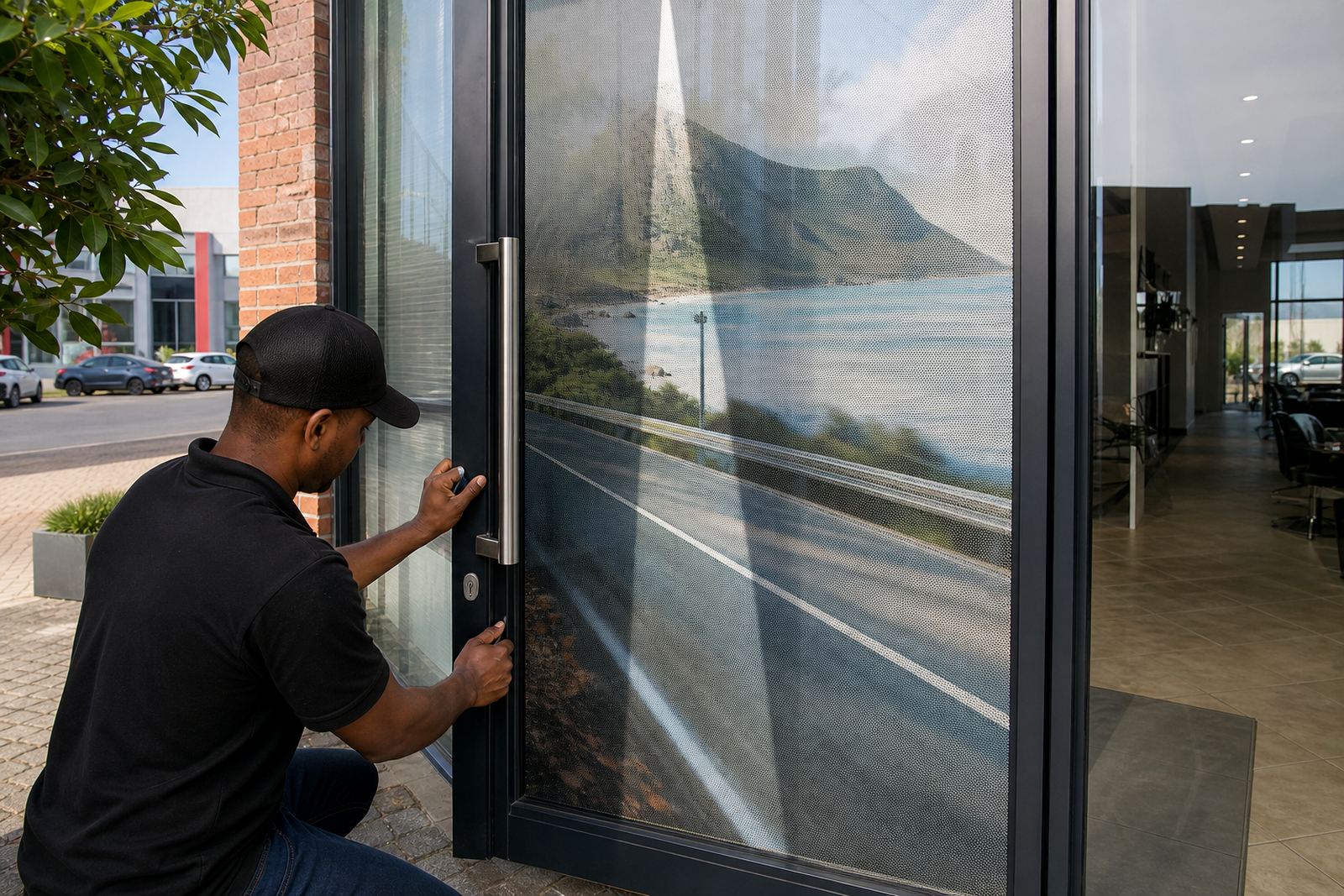
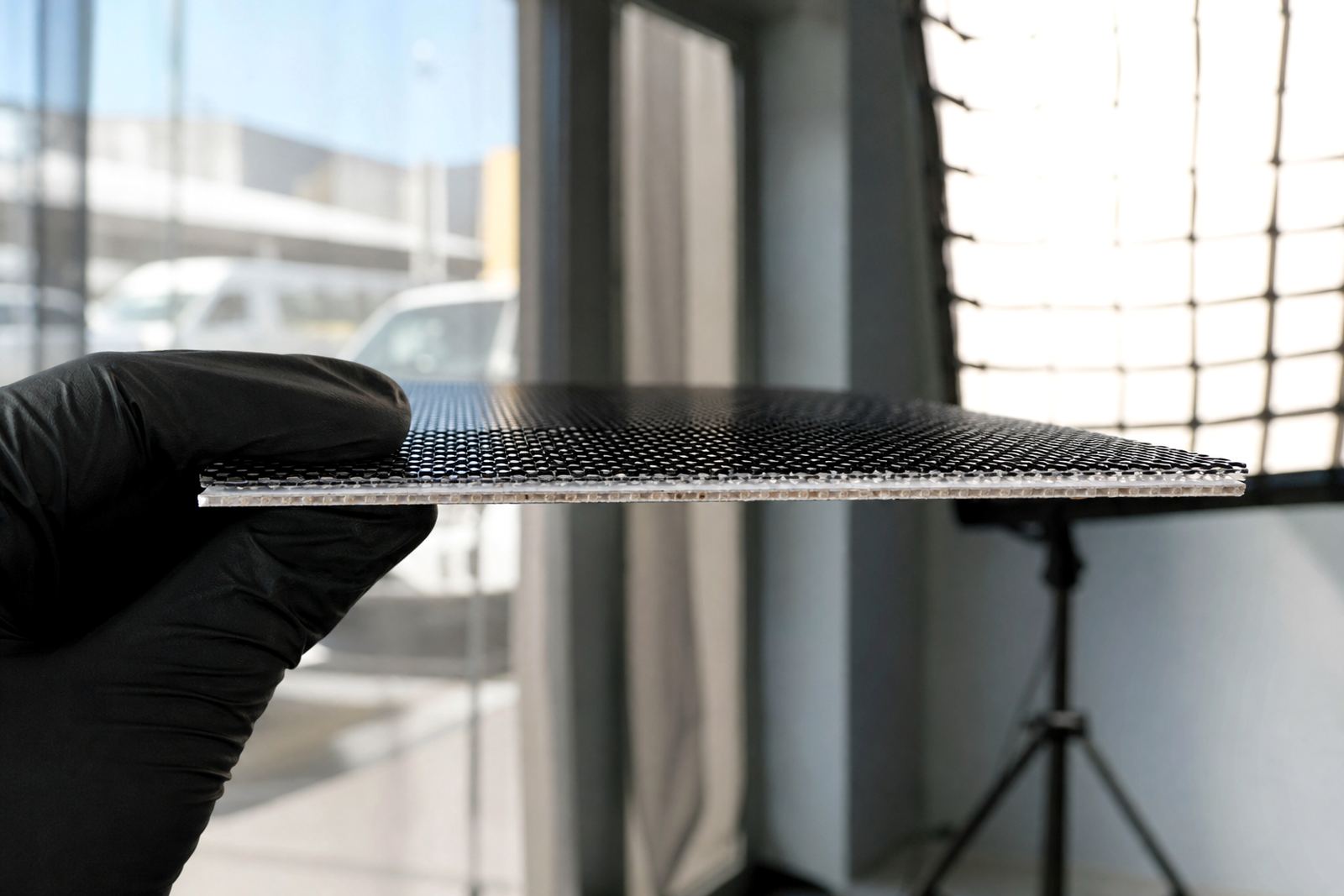
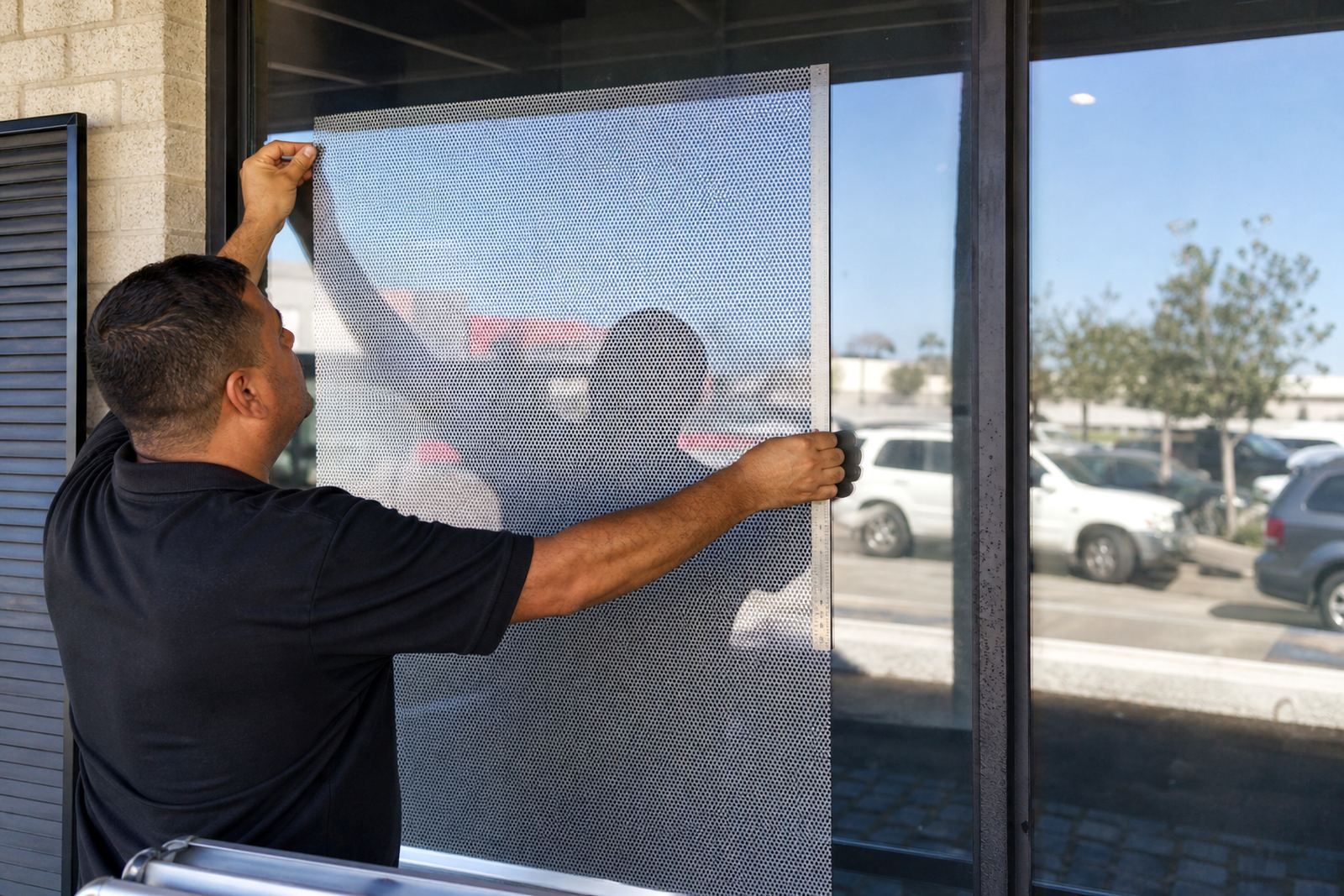
Flat glass film is a perforated vinyl used on straight panes where a clear internal view and an outside printed image are both needed. It is common on shopfronts, reception areas, corridor glazing and meeting room partitions because it lets you work with the existing glass rather than replacing it. The film is printed on the outside face, then applied to the glass with the perforation pattern still allowing light through from inside. On the street side you get a branded graphic, while the inside view stays open and useable.
The usual perforation ratios are 40/60, 30/70 and 50/50, depending on how much visibility and graphic density you want. A tighter perforation normally gives a stronger image on the outside, while a more open pattern gives better internal visibility. For many retailers a 70/30 style balance is the best middle ground, but every site should be checked against the glass size, viewing distance and the amount of daylight coming into the space.
Sizes, print options and finish choices
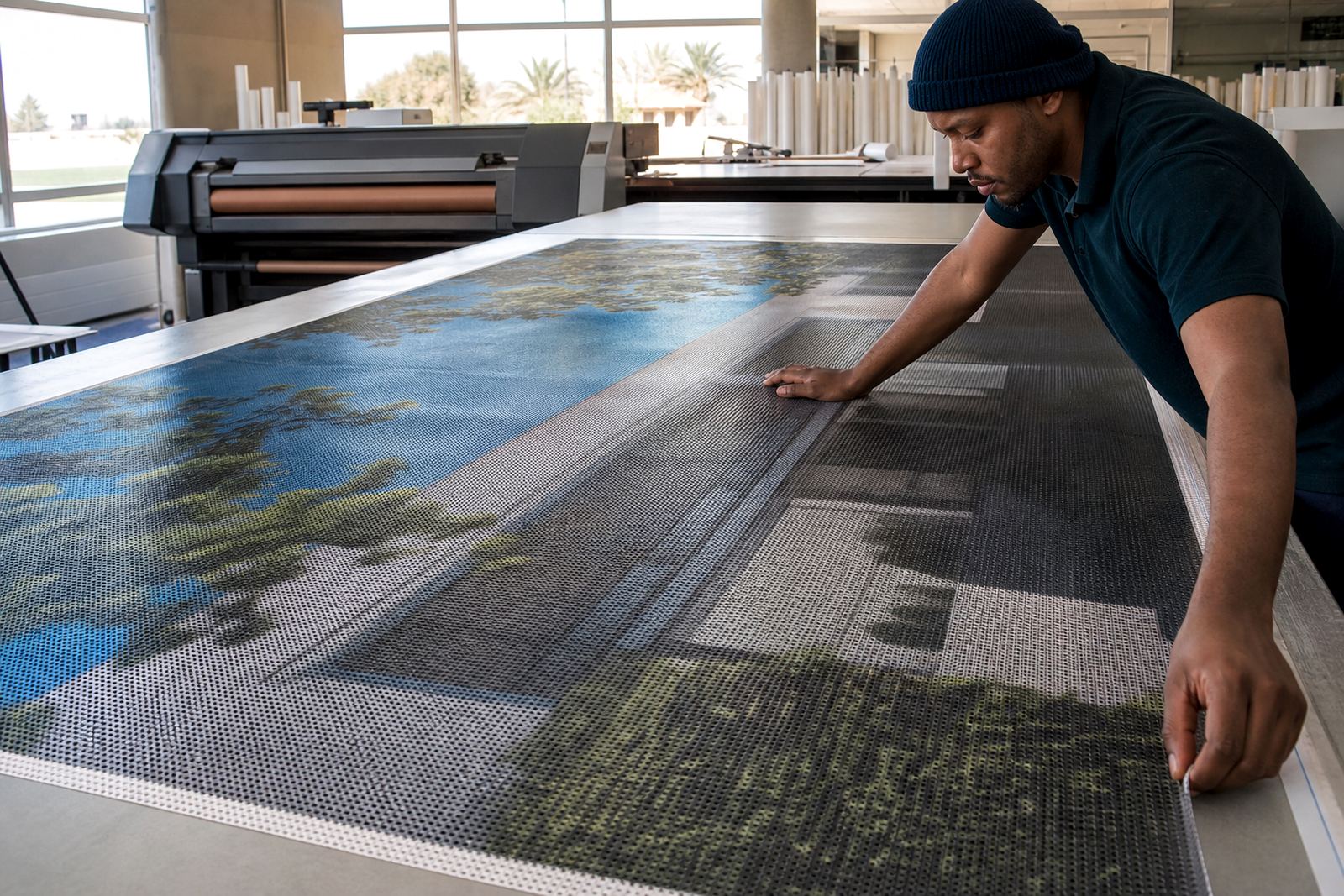
We work from site measurements so the film can be cut to suit each pane and mullion line. Flat glass film is typically supplied in wide format rolls and then trimmed on site or in the workshop to suit the panel size. For larger shopfronts, the artwork is joined across panels so the design reads correctly from the pavement without awkward breaks. For smaller office panes, single-panel pieces are often cleaner and quicker to fit.
- Perforation ratios can be chosen to suit privacy and visibility needs
- Printed graphics can cover the full pane or just a band across the lower section
- Optional clear overlamination can help protect the print in high-touch areas
- Matt or gloss print finishes can be selected depending on glare and the look you want
- Cut-outs can be added for handles, frit dots, seals or safety markings
For straight glass, the edges matter. Clean square cuts and neat panel joins keep the finish tidy, especially where customers see the glass at close range. A good layout also makes later replacement easier if your branding changes or a section gets scratched.
Where it suits best in commercial spaces
This product is best on flat glazed surfaces that have a consistent viewing angle. Shopfront windows, office partitions, internal glass walls, reception fronts and street-facing doors all suit it well. It is also used on some vehicle side windows and rear windows, provided the application is legal and the driver view remains within the current road traffic rules. If you are unsure, check the latest requirements before ordering vehicle film.
In coastal areas such as Cape Town and Durban, the film can help soften strong sun and reduce glare on front-facing glazing. In busy retail streets, it is also a practical way to keep the inside of the store visible enough for staff while still hiding stock areas, tills or back-of-house details. For service businesses in Pretoria, Johannesburg and Gqeberha, it is a useful way to turn plain panes into clear signage without building extra boards or frames.
- Retail shopfronts
- Franchise and service counters
- Office partitions and meeting rooms
- Showrooms and reception areas
- Vehicle side and rear windows where allowed
How installation works on glass and vehicles
Glass installation starts with surface preparation. The pane is cleaned, dried and checked for silicone, dust, old adhesive and paint overspray. Any old film must be removed fully before the new sheet goes on, otherwise the finish will show blemishes and edges can lift. The film is then aligned, wet-applied and squeegeed so the adhesive bonds evenly to the flat glass. On some jobs the install is done in stages if the panel sizes are large or the site has restricted access.
Vehicle installation needs even more care because curves, weather seals and tinted glass can affect the fit. Flat glass film is best on the flatter sections of vehicle windows and must be used with the correct orientation so the graphics read properly from outside. Installation can be done with the usual print and cutting setup, and on site only normal hand tools and clean water are needed. That helps on tight fit-out timelines when the shop has to open on a fixed date.
Care, servicing and when to replace it
After fitting, flat glass film only calls for light care. Wipe it with a soft cloth, fresh water and a gentle non-abrasive cleaner. Steer clear of rough scourers, sharp blades and harsh solvents, as these can scuff the print or lift an edge. Let newly installed film settle fully before any heavier cleaning.
Service usually involves replacing damaged panels, refreshing old artwork or removing film before a new campaign. If the glass has been badly scratched, the film may be able to hide some marks but not all of them, so it is better to inspect the pane first. We also help with refit and refresh work when a shop changes branding, opens a second branch or updates window messages for seasonal trading. Old film removal is part of the service if you are changing over from a previous graphic.
What to check before ordering
Good ordering starts with clear site details. Measure the visible glass area, note the frame sizes and tell us whether the pane is straight, fixed, hinged or sliding. If there are stickers, safety markings or existing tint already on the glass, include that in the brief. For vehicles, confirm the window type, the legal requirement for driver visibility and whether the film is for the rear section only or across a wider panel. That way the layout can be planned properly and there are no delays on the day of fitting.
- Exact panel sizes or a site measure
- Preferred perforation ratio and privacy level
- Artwork files or layout notes
- Whether lamination is needed for added protection
- Glass type, tint, seals and any existing film
- Install location, access hours and any municipal or site rules
From our Montague Gardens base, we support projects across Cape Town, Bellville, Milnerton and nationwide supply to Johannesburg, Durban, Pretoria and Gqeberha. If you need flat glass film for a new fit-out or a replacement section, send the measurements through the enquiry form and we will take it from there. It keeps the process simple and avoids guesswork at install time, which is where most jobs go sideways.
Key facts
| Product type | Perforated one-way vision film for flat glass and selected vehicle windows |
|---|---|
| Common ratios | 40/60, 30/70 and 50/50 perforation options |
| Print method | Wide format printed graphics for external viewing |
| Finish options | Optional overlamination, matt or gloss appearance |
| Application surfaces | Straight shopfront panes, office partitions, reception fronts and suitable vehicle glass |
| Service coverage | Cape Town, Johannesburg, Durban, Pretoria, Gqeberha and surrounding supply areas |