Perforated Film for Glass Doors and Entrance Panels
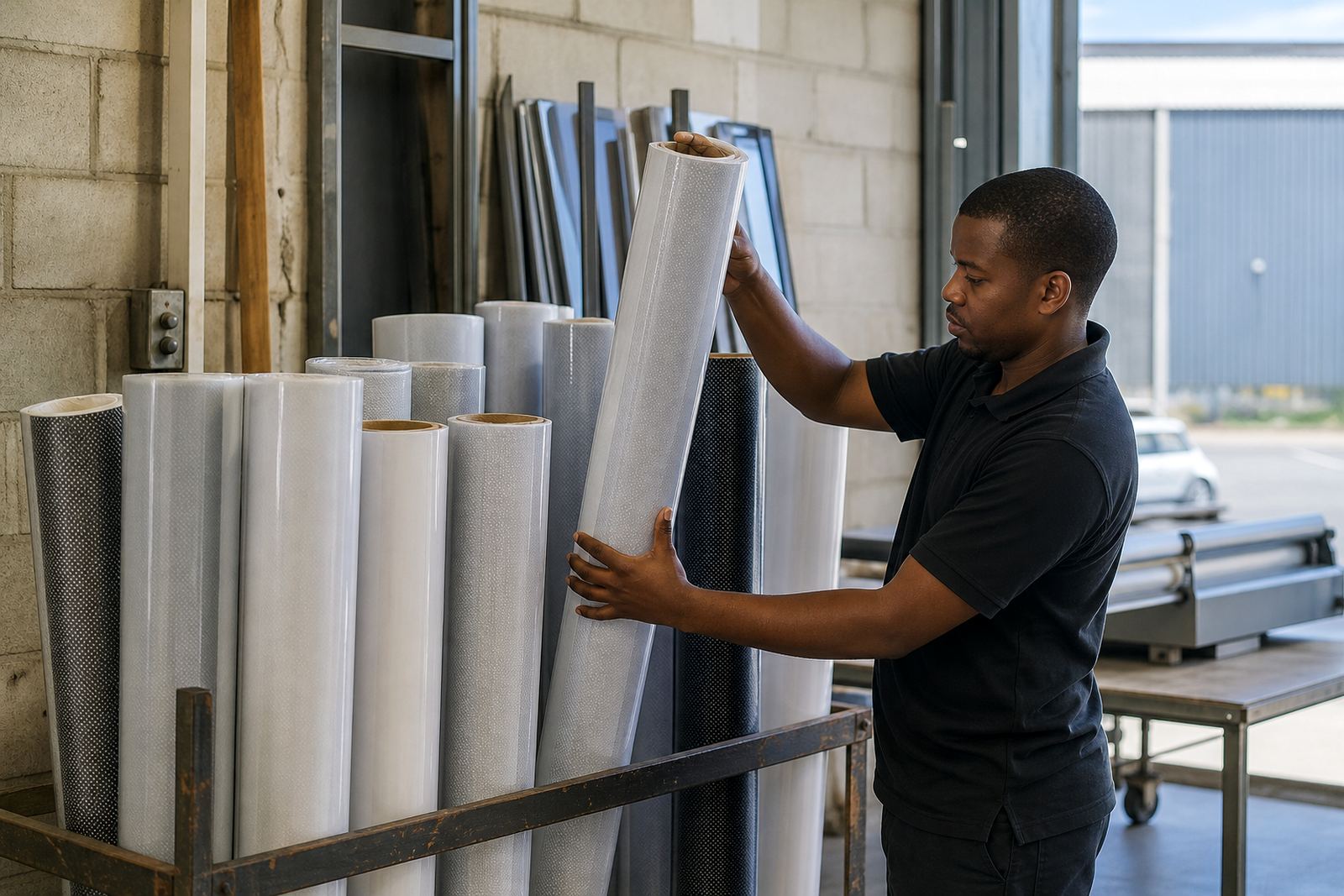
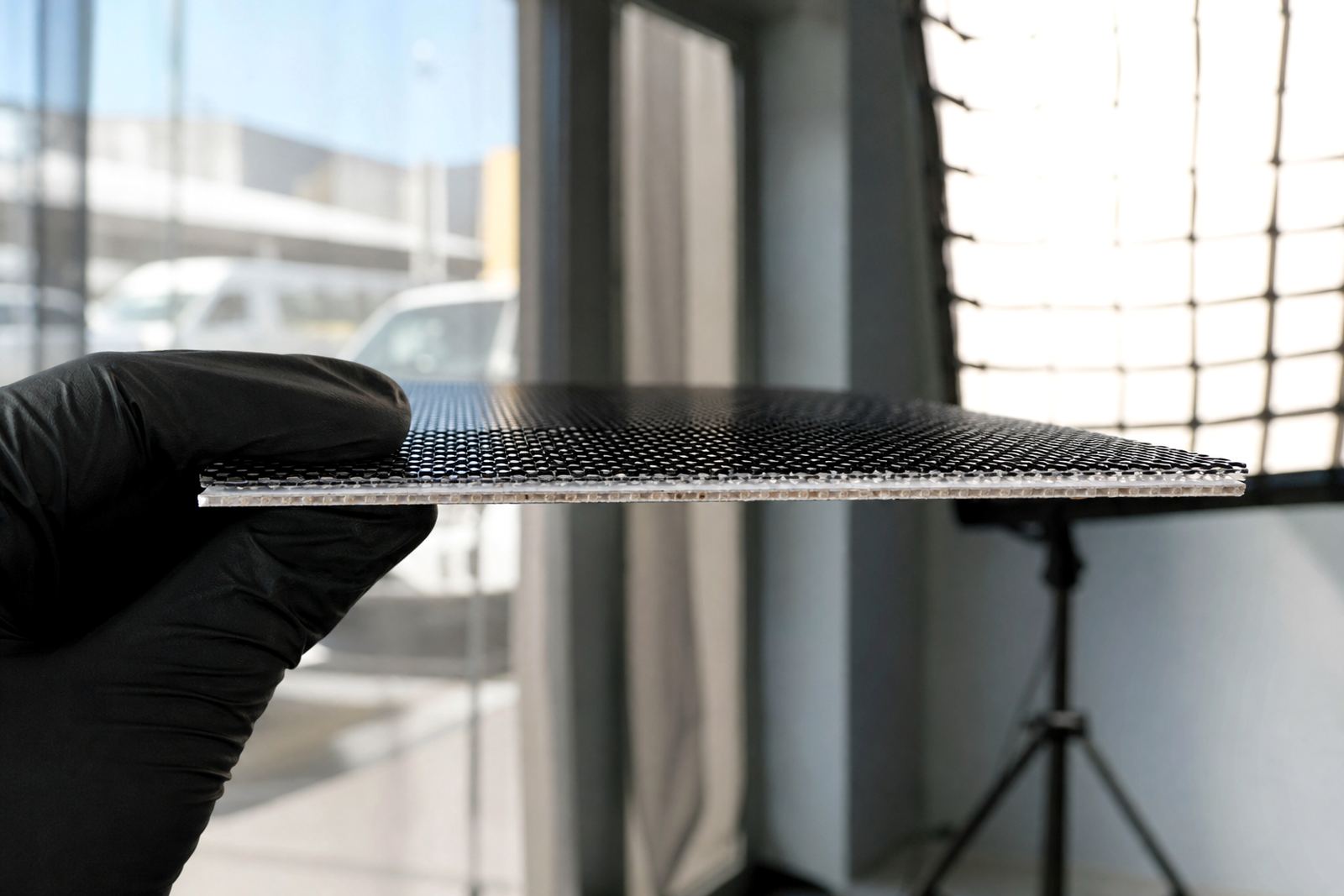
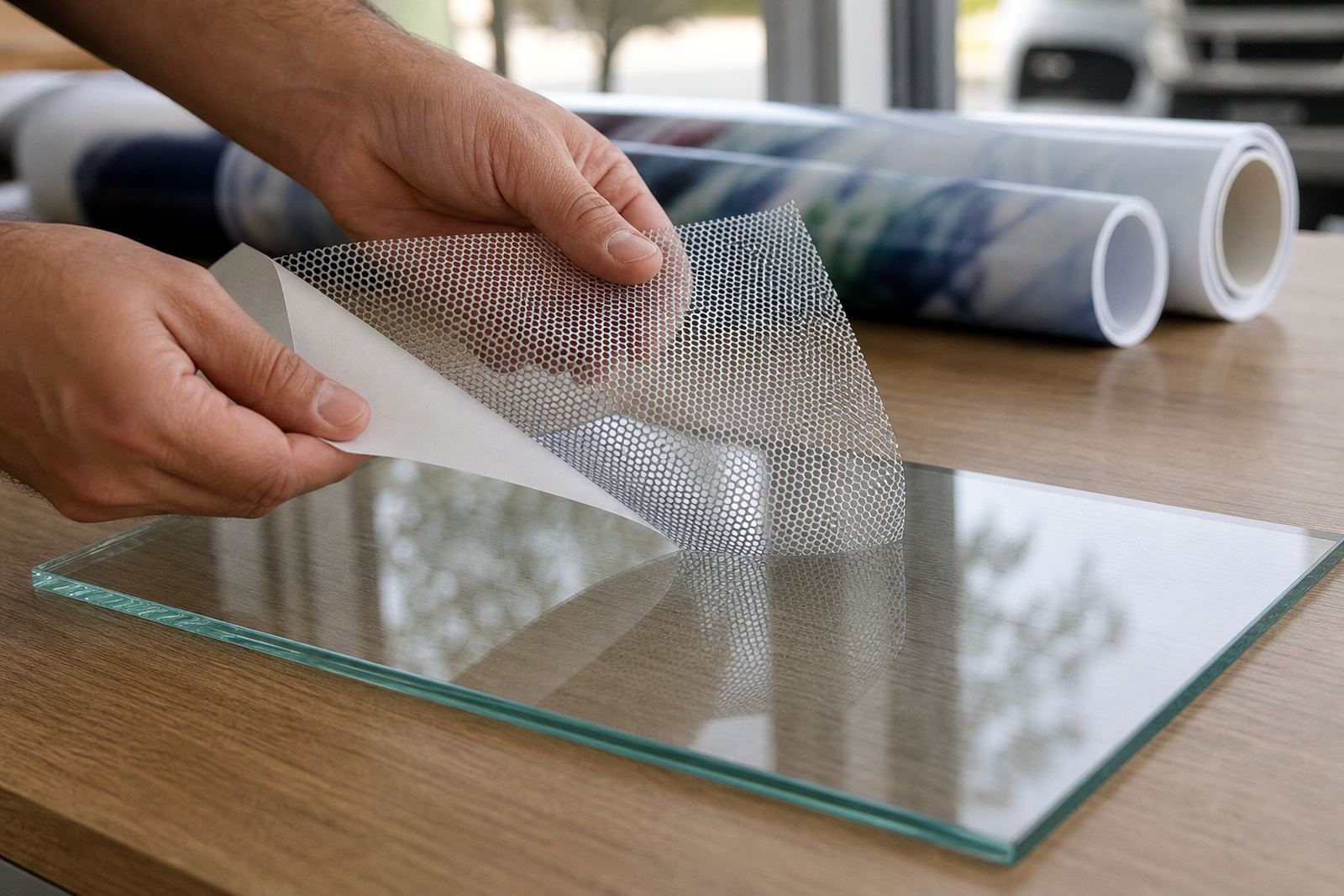
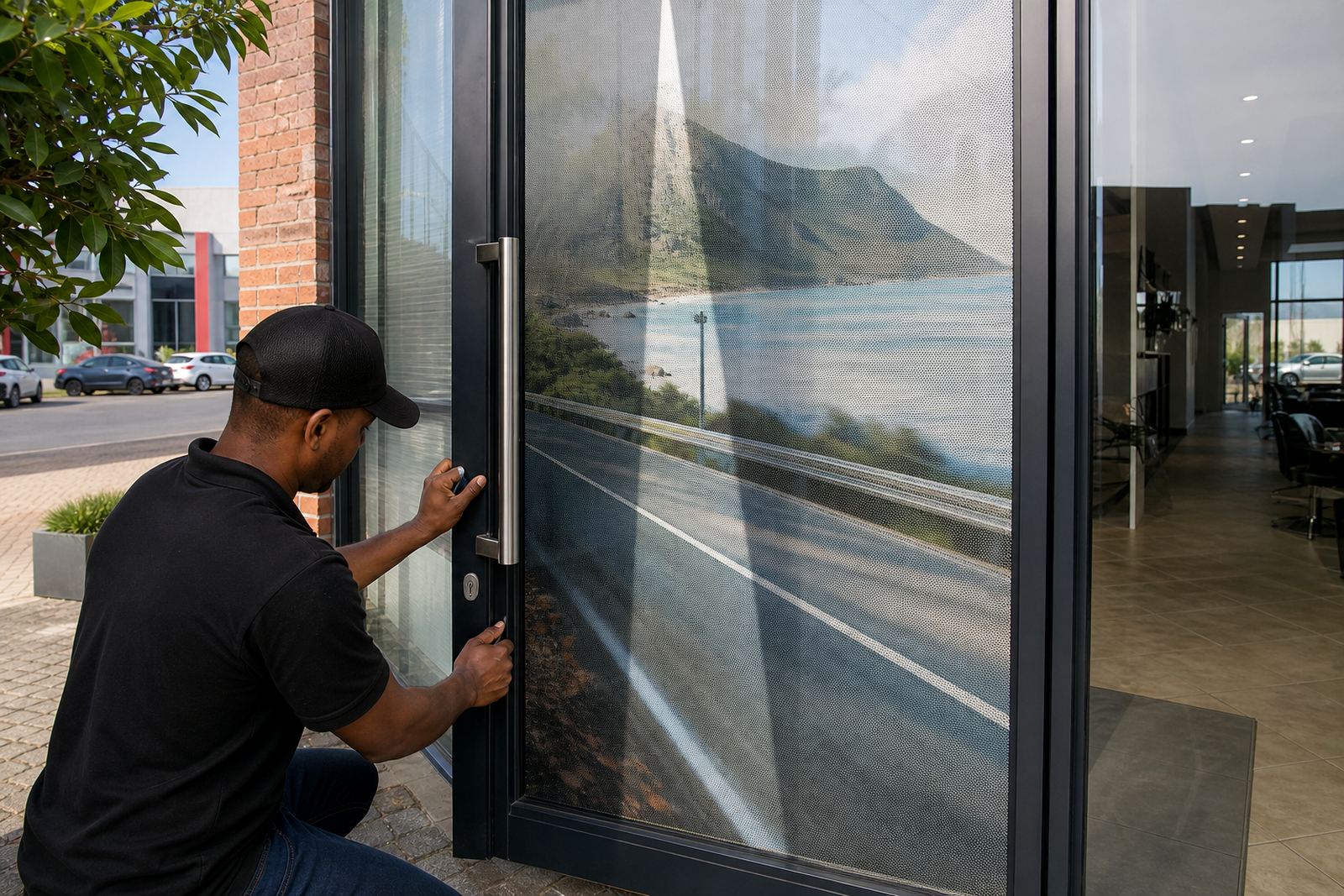
Retail door film is a perforated one-way vision film made for glazed entrances, side lights and other door glass where you want outward graphics and inward visibility. The face is printed in full colour, while the perforation ratio lets people inside keep a clear enough view out, which is useful on busy streets and in malls where staff need to see customers arriving.
Typical perforation patterns are 60/40, 70/30 and 80/20, depending on how much outside image density and inside visibility you need. A 70/30 layout is often a good middle ground for shop doors, while more open films can help where the interior is darker or you want more light. The printed side is usually finished with a clear laminate for better scuff resistance and to help protect the ink from cleaning and sun exposure.
Common Sizes, Print Options and Door Layouts
Door film is usually supplied cut to the finished panel size after site measuring, artwork checks and templating. For shopfronts, the film can cover the full glass leaf, a lower privacy band, or a split layout that keeps handles, push bars and safety markings clear. On double doors, we can match the panels so the branding reads neatly across both leaves, and the artwork can be set to allow for door movement and sight lines.
- Full door coverage for entrances, reception doors and mall shopfronts
- Half height branding with opening hours, trading notices or offers
- Clear zones for handles, compliance stickers and safety markings
- Custom cut-outs for locks, vision panels and door hardware
Print can be done in solid colour, photographic artwork, logos, directional messaging or simple text. For cleaner results, we usually prepare a colour proof first so the client can check shades, wording and panel positions before print. That step saves time later when the film is on the glass and the shop needs to stay open, or close for only a short window.
Where Retail Door Film Suits Best
This product suits retailers, pharmacies, salons, takeaway counters, service centres and forecourts that use glazed doors as part of the customer welcome. It is also useful in office foyers, medical suites and building entrances where you want a smart front face without losing natural light. In coastal areas like Durban and Gqeberha, the film helps keep entrance branding looking tidy in humid conditions, while in inland towns it can hold up well through hot afternoons and winter dust if the glass is prepared properly.
Retail door film also works well where trading hours need to be visible from the pavement, or where promotions change often and the glass needs to carry short term messages. If the entrance is exposed to direct sun or regular cleaning, a laminated finish is a better choice. For high traffic doors, careful edge sealing and correct surface prep matter more than people think, especially where constant hand contact can lift corners over time.
- Glazed entrance doors and side panels
- Internal glass doors in malls and office foyers
- Customer-facing service counters with clear door panels
- Temporary promotions, seasonal specials and changeable hours
Installation on Glass and What the Site Needs
Installation starts with a clean, dry surface and enough space to work safely around the doorway. The glass must be free of silicone residue, dust, polish and old adhesive. If there is existing film, it should be removed first and the surface prepared again, because leftover glue or scraper marks can show through the print. For door applications, accurate measuring is essential since even a few millimetres can affect alignment around handles and lock positions.
Most retail door film is installed wet on glass with the correct tools, but the exact method depends on the panel size, the surrounding frame and the site conditions. The area should be sheltered from strong wind, heavy dust and direct water spray during fitting. No special supply is needed for the film itself, though the site should have enough working light and access for safe installation. If the entrance has automatic doors or nearby fittings, the installer must work around them carefully and keep the route clear.
- Allow access to the door area for measuring and fitting
- Keep the glass clean and dry before installation day
- Switch off or isolate nearby systems if required for safe access
- Plan for short downtime if the door must stay closed while the film sets
Care, Cleaning and Refit Plans
Once fitted, the film should be left to cure before heavy cleaning or pressure washing nearby. Use a soft cloth, mild soap and clean water for routine maintenance. Avoid abrasive pads, strong solvent cleaners and sharp tools at the edges. In busy retail spaces, the lower sections of the door often pick up scuffs from bags, shoes and trolleys, so a laminated finish is worth considering if the door gets hard use.
If a promotion changes, the film can be replaced or refreshed without redoing the whole entrance. That is useful for seasonal trading, new opening hours or rebranding work. Old film removal is part of the service when needed, and a proper strip-down is better than trying to patch damaged sections. In many cases the refit is quicker than a full new install, provided the underlying glass is still in good condition.
What to Check Before You Order
Before ordering retail door film, confirm the exact glass size, whether the panel is single or double glazed, and whether the film needs to wrap one leaf or both. Check what needs to remain visible through the glass, such as handles, emergency notices, fire exit markings or opening directions. If the doors are in a mall or regulated building, the landlord or centre management may have rules on printed glass, safety markings or approved coverage, so it is best to confirm those first.
For vehicle applications, the same perforated film principle can be used on rear and side windows, but the driver view must remain legal. Please check the current road traffic rules before applying film to any vehicle glass. For retail doors, the main checks are simpler: accurate dimensions, final wording, logo placement and whether you want one-sided or repeated graphics. If you are unsure, a site measure and artwork setup are the safest start, especially when the glass has a frame, a push bar or old decals that need removal first.
Key facts
| Product type | Perforated one-way vision film for glazed retail doors |
|---|---|
| Perforation ratios | Common options include 60/40, 70/30 and 80/20 |
| Finish | Printed face with optional clear protective lamination |
| Application | Glass doors, side lights, entrance panels and internal glazing |
| Installation methods | Wet application on clean glass with site measuring and templating |
| Service areas | Cape Town, Johannesburg, Durban, Pretoria and Gqeberha |