What 40 60 vision film does on glass and vehicle windows
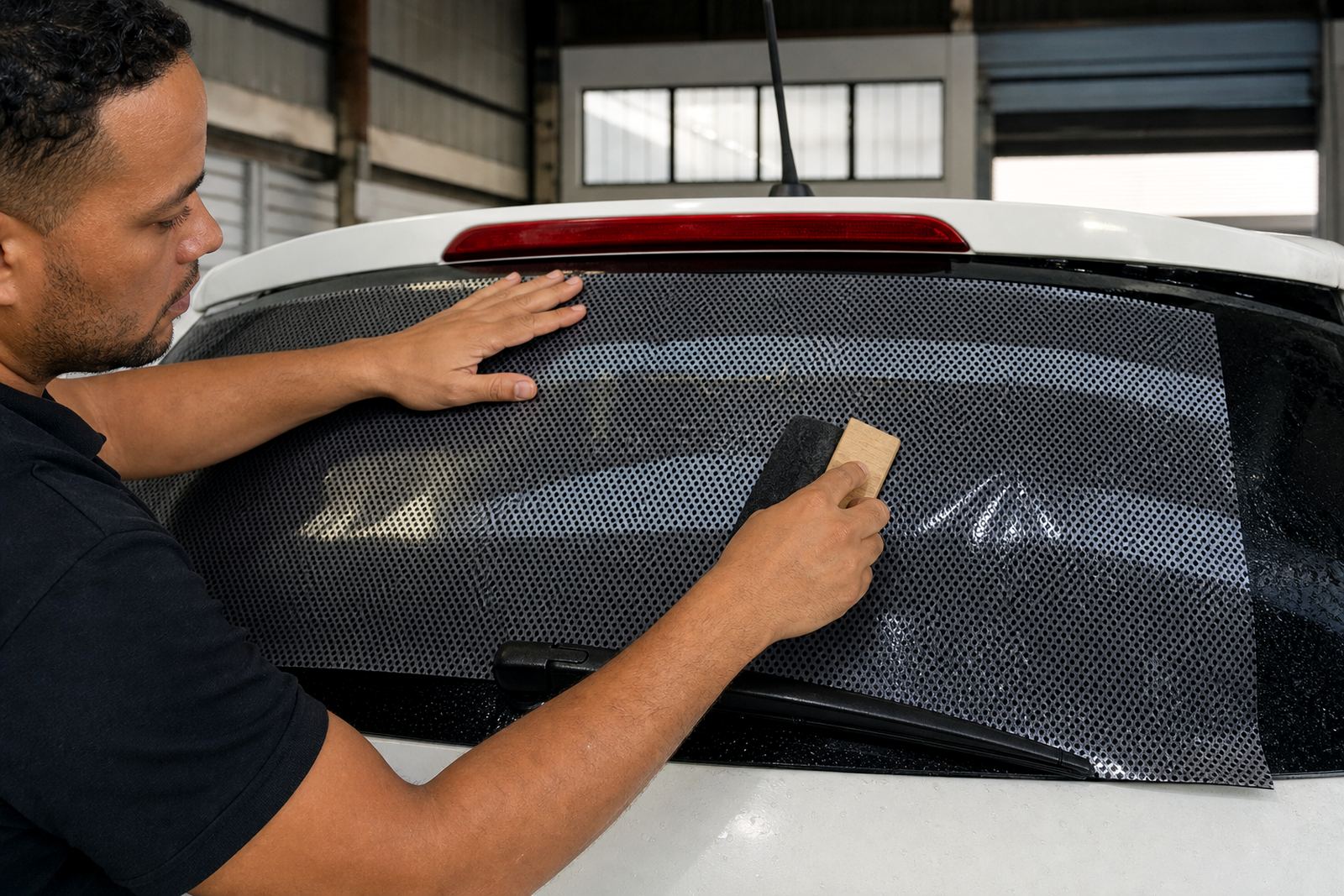
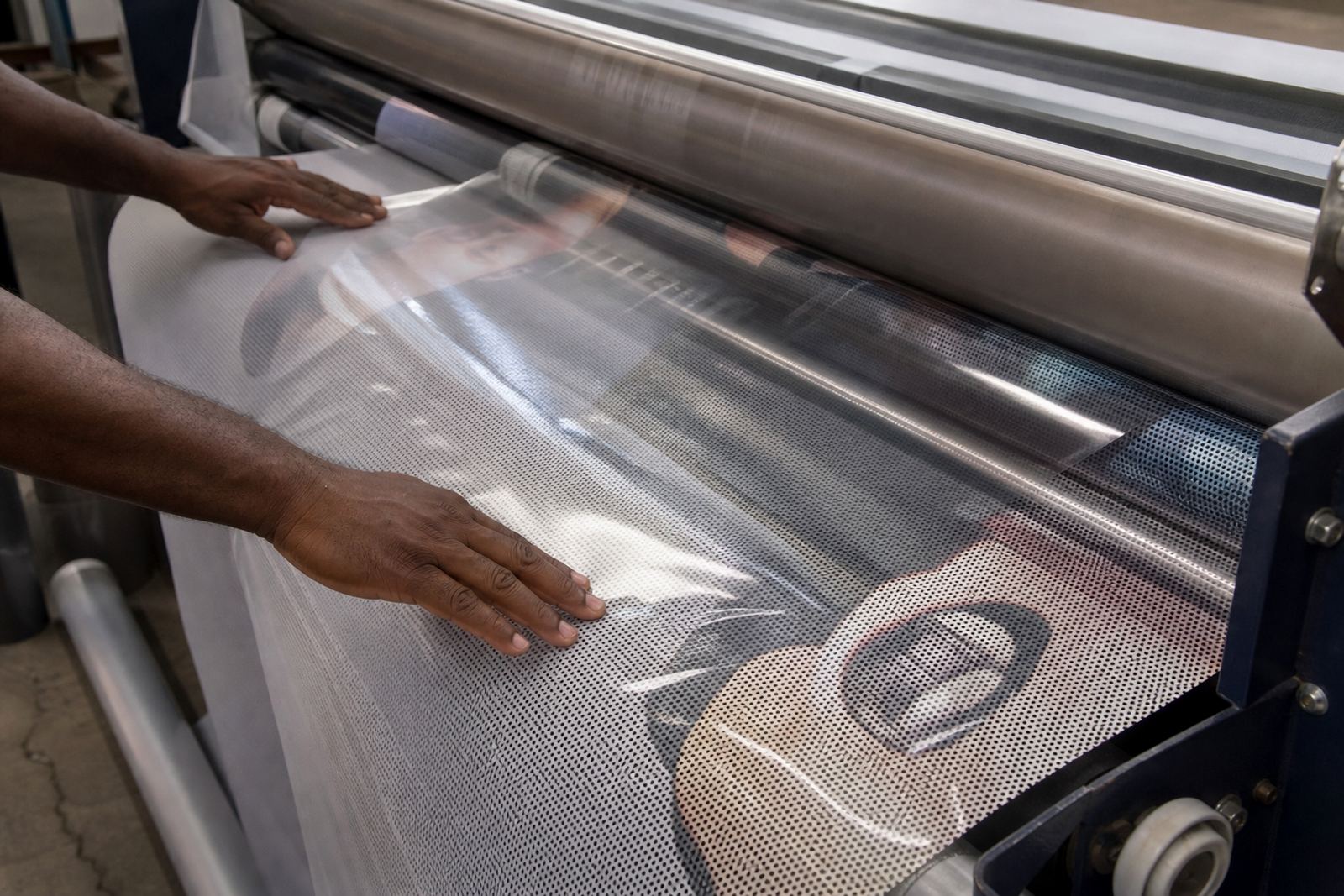
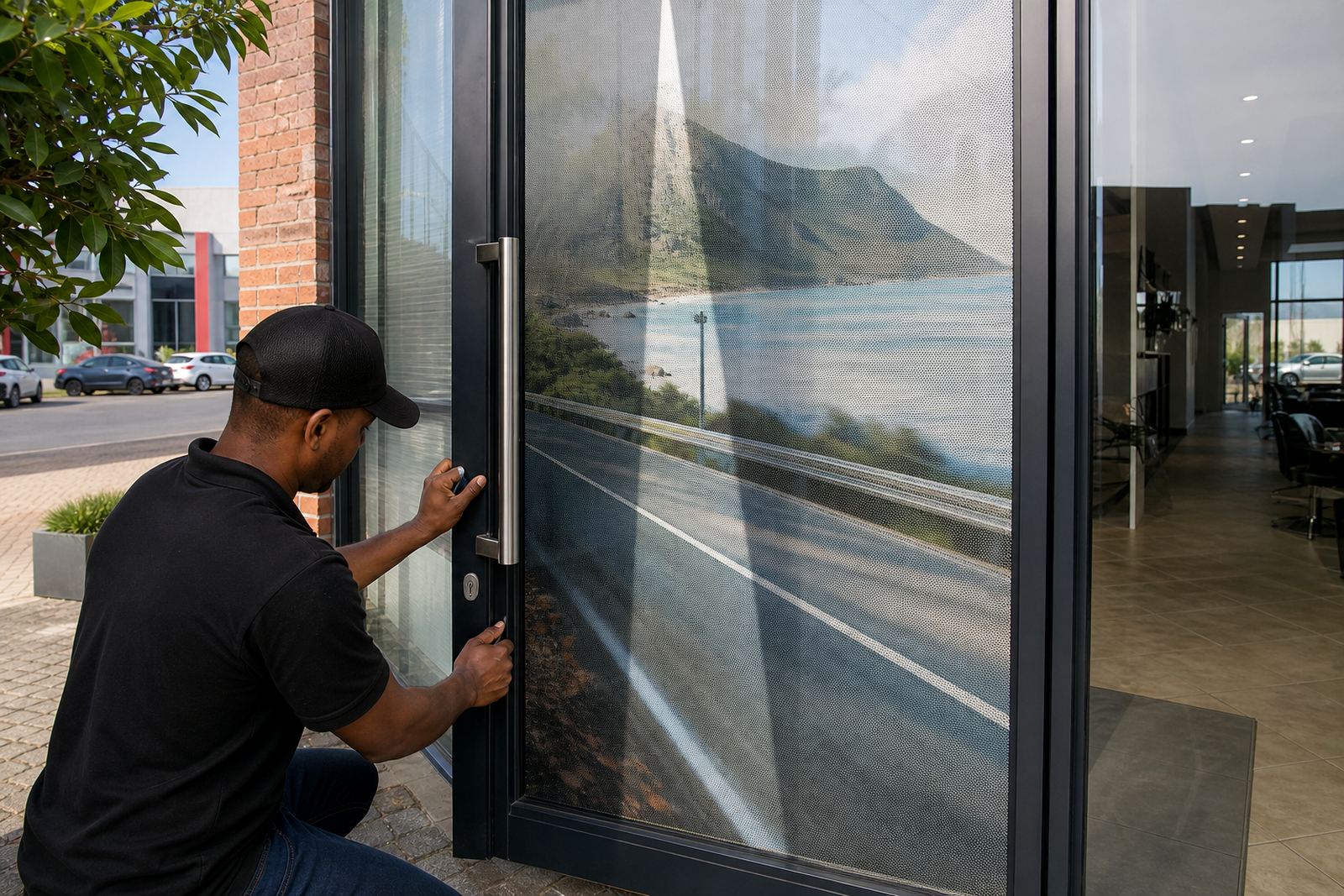
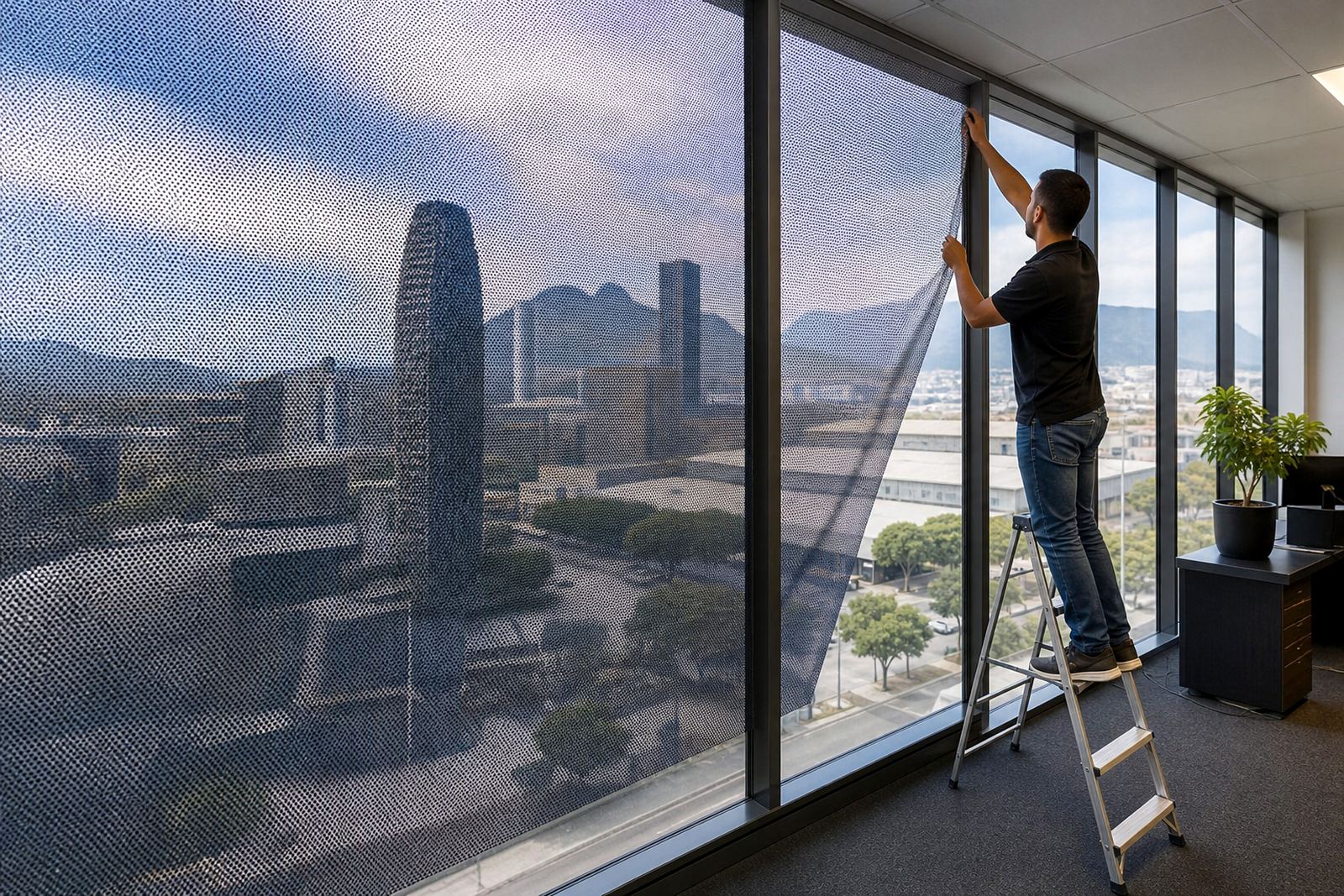
This film uses a printed face on one side and tiny perforations through the material so the outside carries your artwork while the inside keeps a through-view. With a 40 60 style structure, the balance is set for lighter print coverage and better outward visibility than denser perforated films, which can help in sunny shopfronts, glass doors, fleet windows and rear vehicle glass.
It is commonly used on retail premises, service counters, office partitions with street-facing glass, and on vehicles that need business messaging without blocking the driver or passengers too much. The film is selected, printed and fitted with the glass type in mind, because clear glass, tinted glass and curved vehicle glass all behave differently. A clean result starts with correct measuring and surface prep, otherwise the edges can lift and dust can show through.
Print options, perforation ratios and finish choices
40 60 refers to a more open perforation balance than heavier coverage films. In practical terms, that means more open area for viewing from the inside and slightly less outside coverage than a tighter film. It is a sensible option where you want daylight and line of sight to still work for staff, drivers or security staff.
- Single-sided printed graphics for shopfronts and rear vehicle windows
- CMYK wide format print for full colour artwork, logos and promotions
- Lamination for extra surface protection on higher traffic installations
- Trimmed to size for standard panes or templated for vehicle glass
- Supply in roll format for larger projects and repeat work
Film choice should also take account of the viewing distance. Close-up lettering needs to stay readable without packing the design too tightly, while larger graphics can carry better on perforated material. If the artwork is too dark or too busy, the outside may look heavy and the inside view can suffer, so good colour proofing matters.
Where this film suits best in South African conditions
In Cape Town, Johannesburg, Durban, Pretoria and Gqeberha, 40 60 vision film is often chosen where sun glare, heat and street exposure all affect the glass. It can work well on shopfronts facing parking bays, public walkways or busy roads, and on vehicles that spend long hours on the road, parked at job sites, or moving between suburbs.
It is especially useful when the inside view must stay more open during bright daylight. Coastal humidity can affect surface prep and adhesive cure times, so clean application and dry conditions are important.
- Retail shopfronts and entrance glazing
- Vehicle rear windows and side cargo windows
- Service counters with street-facing glass
- Temporary promotions where easy removal is later needed
Installation, templates and site prep
Installation is normally done on clean glass with a squeegee, blade, measuring tools and surface preparation materials. For vehicle work, templating helps the film follow the window shape, seals and curves properly. On buildings, site measuring helps make sure the panels align with mullions, doors and signage lines before any print is sent out. A rushed fit can trap moisture, show silvering or leave corners lifting after a few hot days.
Before Fitting
On vehicle windows, we also check the legal side before fitting. The driver’s view must remain within current road traffic requirements, so check the latest rules for your vehicle class and use. A film that looks good on a side or rear window still needs to suit visibility and road safety, especially for commercial vehicles used all day.
Care, cleaning and when to replace
Perforated film needs gentle care so the print and adhesive last as intended. Use a soft cloth or sponge with mild soap and water, and avoid abrasive pads, strong solvents or aggressive scrubbing around the perforations. Pressure washers are not suitable for close-up cleaning on glass or vehicle windows because water force can push dirt into the film edge and shorten the life of the installation.
For shopfronts, regular visual checks are worth doing after heavy rain, dust, or building work nearby. On vehicles, look at the edges around window rubbers and trims after washing or long trips. If the film starts to lift, fade unevenly or crack, a refit and refresh can be arranged. Old film removal should be done carefully so the glass surface is not scratched and the new install goes on cleanly.
- Clean only with non-abrasive cloths and mild soap
- Do not scrape the perforations or pick at corners
- Avoid harsh chemicals near printed areas
- Report lifting, bubbles or edge damage early
What to check before ordering
Before ordering 40 60 vision film, confirm the exact glass size, the panel count and whether the application is for a fixed shop window or a moving vehicle window. We also need to know if the glass is flat, curved, tinted or laminated, because that changes the print setup and fitting method. If the artwork must line up across several panes or across a full vehicle, accurate measurements matter even more.
It helps to have your logo files, wording, contact details and any brand colours ready. Our team can assist with artwork setup, colour proofing, wide format printing, film lamination and installation planning. If the job is for multiple branches or a mixed fleet, supply requirements can be coordinated from Montague Gardens with nationwide dispatch to Cape Town, Johannesburg, Durban, Pretoria and Gqeberha. A small typo in a phone number or a shifted panel can cost time later, so it is worth checking every detail first.
Key facts
| Product type | Perforated one-way vision film for glass and vehicle windows |
|---|---|
| Perforation balance | 40 60 style, with a more open viewing profile |
| Print method | Wide format full colour printing on the outer face |
| Finish options | Optional protective lamination where suitable |
| Common use | Shopfronts, rear vehicle glass, side windows and signage glazing |
| Service area | Montague Gardens, Cape Town and supply across South Africa |