How Printed Film Is Packed For Safe Transport
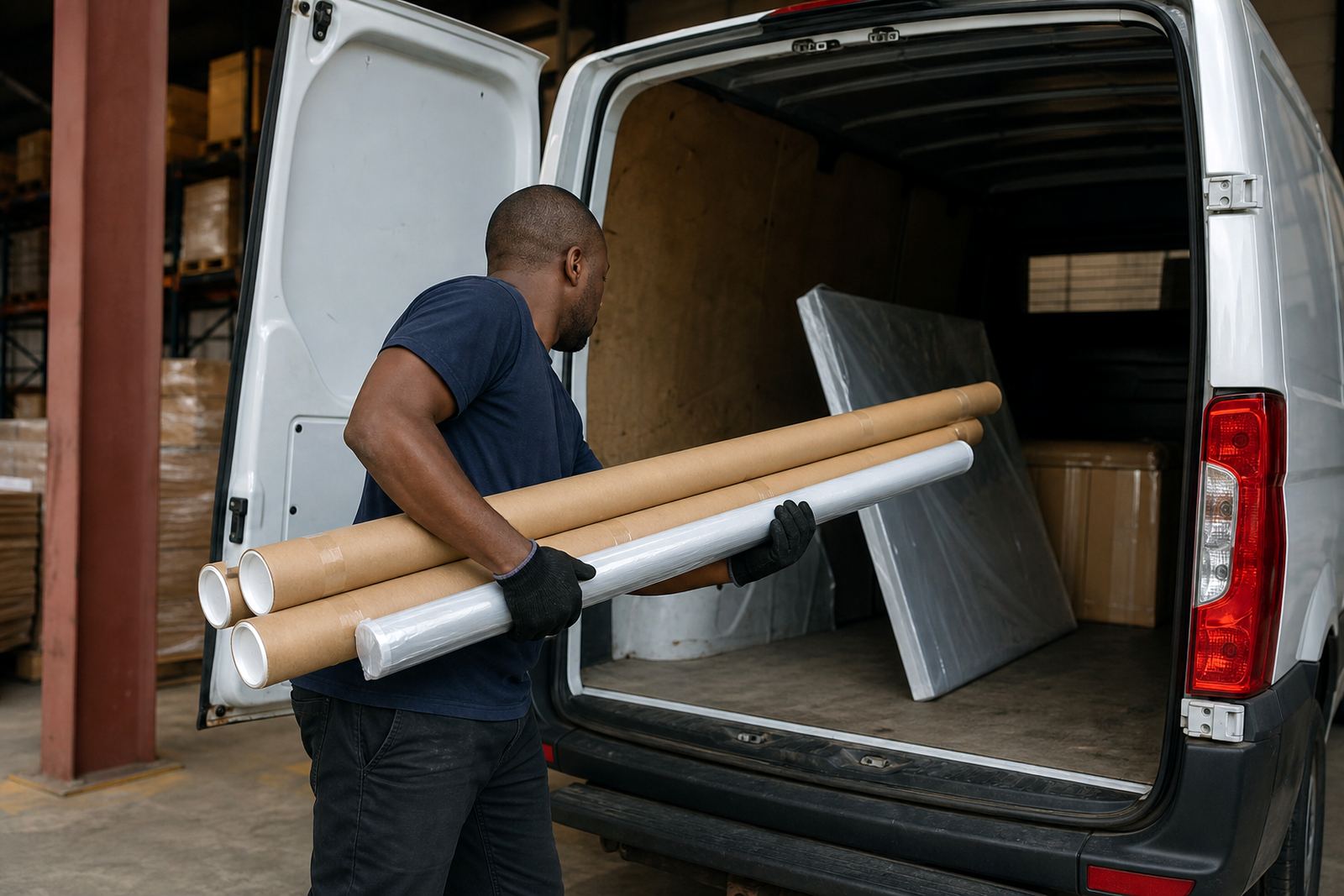
Printed perforated film is usually supplied in rolled form on a core so the graphic face does not crease in transit. For shopfront work and vehicle graphics, the roll is wrapped, protected at the edges and sealed inside a sturdy outer carton or protective sleeve. We keep the print face and adhesive face clean during packing, because dust and grit can show through once the film is applied to glass.
Where a job includes more than one panel, each roll or panel set is labelled clearly for the site, opening order and fitting position. That helps when a project has upper and lower panes, rear vehicle windows or multiple shopfront sections. It also makes unpacking faster for the installer, especially on a busy commercial site.
What To Expect When Your Order Leaves Montague Gardens
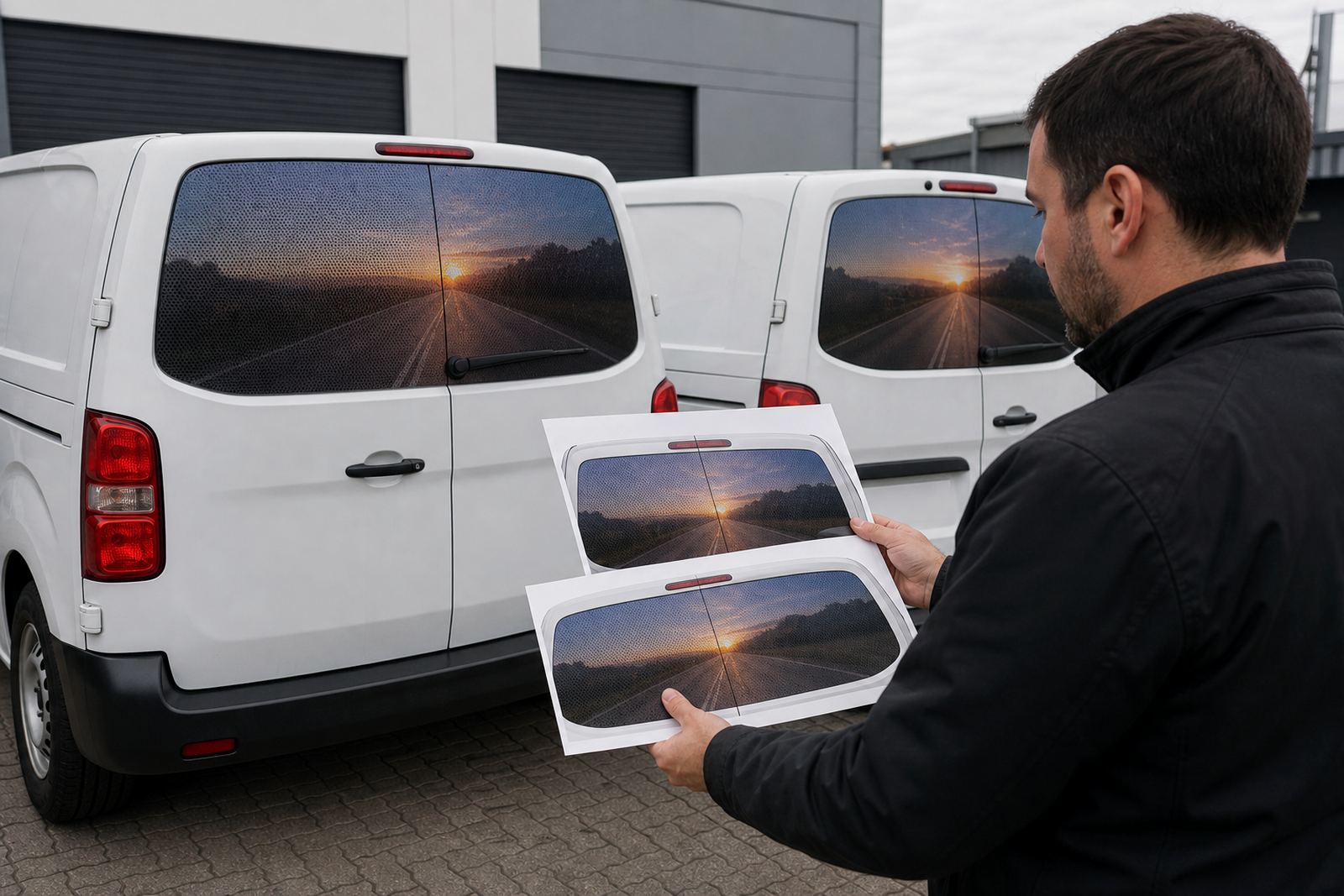
From our Montague Gardens base, orders are released for Cape Town deliveries or packed for national courier and freight movement to Johannesburg, Durban, Pretoria and Gqeberha. Our team checks the artwork, panel count and finishing notes before release, so the film arrives in the right sequence for fitting. If a project includes site measuring, vehicle templating or colour proofing, those details are used to keep the supply accurate.
For larger refit and refresh jobs, we may split supply into separate parcels if the glass installation and vehicle installation schedules differ. That keeps the materials organised and easier to book in at the receiving point. It is particularly useful where old film removal is taking place first and the new film follows soon after.
- Confirm the site name and contact person before dispatch
- Check whether the order is for glass, vehicles, or both
- Make sure access instructions are included for the receiving team
- Allow for local traffic delays and loading bay restrictions
Film Construction, Perforation Ratios And Finishing Notes
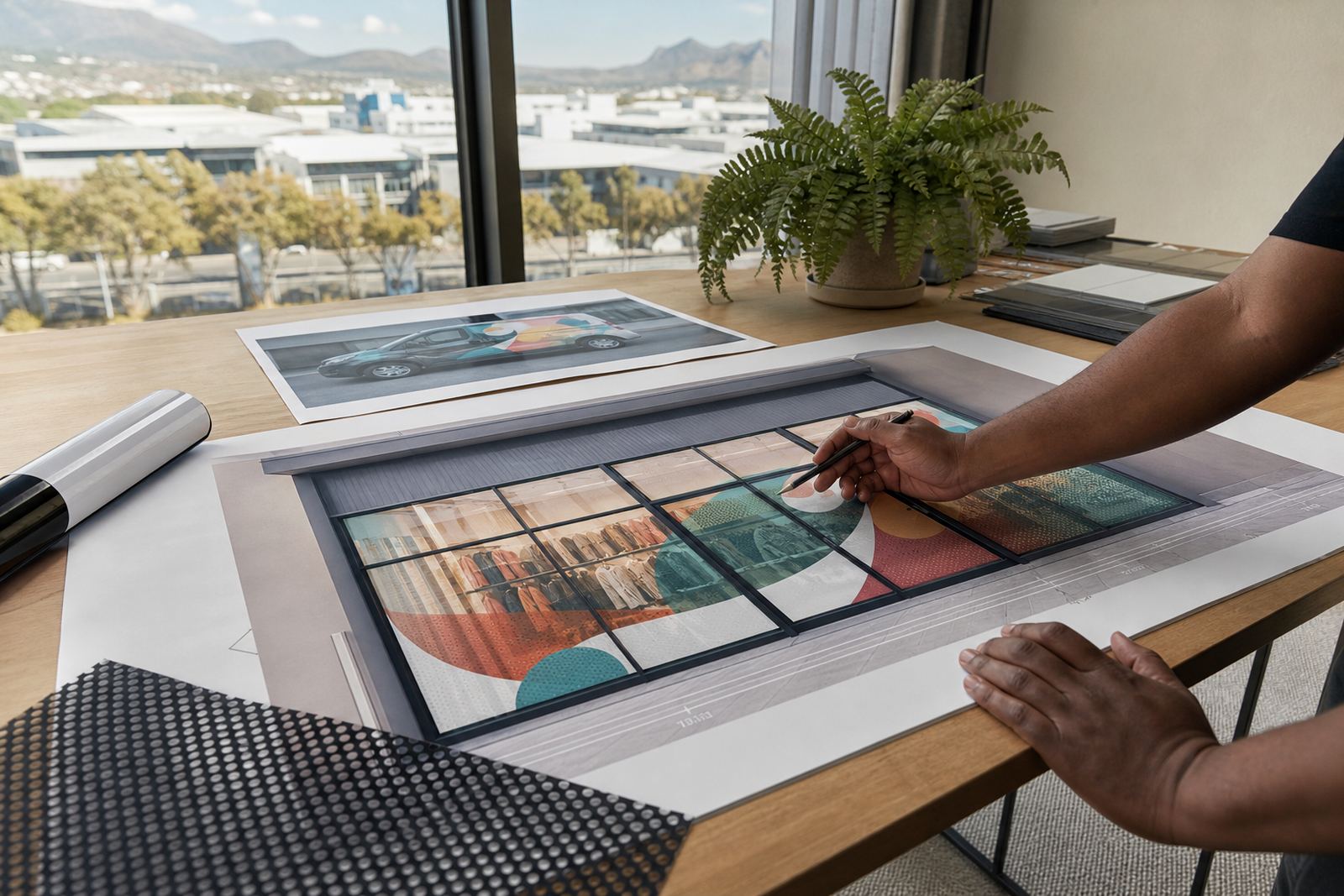
Small evenly spaced holes let perforated one-way vision film carry graphics on the outside while still allowing people inside to see out. Common perforation ratios vary by application, and the chosen ratio affects the balance between outside image strength and inside visibility. For shopfronts, the aim is often to give a clear printed face while still letting daylight and a usable view pass through from inside. For vehicle windows, the fit must stay legal and the driver view must remain within current road traffic rules, so always check the latest requirements before fitting.
Many jobs are printed in wide format and then laminated where extra surface protection is needed. Lamination can help the print cope with handling, cleaning and sun exposure, especially on busy street-facing glass or vehicle windows that see strong UV and coastal humidity. The finishing notes should state whether the film is for internal or external viewing, and whether the adhesive side must face the glass directly. Small details like this save time on site and reduce fitting errors.
- Choose the perforation ratio based on visibility and image needs
- Confirm if the film is to be printed, laminated, or printed only
- State whether the installation surface is interior or exterior glass
- Check driver visibility requirements for any vehicle application
Preparing Glass And Vehicle Windows Before Fitting
Good surface preparation matters as much as the film itself. Glass must be clean, dry and free from paint overspray, grease, silicone and dust. On vehicles, we also check for old adhesive residue, badges, high-mounted brake light positions and window curvature before installation. If the surface is not properly prepared, the film can lift at the edges or show blemishes once applied.
For glass installation in retail centres, offices or roadside premises, local municipal rules and property access conditions may affect the fitting time. In some areas, work on shopfronts has to be scheduled around trading hours, mall access, or loading restrictions. In windy coastal areas, installers may also need extra protection for the film during handling. A calm, clean setup makes a better result and reduces rework.
Receiving, Inspecting And Storing The Roll On Arrival
Once the delivery reaches the site or receiving point, the first job is to inspect the outer packaging before opening. Check for crushed corners, torn sleeves, moisture marks or any sign the roll has shifted inside the carton. Then compare the label against the job sheet, panel count and site notes. If anything looks out of place, flag it before the film is unpacked or moved into storage.
If fitting is not immediate, store the film upright or flat in a dry, shaded place away from heat and direct sunlight. Avoid leaning rolls against rough walls or leaving them in a vehicle cabin, especially in summer.
- Check packaging condition before signing off the delivery
- Match labels to the correct site and panel sequence
- Keep rolls dry and out of direct sun
- Do not open the packaging until the fitting team is ready
Dispatch Areas, Turnaround Planning And Refit Jobs
We supply perforated one-way vision film across South Africa, with regular movement into Cape Town, Johannesburg, Durban, Pretoria and Gqeberha. The turnaround depends on artwork approval, print queue and the level of finishing required. If your job includes vehicle templating, artwork setup or a colour proof, allow time for sign-off before the film is packed and released. That helps avoid costly reprints and keeps the install date on track.
For sites that are being refreshed, it often makes sense to plan a refit in stages. Old film removal can happen first, then surface preparation, and the new printed film can follow once the glass or vehicle panels are ready. This approach is useful for retailers, service providers and fleet owners who need the premises or vehicles back in use quickly. Marius Ntsele and the team coordinate the handover so the supply and fitting steps stay aligned, even when the work is split across different towns.