Plan Artwork Around Viewing Distance And Angle
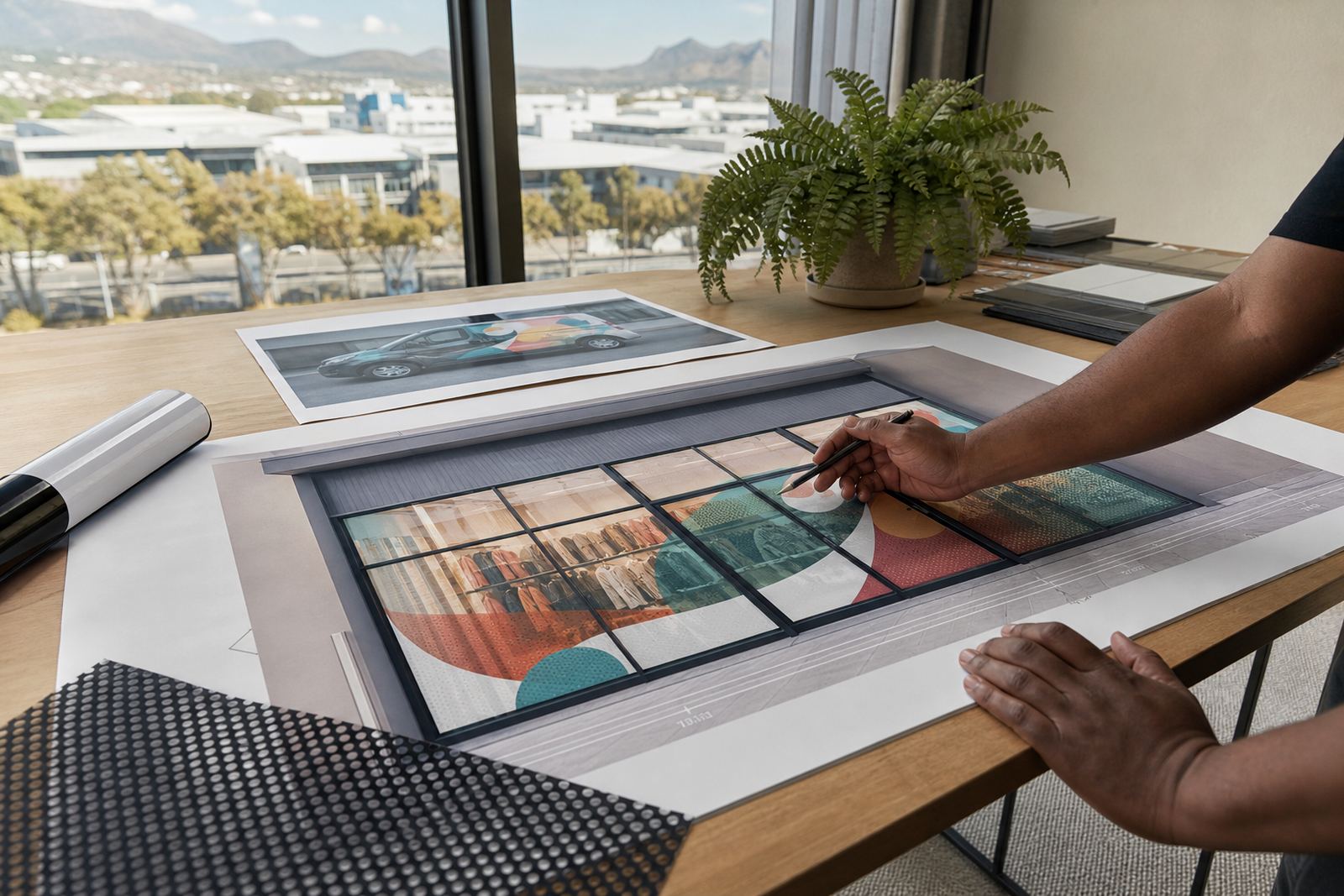
A shopfront image has to work from the pavement, across the road and from the side, not just straight on. Big bold logos, short messages and clean blocks of colour usually read better than fine detail. If the glass sits back under a canopy or in a mall passage, adjust the layout so the important part of the message stays in the middle viewing zone.
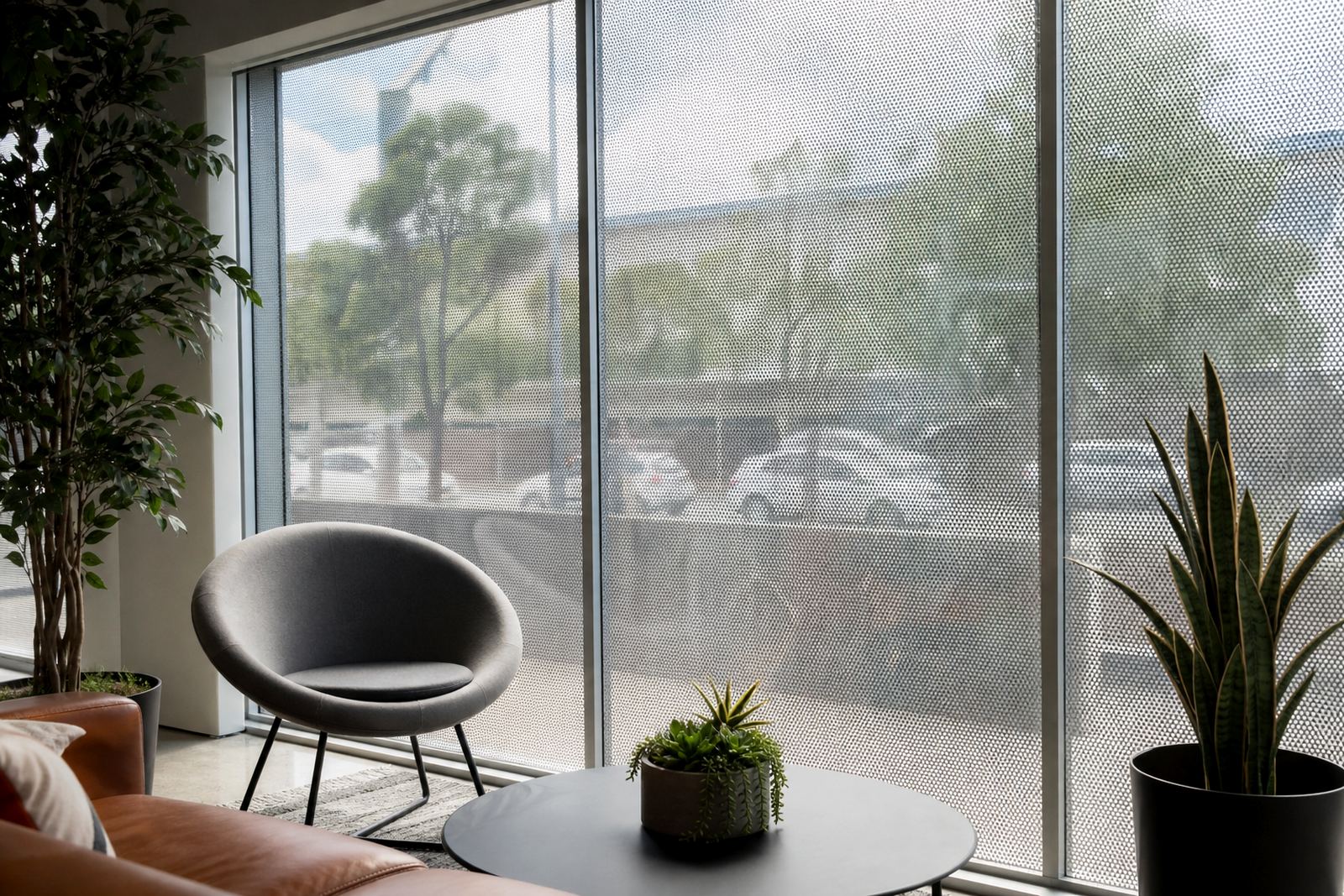
Perforation ratios are usually chosen to balance print density and inside visibility. A tighter pattern can hold more print detail, while a wider open area gives a clearer view out. The best choice depends on where the shop faces, how much light enters, and how much privacy you need during trading hours.
- Keep key text away from the bottom edge where it can be blocked by counters or displays.
- Place logos and contact details where they can be seen from a normal standing height.
- Use contrast that still works in strong daylight.
- Avoid long paragraphs of copy, they do not read well on glass.
Choose Print And Lamination For The Site Conditions
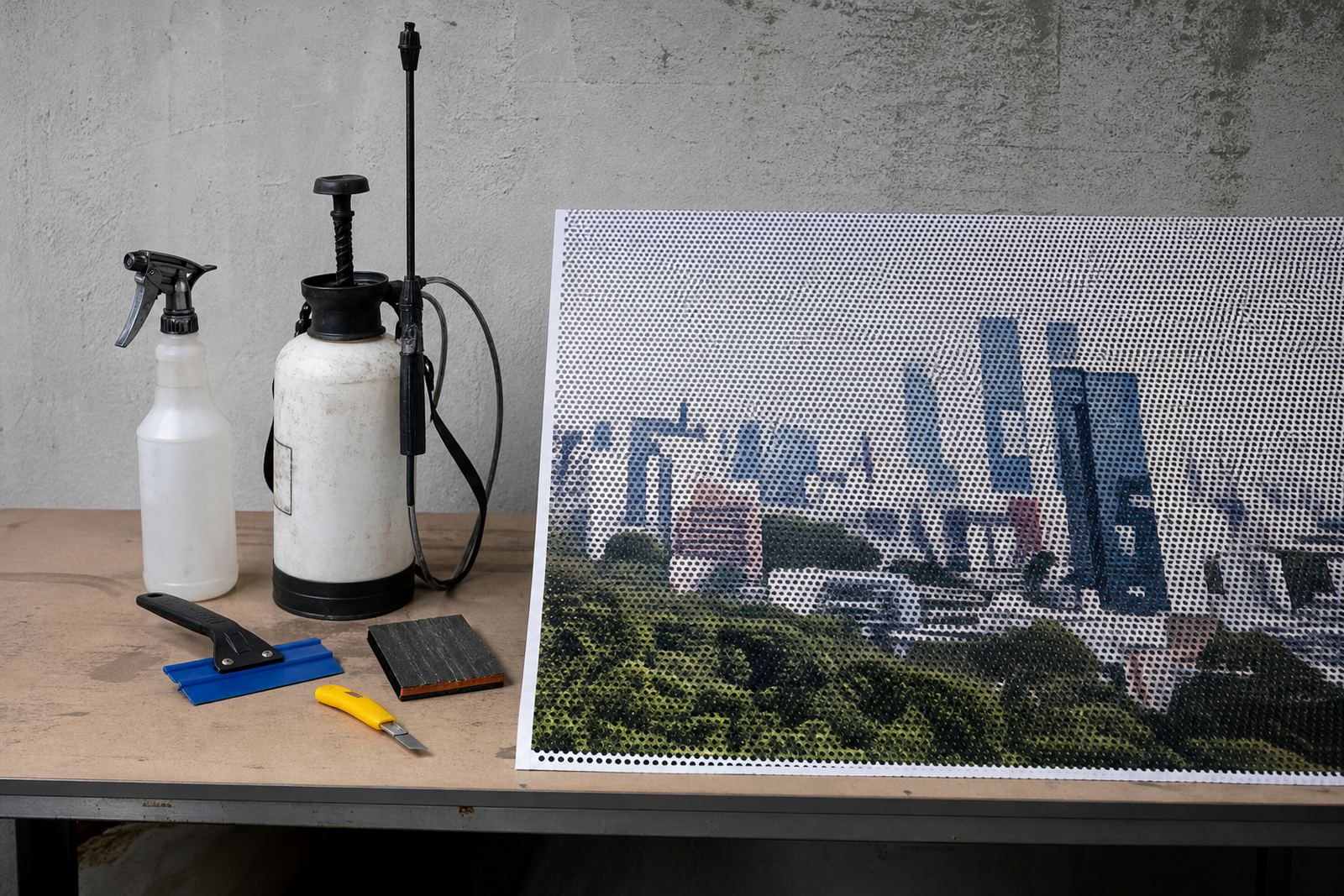
For shopfronts near busy roads, coastal humidity or strong afternoon sun, the print and lamination combination needs proper planning. Wide format printing must give crisp colour and readable detail, while lamination protects the print face from cleaning, scratching and daily wear. In places like Montague Gardens or the Durban coast, moisture and heat can test the edge seal if the surface prep is rushed.
Lamination also affects the finish. A matt face reduces glare, while a gloss finish can make colours pop more in shade. The right choice depends on the front light and how the glass is viewed during trading hours. If the print will be seen at night from inside lit premises, test the design in similar light before final approval.
- Ask for a colour proof before production starts.
- Confirm whether the front will be viewed mostly in daylight or after dark.
- Check that the laminate suits regular cleaning with non harsh products.
- Make sure the print edges are sealed and trimmed cleanly.
Prepare The Glass And Plan The Installation Day
A clean, stable surface is essential. Old vinyl, dust, grease and moisture can all interfere with adhesion. If the shopfront has existing graphics, allow time for old film removal and for any glue residue to be cleared away. On some sites the installer may need to work around trading hours, security shutters or municipal access rules, so the timing should be agreed before the team arrives.
For a smooth fit, the surface should be dry, dust free and not recently painted or silicone treated. If the shopfront is exposed to wind or coastal spray, install when the weather is calm and the glass is dry. Good preparation saves rework and helps the film sit flat from edge to edge.
- Clear the inside area near the glass before installation.
- Switch off nearby fans that may blow dust onto the pane.
- Keep ladders, cleaning gear and signage out of the working path.
- Confirm access for the installation team and vehicle parking.
Check Visibility And Compliance Before Sign-Off
Perforated film on a shopfront should improve branding without making the interior feel closed in. Before sign-off, stand inside during daylight and check whether you can still see out clearly enough for staff movement and customer awareness. The outside graphic should read as intended from the street, but the inside view must stay practical for day to day use.
If the film is being used on vehicle windows as part of the same branding set, the driver view must remain legal. Check current road traffic rules before fitting any window film to a vehicle. Vehicle glass, especially front side windows and rear screens, may be subject to visibility limits and local inspection checks. A safe layout on a shopfront is not automatically safe on a bakkie, panel van or SUV.
- Walk the front from left, right and straight on.
- Check that door handles, emergency exits and notices are not hidden.
- Review the inside-out view in both bright sun and indoor light.
- Confirm the final artwork matches the approved proof and panel map.