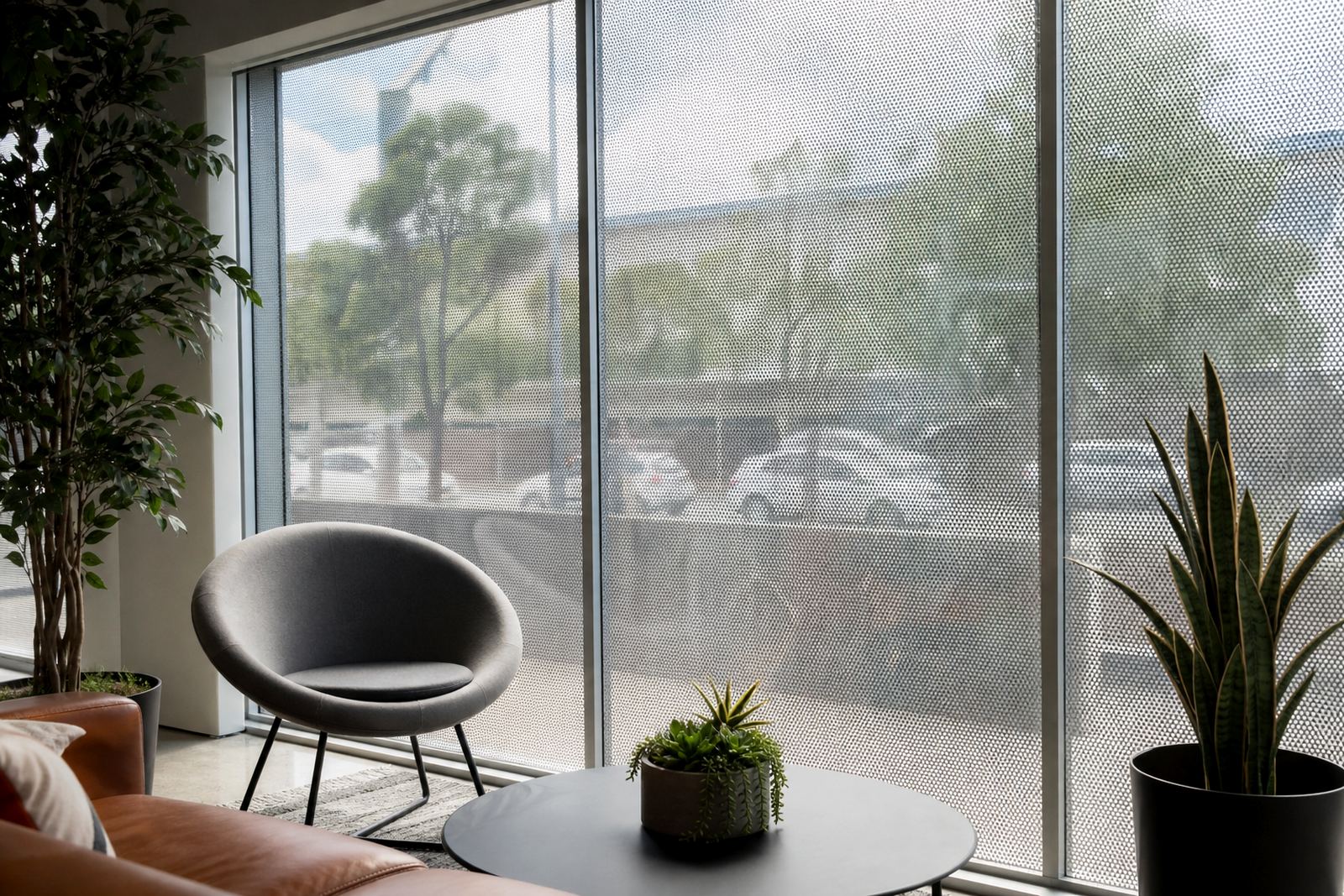
How One-Way Vision Film Works in Daylight
Small, evenly spaced holes across the printed face are what give perforated one-way vision film its distinctive function. From the outside, people see the printed graphic first. From inside, the eye can still look through the perforations and make use of the outside light. That balance is what makes it useful for shopfronts, office glass and vehicle windows.
The effect depends on the perforation ratio, print coverage and the amount of light on each side of the glass. In strong daylight the printed side reads clearly from outside. At night or in low light, the inside may become more visible from the outside, so you need to plan the design and the lighting around the site. For the best result, the film must be matched to the glass, the viewing angle and how the space is used during the day.
When Privacy Matters Most in Shops and Vehicles
Businesses use this film when they want people to see the message outside without giving everyone a clear view in. It is common on retail shopfronts, service counters, waiting areas and vehicle rear side windows. It can help reduce distraction, limit direct sightlines and still keep the space bright enough to work in.
For vehicles, the film is often used on rear windows and side windows where branding can be seen by traffic and pedestrians. The driver must keep a legal field of view, and readers should check the current road traffic rules before fitting film to any vehicle window. If the vehicle carries passengers or stock, the layout should also allow for safe reversing, lane changes and parking in busy areas.
A few common use cases are:
- Shopfront privacy during trading hours
- Meeting rooms facing the street
- Delivery vans and service vehicles
- Waiting areas where glare needs reducing
- Window branding on glass doors and panels
Choose the Right Perforation, Print and Lamination
Not all perforated film behaves the same way. A tighter perforation can give a stronger printed appearance outside, while a more open perforation can improve outward visibility from inside. The right choice depends on whether the main goal is privacy, branding or a mix of both.
Printing needs to be sharp enough for the outside message to hold up at road distance and close range. Lamination can add surface protection against scuffing, cleaning chemicals and UV exposure, which is useful on busy streets and in coastal areas where humidity and salt can affect finishes over time. On vehicle windows, lamination also helps the print survive routine washing and daily handling.
- Confirm the glass size and visible area
- Check the normal viewing distance
- Decide how much outside privacy is needed
- Choose print coverage that suits the design
- Use lamination where the film will be exposed to wear
Site Measuring and Artwork Setup Checklist
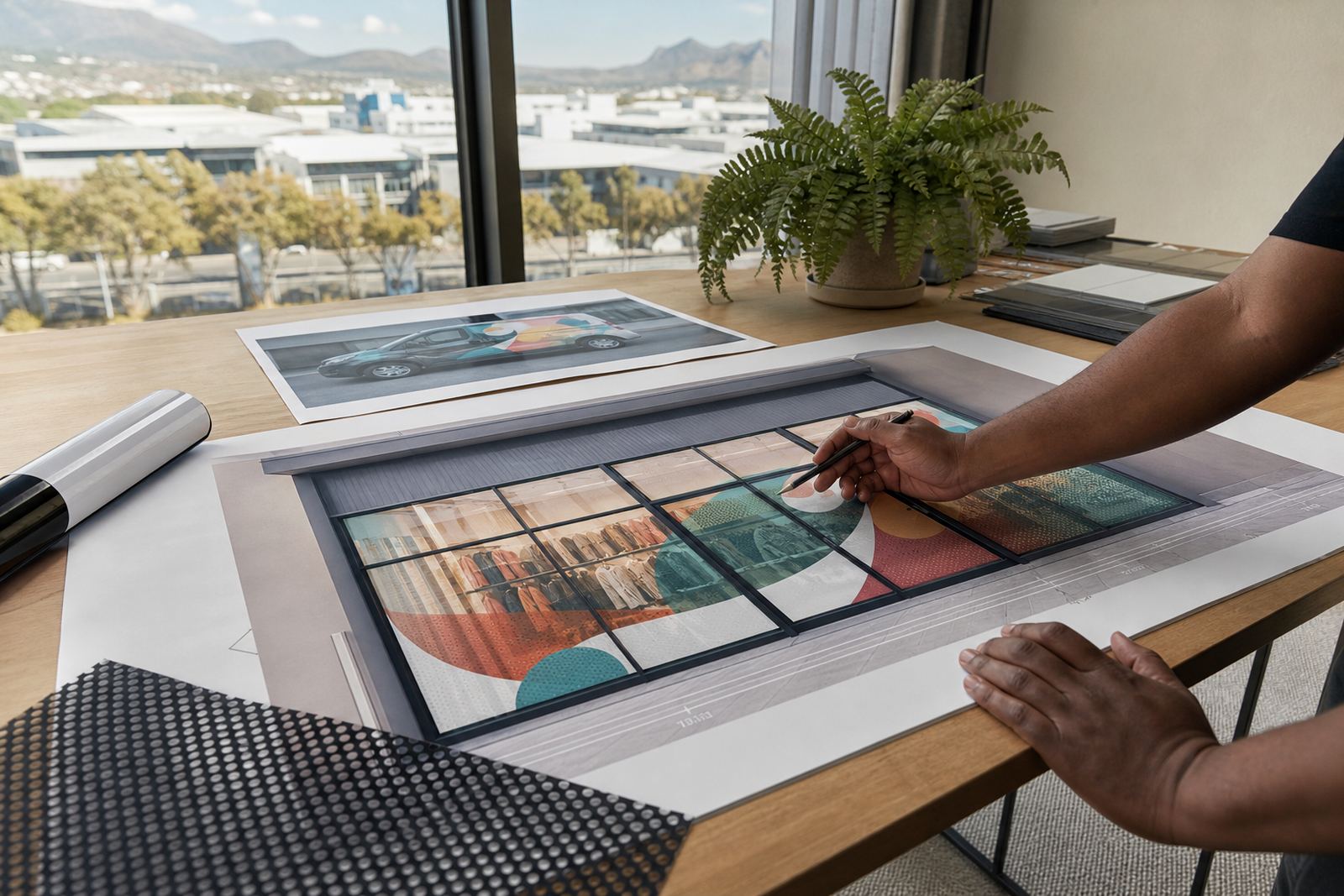
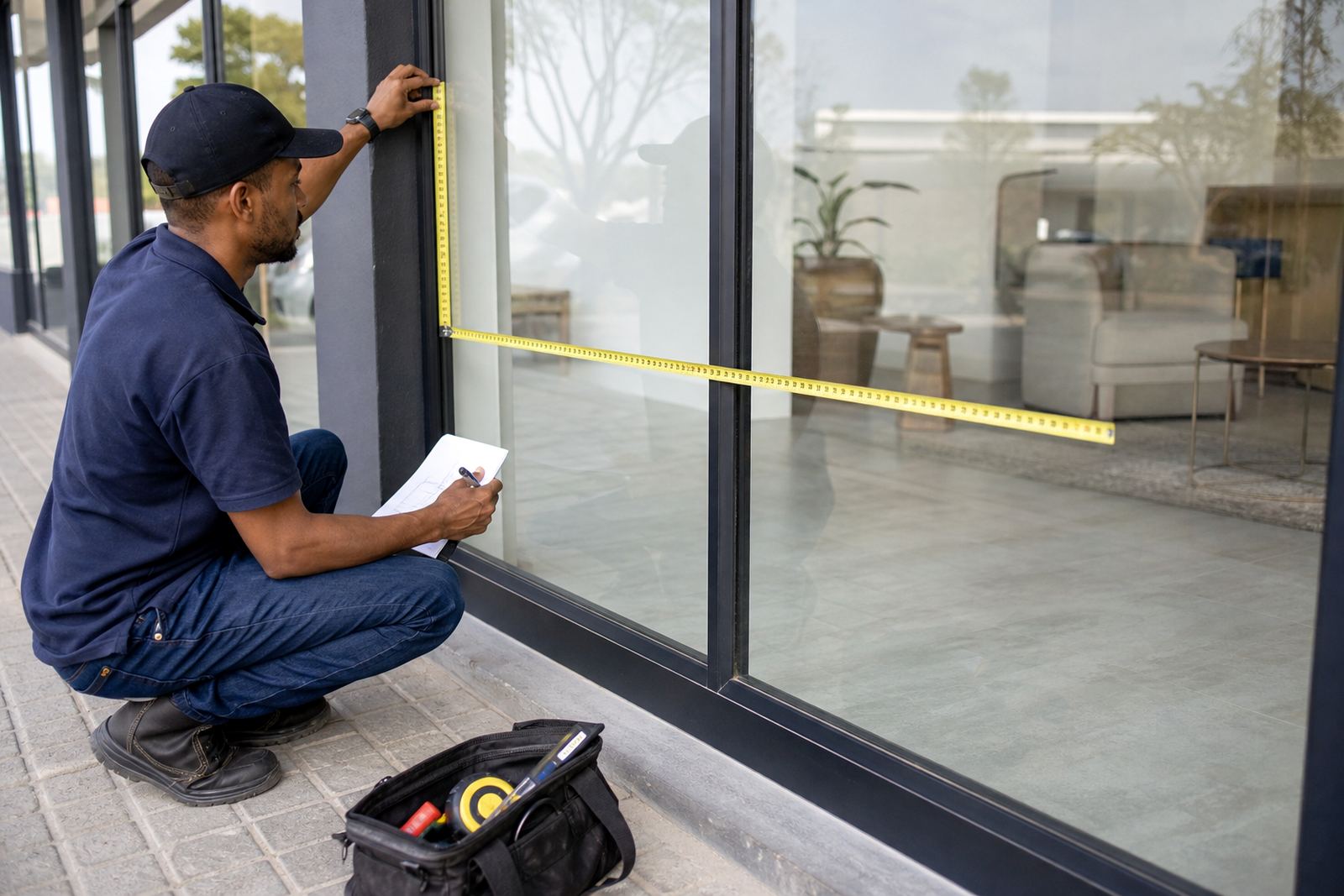
Accurate measuring avoids costly trimming later. For shopfronts, the measuring must include glass panels, mullions, handles, frames and any tint already on the glass. For vehicles, templating must follow the window shape, the curve of the glass and any heater lines or fittings that could affect the fit.
Artwork setup should be done at full size where possible, with safe margins for edges and cut lines. If the graphic includes text, logo marks or contact details, they should stay clear and readable through the perforation pattern. Colour proofing is important too, because dark colours and dense backgrounds can change how much light passes through the film.
Before print, check these points:
- Glass measurements are taken on site or from a proper template
- Artwork is set up to the correct dimensions
- Text stays away from trims, handles and seals
- Colours are checked for daylight visibility
- The final layout suits the viewing direction inside and outside
Application Steps for Glass and Vehicle Windows
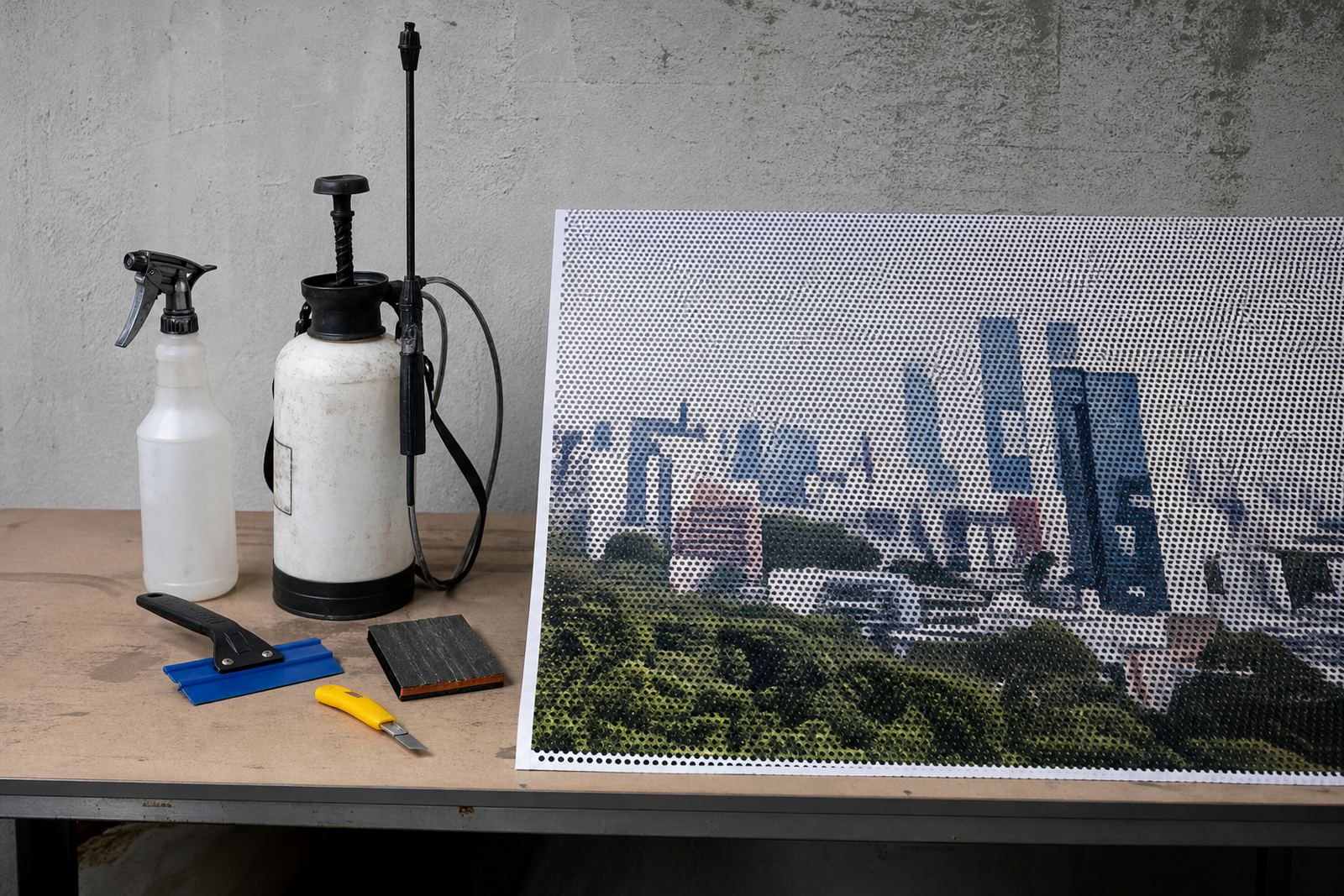
Glass installation starts with surface preparation. The glass must be cleaned properly, dried and free of dust, grease and old adhesive. Any rough edges or damaged seals should be dealt with first. A clean surface helps the film lay flat and reduces bubbles or lifting at the corners.
For shopfronts, the film is usually installed from the outside face of the glass so the print can be seen clearly. For vehicles, the installer must work around curves, seals and heating elements and take care not to damage the rear screen. It is also important to allow for curing time before washing or rolling windows down.
- Remove old film if needed
- Prepare the surface carefully
- Align the panel before wetting or fixing
- Smooth out air pockets and edges
- Allow the film to settle before normal use
Maintenance, Refit and Refresh Planning
Perforated film is practical, but it still needs regular checking. On shopfronts, look for lifted corners, fading, scratches and signs of dirt build-up in the perforations. On vehicles, check for wear from washing, road grime and pressure at the window seals. A film that is looked after properly can keep doing its job for a good while, but once it starts to lift or the print loses clarity it should be removed and replaced.
For businesses that change campaigns or refresh branding during the year, a refit and refresh plan makes sense. That might mean old film removal, a new artwork setup, fresh printing and new installation to match a seasonal promotion or updated brand message. In places like Cape Town, Johannesburg, Durban, Pretoria and Gqeberha, the weather and traffic conditions can differ quite a bit so the replacement cycle may vary by site.
If you are unsure about the right layout, use the enquiry form on our contact page and ask for advice on the best option for your glass or vehicle windows. A proper plan from the start saves time later, and keeps the finish neat not messy.