What lamination does on perforated film
The outer face of perforated one-way vision film carries the print, while the reverse side is viewed through the tiny holes in the material. A laminate is a clear protective layer applied over the printed face before or after production, depending on the film system being used. It helps protect the print from scuffing, UV exposure, salt air and the repeated wiping that shopfronts and vehicle windows get every day.
For shopfronts in places like Montague Gardens, Bellville and Milnerton, laminate is often specified where the film is likely to be cleaned often or exposed to strong afternoon sun. On vehicles, it can help the printed side hold up better on the side windows and rear windows, especially where road grime and washing are part of normal use.
When to specify laminate and when to leave it off
The right choice depends on where the film is going, how long it needs to last, and how much handling it will get during installation and cleaning. Some projects only need short-term promotional use, while others need a longer service life. In shopfront work, laminate is often worth specifying when the print carries detailed graphics, dark colours or fine text that must stay legible for months.
- Choose laminate for strong sun exposure, coastal humidity and frequent cleaning.
- Choose laminate when the printed face may be touched during daily use or by cleaners.
- Choose laminate for higher wear areas on fleet vehicles and delivery vans.
- Leave it off for short campaigns where replacement is planned soon.
- Check whether the installation surface is flat, curved or divided by window rubbers, because that affects handling.
If the job is on a street-facing glass panel in Cape Town or Durban, laminate can be a sensible extra layer. If it is a short-term event graphic on a vehicle window, a lighter specification may be enough.
How lamination changes finish and visibility
Laminate affects the final look of the print. A gloss finish usually gives brighter colour and a sharper feel, while a matt finish can reduce reflection on glass and give a calmer appearance. On perforated film, the finish should also be selected with the viewing angle in mind because light on the outside face can affect how visible the graphic appears from the street.
It is also important to remember that the perforation ratio matters. A film with larger open area can give better outward view, while a denser pattern can give stronger image coverage from outside. Lamination does not change the perforation pattern itself, but it does add a layer that can slightly alter the look and feel of the print. That is why colour proofing is useful before full production.
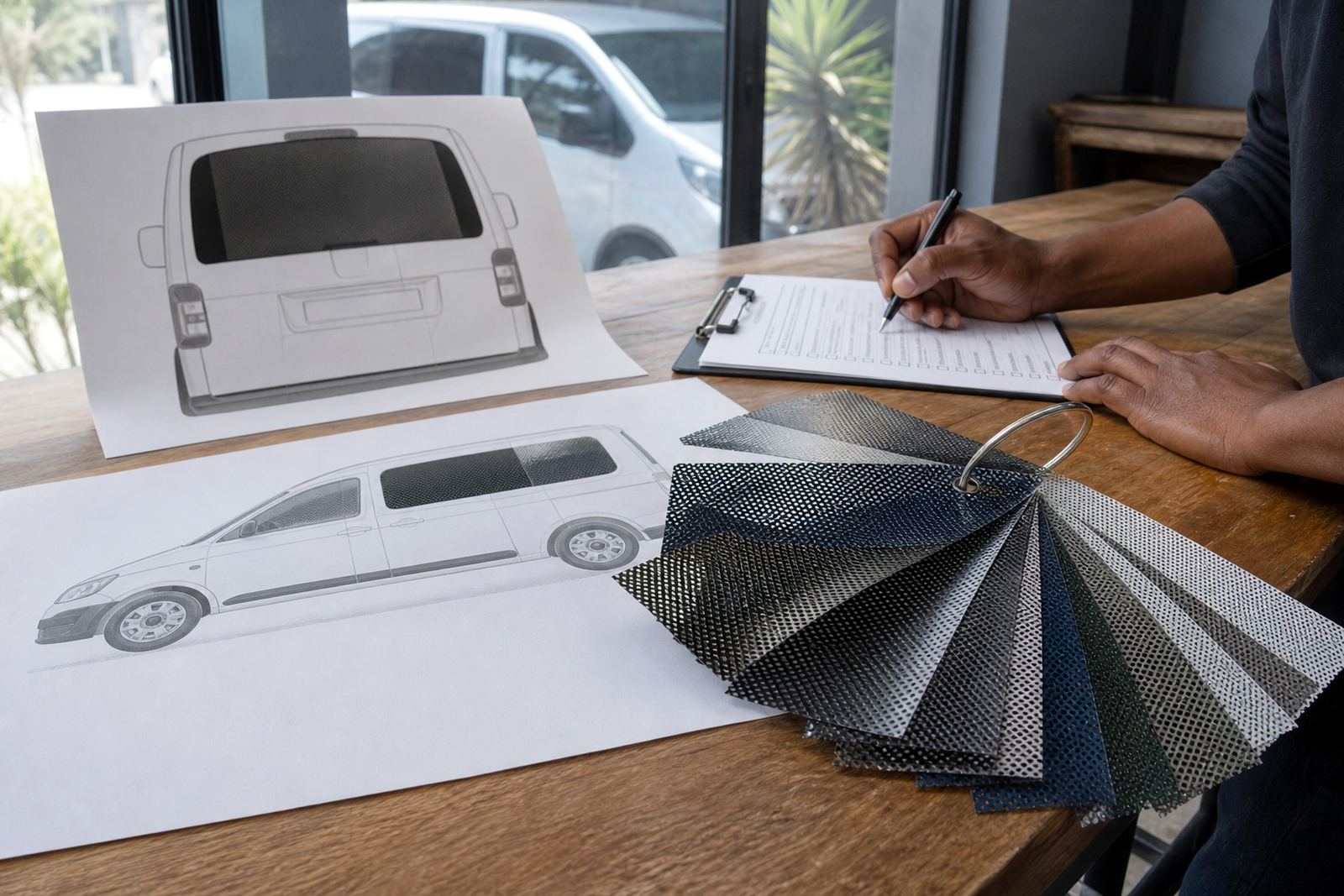
For vehicle windows, the end result should still allow the driver to see clearly where the film is fitted and where the law allows it. Check the current road traffic rules before specifying any vehicle window film, because legal visibility requirements can change and may differ by window position.
Application steps that protect the finish
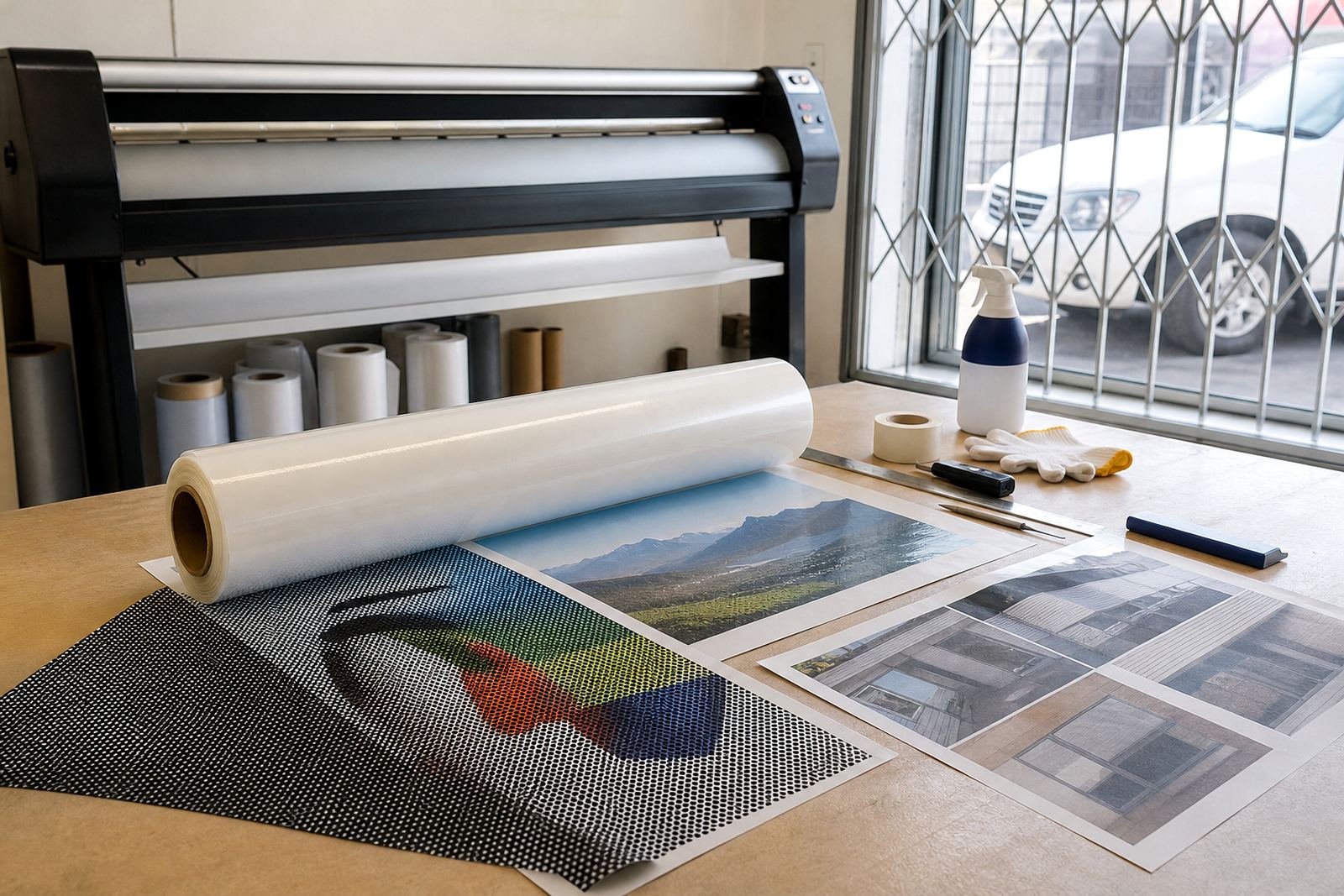
Good lamination starts with clean print conditions, proper curing time and careful handling before installation. If the print is still releasing solvent or moisture when laminate is applied, bubbles or edge lift can appear later. On shopfronts, this can be a problem around the top edge of tall glazing. On vehicles, it matters even more because curved glass and rubber seals place extra stress on the material.
- Prepare the artwork at the correct size with safe margins for trimming.
- Print on the correct side for the viewing direction.
- Allow the print to cure before lamination.
- Check for dust, lint and print defects before the protective layer is applied.
- Trim with clean edges and inspect corners carefully.
- Carry out surface preparation on glass or vehicle windows before fitting.
For installations in Johannesburg and Pretoria, where dust and dry weather can affect adhesion, a clean prep process matters. In coastal areas such as Durban and Gqeberha, humidity can slow things down a bit so timing has to be managed properly, otherwise the film can be more difficult to handle.
Care and cleaning after installation
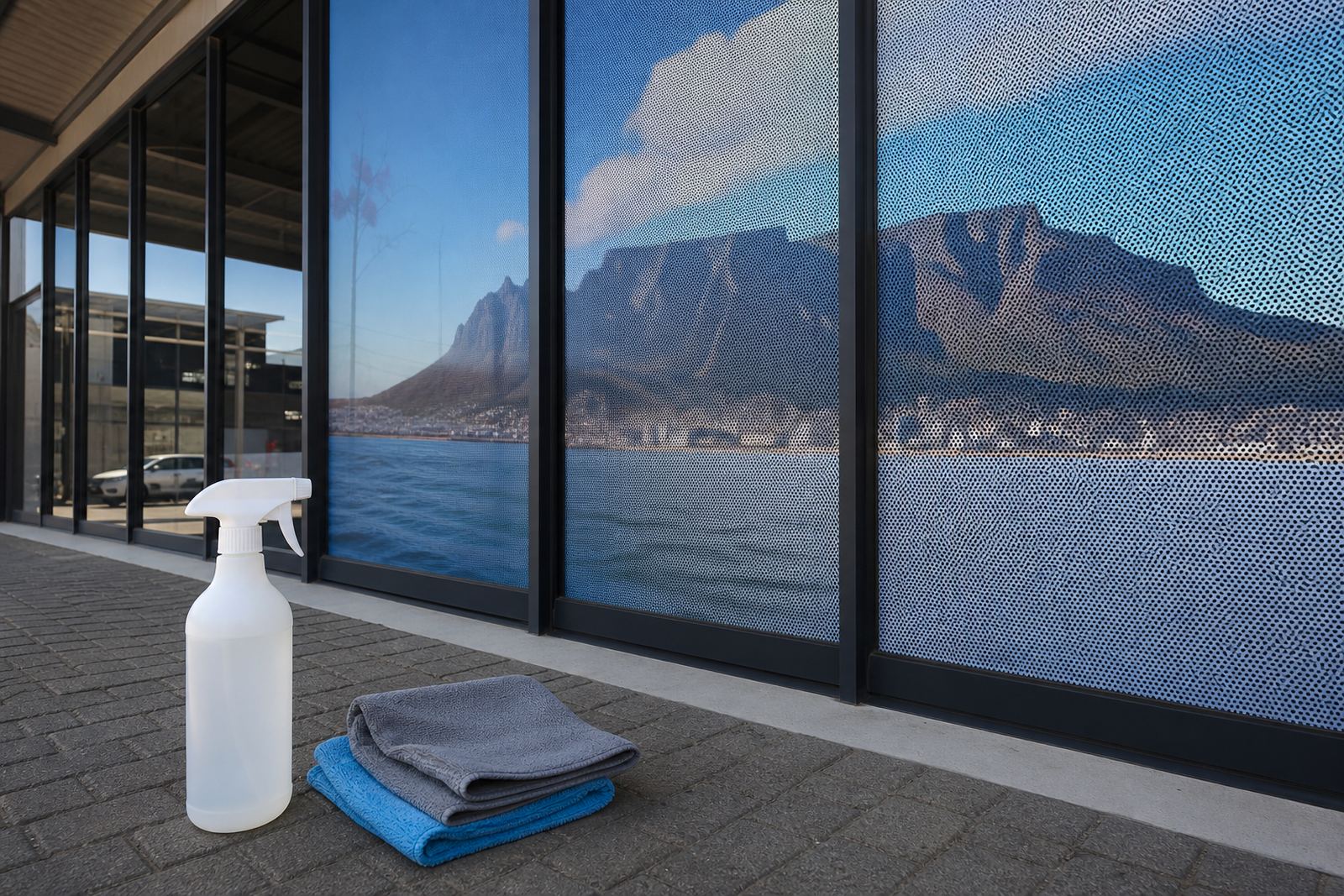
Laminated perforated film is still a printed product, so care matters. The laminate gives a stronger surface, but harsh chemicals, abrasive cloths and high-pressure washing too close to the edge can shorten the life of the film. For shopfronts, use soft cloths or non-abrasive squeegees with mild cleaning liquid. For vehicles, avoid aggressive scrubbing around the window edges and do not use sharp tools to lift dirt.
Allow enough time after installation before the first wash. If the film has just been fitted, the adhesive still needs time to settle. This is especially important after glass installation or vehicle installation where the surface has been handled for a full day. If the job is part of a refit and refresh, old film removal and surface preparation should be done carefully so the new layer sits properly.
- Use mild, non-ammonia cleaners where possible.
- Wipe gently rather than scrubbing hard.
- Do not pick at corners or seams.
- Keep pressure washers away from edges and joins.
- Report any lifting or damage early so repairs can be arranged.
How our team plans lamination for each job
Every order starts with the intended use. A retail shopfront in Cape Town city bowl may need a cleaner finish for foot traffic and daily window cleaning, while a courier van working in Johannesburg might need a tougher surface to handle road spray and repeated washing. Our team can measure the site, check the glass or vehicle panels, set up artwork and advise on whether laminate is useful for that specific application.
Marius Ntsele oversees the overall production flow, while Ayanda Mbele handles client enquiries, Liam Maseko manages print production, Noluthando Liebenberg coordinates installations, Ridwaan Hlongwane works on vehicle graphics, and Chantel Fortuin supports customers through the process. That means the same job can be checked from artwork through to fitting, which helps avoid unnecessary rework and keeps the finish consistent.
We also support nationwide dispatch for projects that need supply only, including Cape Town, Johannesburg, Durban, Pretoria and Gqeberha. If you are replacing an older film or planning a fresh promotional run, ask for lamination guidance before the print is approved. It is easier to specify the right finish up front than to sort out wear later.