Start With the Right First Week Care
The first few days after installation matter most. Whether the film is on a shopfront in Montague Gardens or on a vehicle working between Cape Town and Durban, the adhesive needs time to settle. Keep the surface dry and avoid pressure washing, scrubbing or window cleaning for at least 72 hours after application.
For vehicle windows, avoid winding the glass down for the first few days. On shopfronts, do not tape notices, posters or security stickers over the printed area while the adhesive is still curing. Small movements during curing can lift corners or leave marks that are hard to correct later.
- Do not wash for 72 hours after installation
- Keep vehicle windows closed for the initial cure period
- Avoid stickers, tape and suction cups on fresh film
- Check edge adhesion once the surface has dried fully
Cleaning That Protects Print and Perforations
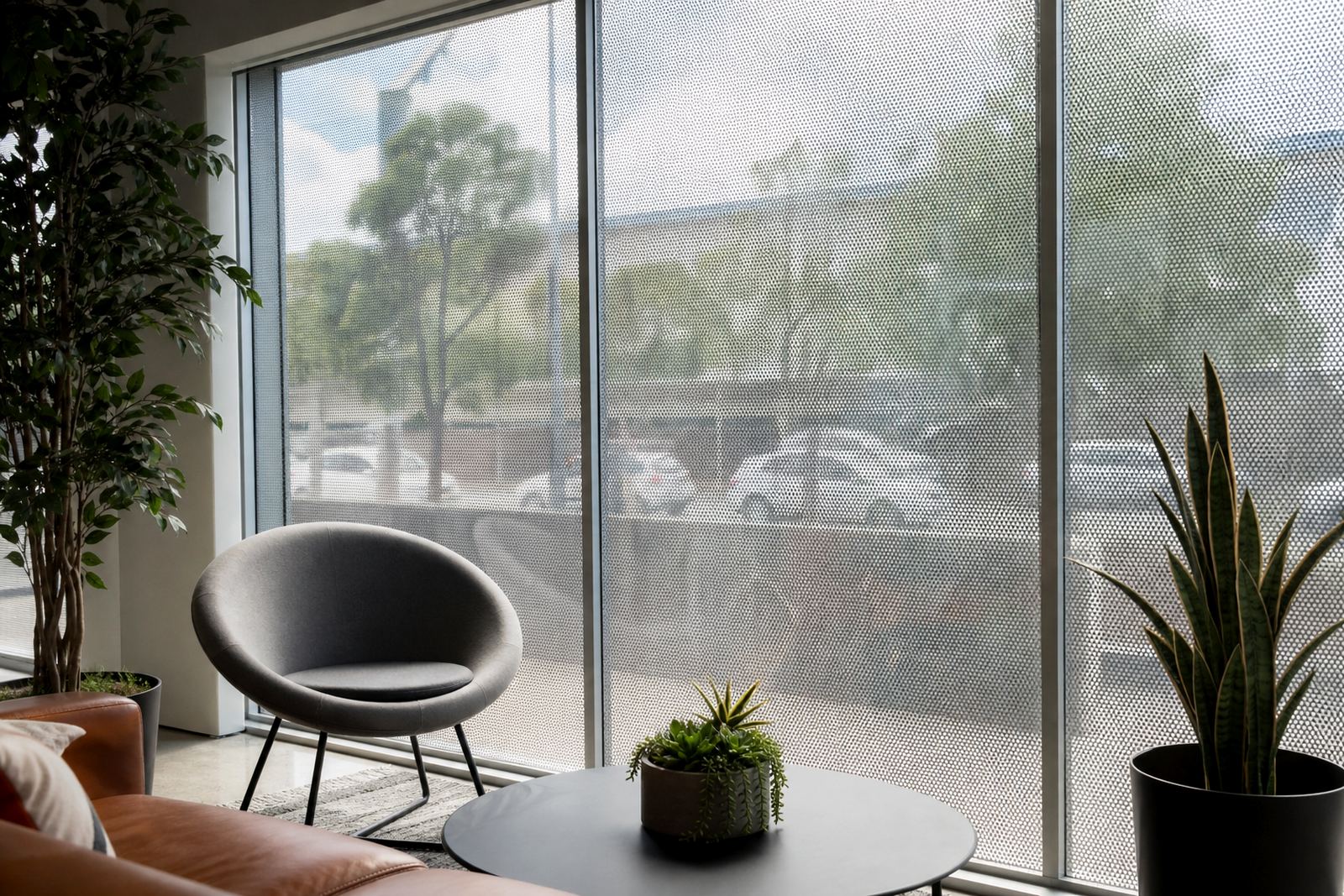
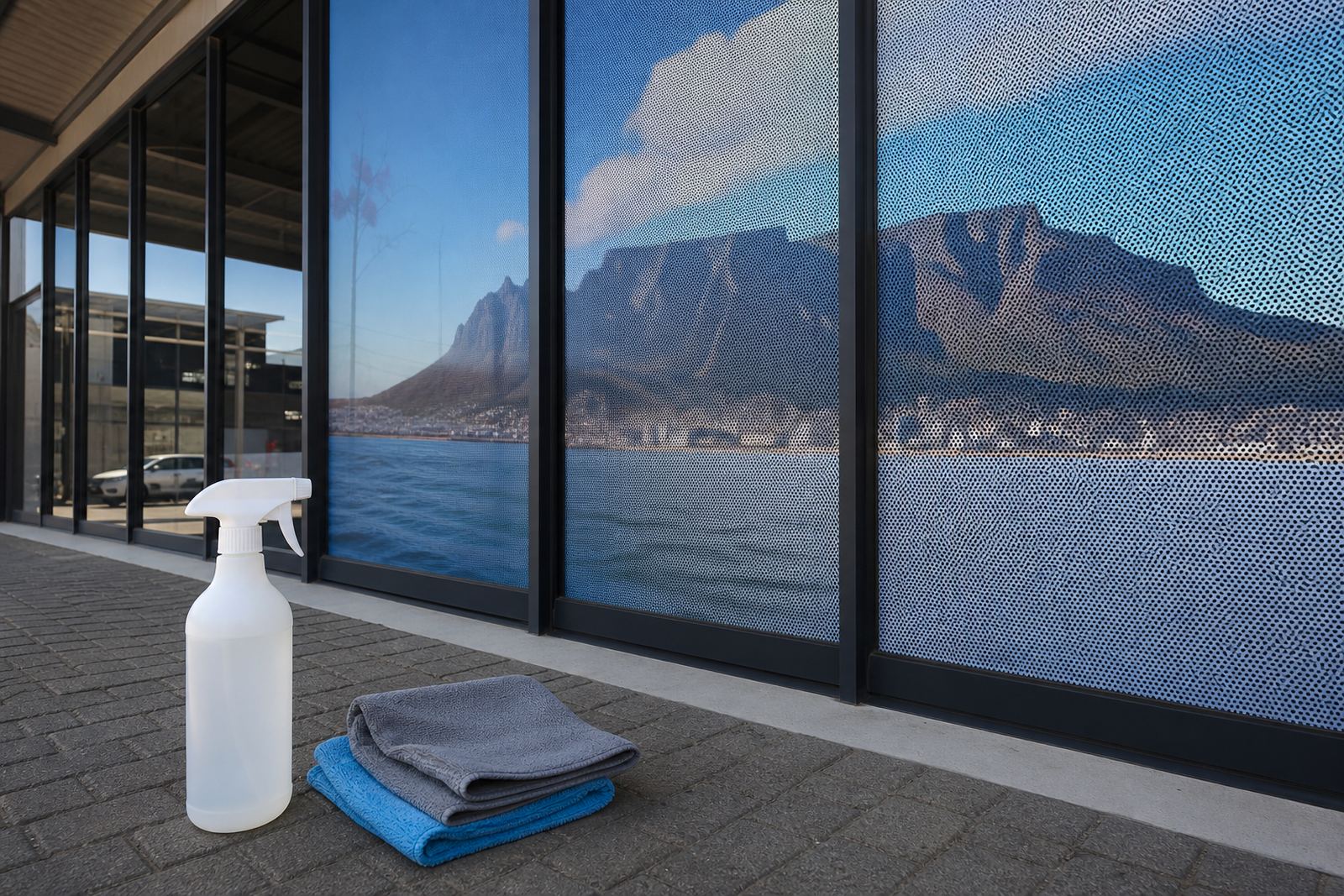
Perforated film has tiny holes that allow visibility from inside while carrying print on the outside, so cleaning must be gentle. Use clean water with a mild, non-abrasive soap. A soft microfibre cloth or sponge is best. Wipe in straight motions rather than hard circles, especially on printed panels with darker colours or fine text. Harsh pad scrubbing can push dirt into the holes and damage the printed face.
For glass on retail fronts, clean from the top down so dirty water does not run over already wiped areas. On vehicle windows, remove road film, dust and salt build-up more often if the vehicle works near the coast. In places like Gqeberha and Durban, salt and humidity can leave a light film on the surface and make the graphics look dull if they are left too long. A quick wash every couple of weeks is usually better than one heavy clean later, and it saves time too.
- Use mild soap and clean water only
- Choose a soft microfibre cloth or sponge
- Wipe gently, do not scour the perforations
- Rinse off road grime, dust and salt before it builds up
What to Avoid on Glass and Vehicle Windows
Some common cleaning products can shorten the life of perforated film. Avoid ammonia based cleaners, strong degreasers, solvents and rough scourers. These can haze the print, dry out the surface and make the edges lift sooner. Steam cleaning is also not suitable close up, as heat and pressure may loosen the adhesive or soften the laminate. If you need to remove bird droppings, insect marks or tar spots, soak the area first with soapy water instead of scraping at it.
Do not use sharp blades on the face of the film unless you are removing old material under controlled conditions. Even a small slip can score the print or cut into the glass seal line. If you are maintaining a fleet, make sure all drivers know that a quick wipe is better than a hard clean between jobs. That small habit keeps the graphics neater and helps the film last longer.
- Do not use ammonia, solvents or harsh degreasers
- Do not scrape with blades or metal tools
- Do not use high heat steam directly on the film
- Soak stubborn marks before wiping them away
How to Check Edges, Corners and Drain Paths
Film failures usually start at the edges. In bright sun, on hot panels or after repeated door movement, check the corners for lifting. A lifted edge can trap dust and moisture, which then spreads under the film. On shopfronts, inspect the lower edge where mop water, dust and street spray gather. On vehicles, check around sliding windows, door frames and tight curves near the rear glass.
If the film is used on windows with drain holes or trims, make sure those areas stay clear. Water should not sit behind the film or pool along the bottom edge. In coastal towns, that trapped moisture can cause staining and make the adhesive work harder than it should. A short monthly inspection is enough for most premises, but busy vehicles may need a quick check every week.
- Look for lifted corners, bubbles and edge dirt
- Keep drain paths and bottom edges clear
- Check more often on coastal routes and high-use vehicles
- Report any lifting early before it spreads
Handling Prints During Repairs or Refits
If a glass panel is being repaired, repainted or replaced, protect the film before work starts. Dust from sanding, fresh paint overspray and builder’s tape can damage the print fast. Cover nearby panels with clean material and keep tools off the graphic area. When a business in Pretoria or Johannesburg is refitting a shopfront, it is often better to remove damaged film cleanly and fit new material after the final surface prep has been done.
For vehicles, take care when doors are resprayed, panels are dent repaired or tinted glass is replaced. Any contamination left behind by old adhesive, polish or silicone must be removed before reapplication. Surface prep is not the flashy part of the job, but it matters more than people think. If the panel is not clean and dry, the film will not sit properly and the finish can look patchy.
- Protect film from dust, overspray and builder’s tape
- Remove old adhesive before fitting new graphics
- Fit after repairs, not before final cleaning
- Use clean dry panels for the best bond
When Old Film Needs Removal and Replacement
Perforated one-way film does not last forever. Sun, salt, wind and repeated washing slowly reduce the print and adhesive performance. When colours look faded, edges keep lifting or the view through the inside has become patchy, it may be time for removal. Old film should be stripped carefully so the glass stays clear and the new application can bond correctly. A well handled removal saves time at the next install and avoids residue that can show through fresh graphics.
If you are refreshing a storefront in Bellville, Milnerton or across the wider Cape Town area, plan removal and refit together where possible. The same applies to fleet vehicles that are being rebranded or returned to service after a season of heavy use. Once the old film is off, the surface should be cleaned, dried and checked for adhesive marks before any new print goes on. That is the cleanest way to keep the finish neat and professional.
- Replace film when fading, lifting or damage becomes obvious
- Remove old adhesive fully before refitting
- Clean and dry the glass before new installation
- Plan removal and replacement together to save downtime
Keep Vehicle Graphics Road-Legal and Easy to Read
On vehicles, one-way vision film must still allow the driver a legal view of the road. That means the size, placement and coverage must suit the vehicle windows and current road traffic rules. If a design covers too much of the clear viewing area, it can create a safety issue and may not be compliant. Check the latest requirements before fitting, especially for rear side windows and rear screens. A neat graphic is only useful if it still supports safe driving.
For day to day care, keep the windows clean enough that the perforations remain open and the inside view stays usable. Dust, mud and road film reduce visibility from both sides. If a driver notices glare, haze or a blind patch, it should be looked at quickly. Good care is simple: clean gently, inspect often and replace worn film before it starts looking tired or unsafe. That keeps your message clear and your vehicle on the road without hassle.
- Check current road traffic rules before fitting or changing coverage
- Keep the viewing area clean and unobstructed
- Inspect for haze, dirt and blind patches
- Replace worn film before it affects visibility